In Pain? Call Caine
Rental Car Accident: Do I Need A Florida Lawyer?

5 Min read
By: Caine Law
Share

You’re probably reading this from a hotel room, airport gate, cruise terminal, or a relative’s condo with a sore neck, a damaged rental vehicle, and a phone full of calls you do not want to answer.
A Florida crash can throw any person into chaos fast. A rental car accident can make that chaos worse. One minute you are driving to the beach, heading to a theme park, leaving the airport, or trying to find your next stop on vacation. The next minute, you are trying to figure out where the rental agreement is, whether your travel insurance helps, whether you should go to urgent care, how you are supposed to fly home injured, and whether you really need legal help. That is when many visitors start asking, Do I need a lawyer for auto accident claims when the crash happened in a rental vehicle far from home.
My opinion is simple. If you were hurt, if fault is not crystal clear, if the rental company is already asking questions, or if an insurance adjuster is pushing you to settle quickly, you should speak with a rental car accident lawyer right away. Not because every rental car accident ends up in court. Because every injury claim can be damaged early, especially when you are a tourist trying to handle Florida laws from another state or another country.
Insurance companies move quickly for a reason. Rental car companies do too. The sooner they frame the story, lock you into a statement, point responsibility somewhere else, or limit your treatment timeline, the easier it becomes for them to pay less. In a rental car accident, you need to protect your health first, but you also need to protect the facts, the rental documents, and the insurance trail.
Tourists are especially vulnerable after a crash. You may not know Florida’s no-fault rules. You may not understand what coverage came with the rental car, what your own auto policy covers back home, whether your credit card gives you any protection, or who is paying for the damage to the vehicle. You may also be on a deadline to leave the state. That pressure causes mistakes. A good rental car accident lawyer can help stop those mistakes before they cost you money.
The central issue is not just the car. It is your injury claim, your disrupted trip, your lost time, your medical care, and your ability to pursue compensation after you go home. That is why the question Do I need a lawyer for auto accident cases is even more important when the crash happens in a rental vehicle during a Florida visit.
The First Moments After a Florida Car Crash
Right after a crash, tourists are not thinking like lawyers. They are thinking like travelers in pain, in an unfamiliar place, with no idea what comes next.
You hear brakes, metal, glass, then quiet. Your hands shake. Your back tightens. Maybe airbags went off. Maybe your suitcase is thrown into the front seat. Someone asks if you are okay, and you say, “I think so,” because you genuinely do not know yet. Then the questions hit all at once. Should you call 911? Should you call the rental company first? Should you miss your flight? Should you go to the ER even if you are supposed to check out tomorrow? Should you talk to the other driver’s insurer? Should you answer questions about the rental contract when you cannot even find it in the glove box?
That confusion is when mistakes happen.
I have seen the same pattern over and over in tourist-area crashes. A visitor gets rear-ended leaving Orlando International Airport, sideswiped near South Beach, hit in a hotel district intersection, or clipped on I-95 while trying to follow GPS in unfamiliar traffic. At the scene, they feel mostly adrenaline. Later that evening, their neck tightens, their shoulder throbs, their lower back spasms, or they start getting headaches. By the next morning, the other driver’s insurance company or the rental car company is already calling.
That call is not about helping you recover. It is about controlling the claim, limiting exposure, and preserving a version of events that benefits them.
The smart move is to treat the legal side of a rental car accident as part of your recovery, not as some optional problem you can deal with after your trip. Get medical care. Preserve evidence. Take photos of the scene, the damage, the rental agreement, your injuries, and the other vehicle. Avoid casual statements about fault. Keep the paperwork from the rental counter, your credit card booking, and any collision damage notices. If you are not sure what to save, this guide on how to document evidence needed for a personal injury claim in Florida is a strong place to start.
The first version of the story often becomes the version the insurance company fights to preserve. Make sure it is accurate.
The central question is not just, “Do I need a lawyer for auto accident claims?” The more important question is, “Do I want the rental company and the insurance carrier shaping this case before I understand my injuries, coverage, and legal options?”
If you were hurt in a rental car accident, the answer should be no.
Clear Signs You Should Call an Accident Attorney
Some crashes are simple property-damage claims. Most injury claims are not. A rental car accident involving a tourist is usually more complicated than people expect because there can be several layers of insurance, several parties, and a hard deadline created by your travel schedule.
If you want a direct answer to the question Do I need a lawyer for auto accident cases, use this rule. If the crash affected your body, your trip, your income, your medical care, or your ability to travel normally, call a lawyer. Do not wait for the insurer or rental company to decide how serious it is.
Red flags that mean you should not handle it alone
Do you have any injuries at all? Pain that seems minor on day one can become much worse by day three or day ten, especially after a rental car accident where adrenaline and travel stress delay symptoms.
You were driving a rental car: That alone adds another company, another contract, and another possible coverage dispute.
Fault is disputed: If the other driver blames you, says you were unfamiliar with the area, or claims you made an unsafe turn because you were a tourist, the case is already getting dangerous.
The rental company wants detailed statements immediately: They may be gathering information for their own interests, not yours.
You were hit by a commercial vehicle or rideshare driver: These cases often involve layered insurance and competing stories.
There were multiple cars involved: More drivers means more insurers, more finger-pointing, and more confusion about who caused which impact.
The adjuster wants a recorded statement: That is not a routine favor. It is evidence gathering.
You got a quick settlement offer: Fast money often means discounted value, especially in a rental car accident where the insurer hopes you will take payment and go home.
Your trip was interrupted: Missed flights, hotel extensions, canceled excursions, and emergency travel changes can become part of the damages picture.
You missed work or expect more treatment: Once the losses spread beyond a single urgent care visit, self-representation becomes risky.
You have a prior injury or condition: Insurers love to argue your pain existed before the crash.
A family member was badly hurt or killed in the collision: You need legal guidance immediately.
One fact should get your attention. When insurers and rental companies know a competent rental car accident lawyer is involved, they often handle the claim differently. That does not mean every case becomes huge. It means they know someone is preserving evidence, reviewing the contract, identifying coverage, and protecting the value of the injury claim.
Your Claim Handling It Alone vs. With a Lawyer
Task | Handling It Alone | With an Experienced Attorney |
Investigation | You rely on what you can gather yourself while traveling or after returning home | A legal team can organize records, witness statements, crash reports, rental documents, and technical evidence |
Insurance communications | You answer adjusters and rental company representatives directly and risk saying too much | Your lawyer controls the flow of information and protects your claim |
Claim valuation | You may focus only on current bills and rental car damage | A lawyer evaluates the full impact of the crash, including injuries, travel disruption, lost income, and future treatment |
Fault disputes | You argue your version without leverage or legal structure | An attorney can challenge blame with evidence and build a stronger liability case |
Rental contract issues | You may not understand what the rental agreement actually says | A lawyer can review the rental terms and identify overlapping coverage |
Settlement pressure | You may feel forced to take a quick offer before leaving Florida | A lawyer can push back and negotiate from strength, even after you return home |
Peace of mind | You juggle treatment, travel changes, paperwork, and calls | You focus on recovery while your case is handled |
The calls that should worry you most
Insurance adjusters often sound polite, calm, and helpful. Rental company claim departments can sound even more organized and reassuring. That means nothing.
If they ask how you feel, whether you are “doing better,” whether you had somewhere urgent to be, whether you were distracted by directions, whether you think you could have avoided the crash, or whether you bought the rental company’s optional coverage, they are not making conversation. They are looking for facts and phrases they can later use to reduce value, deny responsibility, or shift damage costs onto you.
The moment the claim becomes about injuries instead of car repairs, legal advice is no longer a luxury.
What a Car Accident Lawyer Does For You
Many people delay calling a lawyer because they imagine paperwork, courtrooms, and added stress. In reality, a good rental car accident lawyer removes stress. They take over the parts of the process that most injured tourists should not be handling alone from a hotel room or from another state after they return home.
If you want a clearer picture of the kinds of cases involved, review these Florida auto and motorcycle accident legal services.
Investigation that goes beyond photos
A case investigation is not just about collecting the crash report and taking pictures of bumper damage.
In a rental car accident, it can mean preserving the rental agreement, coverage election forms, pre-rental inspection notes, damage photos, surveillance footage from nearby businesses, tow records, airport or resort incident reports, and statements from passengers or witnesses before they disappear. It can mean identifying whether the rental vehicle had telematics data, reviewing the scene layout, and organizing medical records to connect the injury to the crash.
In more complex cases, lawyers work with accident reconstruction professionals, biomechanical experts, and medical professionals to explain what happened and why the injuries are consistent with the facts. That matters because insurers attack gaps. If there is any missing piece, they use it.
Taking over communication
Once a lawyer gets involved, the insurance company stops treating you like an easy source of admissions. The rental car company also knows it cannot casually pressure you into paying damage charges or giving statements without review.
That immediately changes the tone of the case. Adjusters know they cannot call you at random for recorded statements, push you to settle before treatment develops, or fish for language they can twist later. Every communication has structure. Every request is reviewed. Every document is looked at through the lens of protecting your claim.
This is one of the biggest practical benefits of hiring a rental car accident lawyer early. You get room to breathe, focus on treatment, and figure out the rest of your travel or return-home plans.
Valuing the claim correctly
Most injured people undervalue their own claims. That is not because they are careless. It is because they are living inside the problem while trying to survive it.
A lawyer looks at the claim from the outside and asks better questions:
What treatment will this person need next?
Did the tourist seek treatment in Florida and then continue treatment at home?
How much work have they already missed?
Will they miss more work after returning home?
Did the crash cut the trip short or create extra travel costs?
Did the injury affect daily life, sleep, mobility, or family plans?
Is there additional coverage available through the rental company, the at-fault driver, the visitor’s own policy, or a credit card benefit?
Are there subrogation or reimbursement issues that need to be managed?
The value of a rental car accident claim is not whatever an adjuster offers first. It is built on evidence, medical costs, lost income, travel disruption, pain, and the real human consequences of the injury.
Preparing for court from day one
Most cases resolve without trial. But the best settlements often come from lawyers who prepare every case as if a trial is possible.
That means properly preserving evidence, identifying all responsible parties, reviewing the rental agreement carefully, filing claims on time, building strong medical proof, and staying ready if the insurer refuses to be fair. Trial readiness creates leverage. Insurers can tell the difference between a law office that advertises and one that can actually put a case before a jury.
Do not hire a lawyer just because they have a catchy slogan. Hire one who understands how a rental car accident differs from a regular local crash and who knows how insurers evaluate risk.
Navigating Florida’s Complex Auto Accident Laws
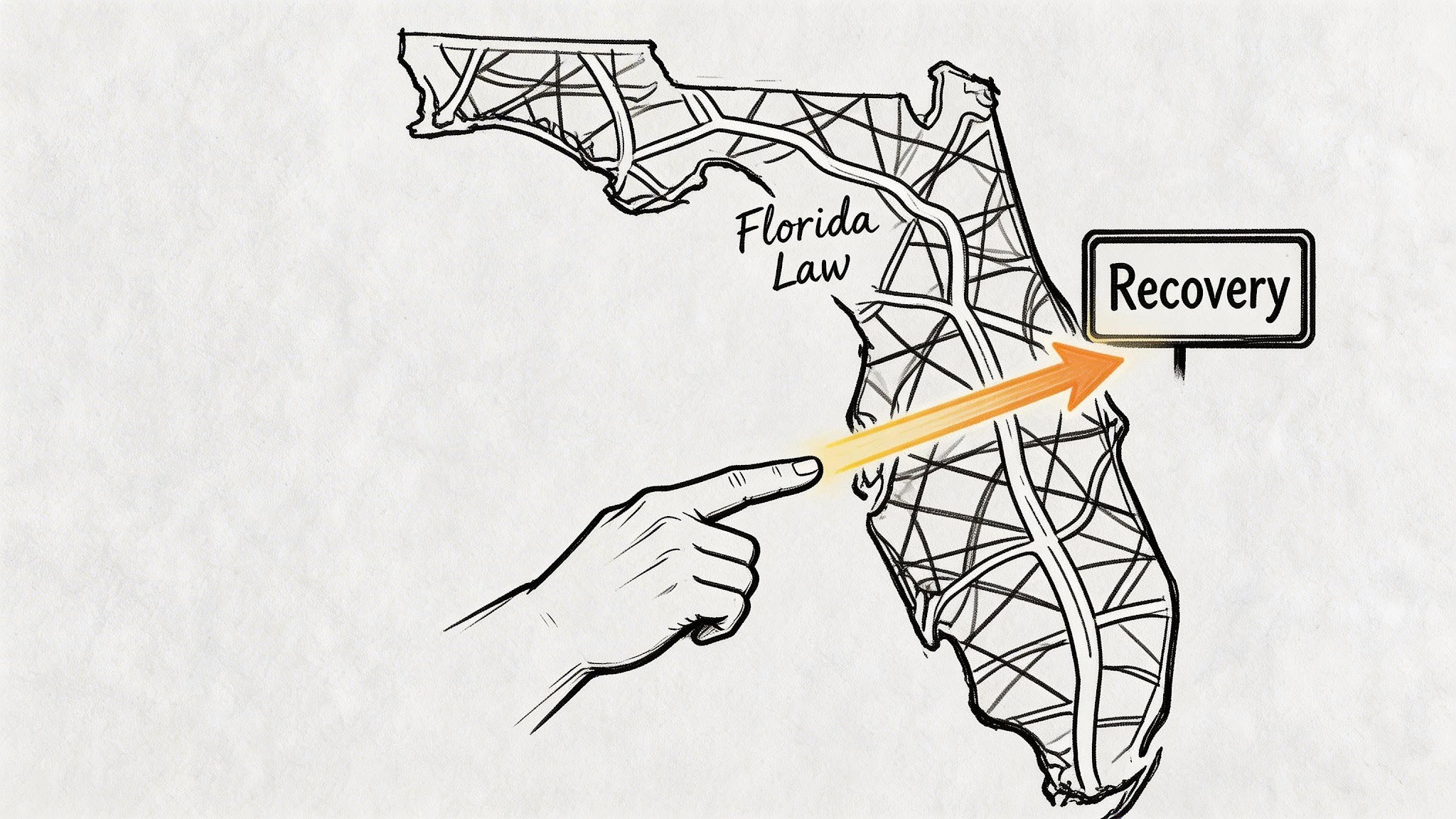
Florida law confuses people because it sounds simple at first, but quickly becomes restrictive. That confusion gets worse when the injured person is a tourist who does not live in Florida and was driving a rental car.
The short version is this. Florida’s no-fault system often involves Personal Injury Protection, or PIP, but whether that applies to you, and how it applies, can depend on the policies available and your status as an insured driver. Rental-car coverage depends on the rental agreement, optional products purchased at the counter, the renter’s own auto policy, possible credit-card benefits, and the other driver’s insurance. Do not assume the rental company’s coverage automatically protects you for injury losses. Many learn too late that the rental company’s coverage was limited, optional, secondary, or not intended to function the way they imagined. In a rental car accident, coverage analysis matters early.
In Florida, if PIP coverage applies, you generally must seek qualifying medical care within 14 days of the crash to preserve access to PIP medical benefits. Waiting too long can create serious coverage problems.
What no-fault really means
People hear “no-fault” and assume fault does not matter. That is wrong.
No-fault rules may affect the first layer of benefits, but they do not erase the importance of who caused the crash. A rental car accident lawyer looks at the full picture, including whether your own coverage applies, whether the at-fault driver can be pursued, whether there are bodily injury limits available, and whether you can seek damages beyond initial medical payments.
So yes, Florida can be no-fault at the front end in many situations. But fault becomes crucial once the case moves beyond basic benefits.
The serious injury threshold
At this point, many injured visitors get blindsided.
Florida restricts pain and suffering claims unless the injury crosses the legal threshold for seriousness. Florida’s threshold generally involves permanent injury, significant and permanent loss of an important bodily function, significant and permanent scarring or disfigurement, or death. This often turns into a fight over medical proof, timing, and documentation. For tourists, that can be even harder because treatment may begin in Florida and continue later at home. Gaps between providers can create openings for the insurer.
Insurers know these threshold cases require clean records, consistent symptoms, and credible doctor support. If your treatment is delayed, inconsistent, or poorly documented, they will use that against you. If your case is well built, the pressure shifts back.
Comparative fault as a pie
The easiest way to understand fault apportionment is to think of your case as a pie.
If the insurer convinces everyone that you were partly responsible, they try to take a slice of that pie away from you. In a rental car accident, they may argue you were unfamiliar with the road, distracted by navigation, confused by traffic patterns, or careless because you were visiting. If they push your share of fault high enough, your recovery can shrink dramatically. In Florida negligence cases covered by the comparative-fault statute, if you are found more than 50% at fault for your own harm, you may be barred from recovering damages.
That is why people damage good cases by speaking too freely after a crash. A sentence like “I was looking for the hotel entrance,” “I was trying to catch my exit,” or “I guess I did not know the area” can become part of an argument to reduce your recovery. This is exactly why the question Do I need a lawyer for auto accident claims matters so much in tourist cases.
Why every percentage point matters
Fault is not just a legal label. It is money.
A lawyer’s job is to challenge lazy blame-shifting, force the insurer to prove its accusations, and present the facts in a way that protects your recovery. In Florida, a few percentage points can make a major difference. You should not negotiate that alone, especially when you are already dealing with travel disruption, rental issues, and medical treatment.
When Seemingly Simple Accidents Get Complicated
The most dangerous claims are often the ones people think they can manage.
A rental car accident looks minor. You walk away. The car is damaged but drivable. Nobody goes by ambulance. You tell yourself it is annoying, but manageable. That sounds reasonable. It is often wrong.
Delayed injuries cause real claim problems
A common tourist scenario goes like this. You get hit on a Thursday while driving a rental car. You feel sore but assume it is just stress. You still go to your hotel. Maybe you try to continue the trip. By the weekend, your neck locks up, your back starts pulsing, you feel dizzy, or you realize you cannot sit comfortably on the plane ride home.
Now the insurer has an opening.
They argue you were not hurt in the crash. They argue you waited too long. They argue you kept sightseeing, so you must not have been badly injured. They argue the symptoms started after you flew home, so the condition must have come from something else. They argue your prior condition is to blame.
A delayed injury case is not hopeless. But it must be built carefully. Medical records, symptom timelines, travel records, photos, and doctor opinions all matter. Sloppy presentation kills these claims.
Feeling “okay” at the scene does not mean you were uninjured. Adrenaline hides a lot. So does the pressure of trying not to ruin a vacation.
A pileup can become an insurance maze
Now take a different situation. Traffic slows near a theme park corridor, beach route, airport exit, or major interstate. One driver brakes hard, another rear-ends them, a third vehicle gets pushed forward, and your rental car is stuck in the middle.
At first glance, it sounds obvious. Somebody hit somebody. The insurers should sort it out.
That is not how it usually works.
In multi-car crashes, each insurer looks for a way to shift blame. One says you stopped too suddenly. Another says the first impact caused everything. Another says your injuries came from a later impact. The rental company may still be asking who is paying for the vehicle damage. Meanwhile, coverage can run out quickly.
These are the cases where layered insurance, supplemental policies, fault allocation, and rental contract terms become brutal for unrepresented people. You are not just proving injury anymore. You are tracing responsibility through several drivers, several insurers, and possibly several coverage sources.
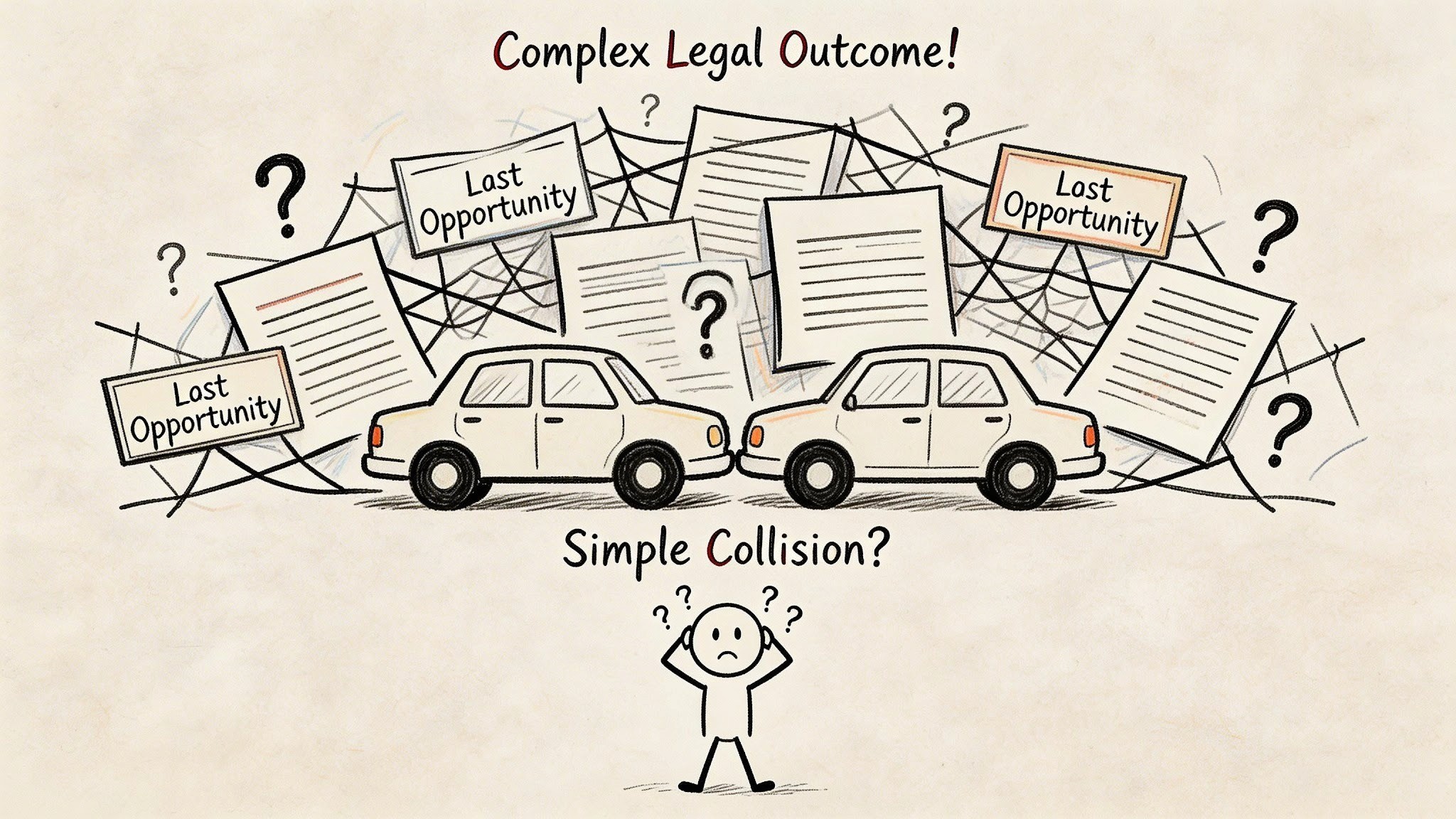
Why “simple” is often a trap
The insurance industry benefits when you underestimate complexity.
If your injuries developed later, if there were several vehicles, if one driver had weak coverage, if the rental vehicle was damaged badly, if the rental company is demanding paperwork, or if anyone disputes what happened, you are already in a case that needs strategy. Not panic. Strategy.
That means preserving treatment records, identifying all possible insurance, documenting travel disruption, reviewing damage charges, and shutting down bad narratives before they harden into the insurer’s official position.
How Much Does a Florida Car Accident Lawyer Cost
The biggest reason injured people hesitate is cost. I understand that.
You are dealing with hotel changes, flight changes, medical treatment, rental vehicle questions, missed work, and household bills waiting for you at home. The idea of paying a lawyer on top of that sounds impossible. In most injury cases, that is not how the system works.
What does a contingency fee mean
Many Florida injury lawyers work on a written contingency-fee agreement, meaning the attorney’s fee is based on the recovery. Ask how fees, case costs, and expenses are handled, including what happens if there is no recovery.
That arrangement matters because it shifts the financial risk to the law firm. It also aligns the lawyer’s interest with yours. The better your result, the better theirs.
Why this matters in complex cases
People often think hiring a lawyer costs money they cannot spare. The bigger risk is often the opposite. Not hiring one can leave money on the table, expose you to avoidable mistakes, or leave you handling a rental car accident claim from hundreds or thousands of miles away with no leverage.
That is especially true if:
liability is disputed,
the rental company is asking for payment,
your injuries worsened after you got home,
there are multiple insurers involved,
or you are still asking Do I need a lawyer for auto accident claims because the process feels unclear.
That is especially true in pileup claims, coverage disputes, and underinsured situations. If you want a broader look at how settlements are approached, this Florida auto accident settlement guide is useful.
The practical bottom line
Ask the lawyer how fees work. Ask who advances case costs. Ask how they handle clients who live out of state. Ask what happens if a lawsuit becomes necessary after you return home.
A good rental car accident lawyer should answer those questions plainly. No jargon. No dancing around the issue.
The key question is not whether you can afford a lawyer. It is whether you can afford to value a rental car accident claim by yourself while insurance companies and rental companies do everything possible to limit what they pay.
Protect Your Rights: Your Next Steps After an Accident
If your crash involved only minor vehicle damage and no injury at all, you may not need a lawyer.
If you were hurt, had symptoms after the wreck, got blamed for part of the crash, were driving a rental vehicle, or received pressure from an insurer or rental company, get legal advice now. Waiting usually helps the insurance company, not you.
Take these steps immediately:
Get a free case evaluation
Do it before you give detailed statements or accept money. Early advice prevents expensive mistakes in a rental car accident claim.Do not give a recorded statement to the other driver’s insurer without legal guidance. You may have separate reporting or cooperation duties with your own insurer or the rental company, so get advice before providing detailed statements.
Be careful with the rental company too
Report the crash as required, but do not guess about fault, injuries, or coverage if you do not know the answer.Keep treating
Follow medical advice, attend appointments, and report symptoms accurately. Gaps in treatment create problems, especially when you begin treatment in Florida and continue it at home.Save everything
Keep photos, bills, discharge papers, prescriptions, crash reports, rental agreements, damage notices, repair estimates, towing paperwork, hotel receipts, and insurer messages.Document your travel disruption
Save records of changed flights, extra hotel nights, rideshare costs, canceled reservations, and nonrefundable prepaid activities affected by the crash.Stay off social media about the crash and your trip
Insurers look for anything they can twist into “proof” that you are fine.Follow up after you return home
A rental car accident lawyer can often continue the case for you while you focus on recovery where you live.
The consultation is usually free, and there is no obligation. Do not let an insurance company or rental company decide your future before you understand your rights.
Frequently Asked Questions About Florida Accident Claims
Do I need a lawyer for auto accident claims if the crash seemed minor?
Maybe not for vehicle damage alone. But if your body hurts, your trip was disrupted, symptoms started later, or the crash involved a rental vehicle, talk to a lawyer. “Minor” is one of the insurance industry’s favorite labels, and it often has nothing to do with what you are actually experiencing.
Should I talk to the other driver’s insurance adjuster?
Not without legal guidance if you were injured. Basic identifying information may be one thing. A recorded statement or detailed conversation about fault, symptoms, your travel plans, or your medical condition is another. That is where many people hurt their cases.
Should I talk to the rental car company?
You usually need to report the accident under the rental agreement, but that does not mean you should casually discuss fault, injuries, or legal responsibility without caution. In a rental car accident, the rental company’s interests are not always aligned with yours.
What if I were partly at fault?
Do not assume that means you have no case. Insurers often inflate fault arguments, especially against tourists who are unfamiliar with local roads. The details matter, and so does how the evidence is presented. If blame is being shifted onto you, that is when legal help becomes important.
What if my pain started days after the crash?
That happens often. Delayed symptoms do not mean the injury is fake. They do mean the claim must be documented carefully. Get medical attention and make sure the history is accurate from the beginning.
What if I already flew home?
You can still pursue a claim. Many tourists assume they lose leverage once they leave Florida. That is not true. A rental car accident lawyer can often manage the case for you while you continue treatment at home.
Can I handle my own claim and hire a lawyer later?
You can, but early mistakes are hard to undo. A bad recorded statement, a rushed settlement, unclear rental paperwork, or poor medical documentation can weaken the case before a lawyer ever sees it. Earlier is usually better.
Will hiring a lawyer guarantee a bigger settlement?
No honest lawyer should guarantee a result. What a good lawyer does is protect you from undervaluing the claim, missing coverage, mishandling evidence, or getting pushed into a bad resolution. That alone can make a major difference in a rental car accident case.
How soon should I call after a crash?
As soon as you realize you may be injured, the claim may become disputed, or the rental company is asking questions you are not comfortable answering. Prompt advice helps preserve evidence, guide treatment issues, and stop insurer tactics before they gain traction.
Do I need a lawyer for auto accident claims if the rental car company says insurance will handle it?
Maybe. That statement does not tell you whose insurance, what kind of losses are covered, whether your injuries are included, or whether the available coverage is enough. That is exactly why people speak with a rental car accident lawyer after a crash.
If you were injured in a Florida rental car accident and need straight answers, contact Caine Law. You can get clear guidance and help dealing with the insurance company before it controls the story.