In Pain? Call Caine
Post Concussion Syndrome Settlement Value in Florida 2026

5 Min read
By: Caine Law
Share

Everyone wants to know the bottom-line number when it comes to a post-concussion syndrome settlement value. The truth is, there's no magic figure. In Florida, these settlements can range anywhere from tens of thousands of dollars for minor, short-lived symptoms to well into the six-figure amounts for cases involving severe, lasting impairment. The final value always comes down to the unique details of your injury and how it has turned your life upside down.
What Is a Typical Post Concussion Syndrome Settlement in Florida
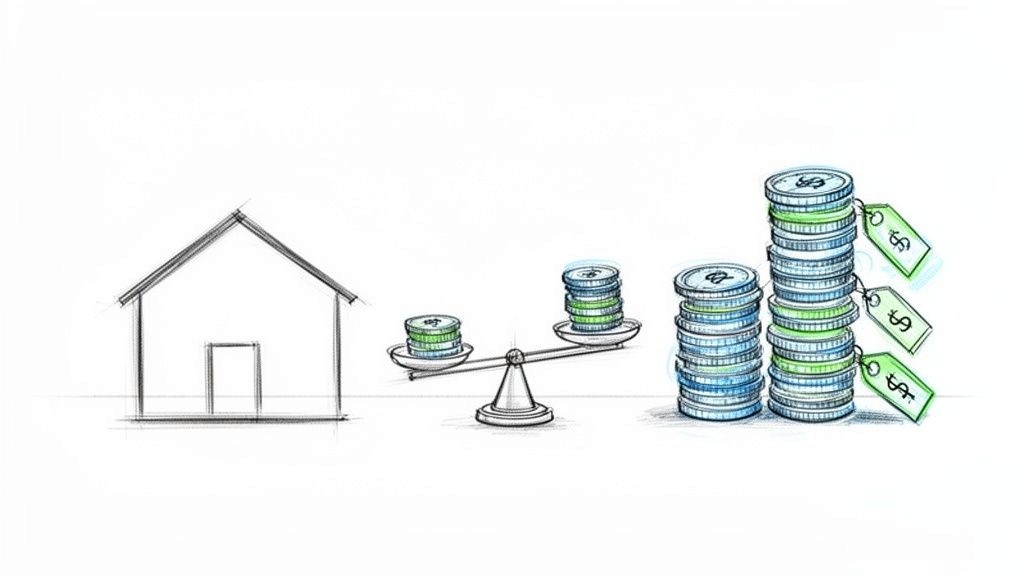
Figuring out the value of a post-concussion syndrome (PCS) claim is a bit like appraising a house. A home's price isn't based on a single factor; it's a mix of its location, size, condition, and unique features. Your PCS settlement isn't just a number pulled from a hat, either. It’s a figure carefully calculated from a collection of very specific, well-documented losses.
Because these calculations are so personal, post-concussion syndrome settlements can vary wildly. The biggest factors are the severity of your injury and how long the symptoms stick around. We've seen documented cases range from $10,000 to over $1 million. While some studies suggest an average settlement for post-concussion syndrome after a car accident is around $48,000, that number is just a generic starting point. You can find more information about how different case specifics influence compensation values.
The Building Blocks of Your Settlement Value
Your claim's value is built from several key components. Just like a real estate agent assesses a property's most important attributes, a personal injury attorney evaluates both the tangible and intangible damages you've suffered.
The most critical factors are:
Medical Expenses: This includes everything from the first ER visit and neurologist appointments to ongoing physical therapy, medications, and specialized treatments.
Lost Wages and Earning Capacity: This covers the paychecks you missed while out of work and, just as importantly, any impact on your future ability to earn a living due to lasting cognitive or physical problems.
Pain and Suffering: This is the legal term for compensating you for the physical pain, emotional distress, anxiety, and the overall loss of enjoyment of life that comes with the persistent symptoms of PCS.
A huge mistake people make is grabbing an early settlement offer before they truly understand the full scope of their injury. Post-concussion syndrome symptoms can linger, change, or even get worse over time. If you settle too soon, you lose the right to seek more compensation for future medical care or long-term suffering.
Quick Look at Post Concussion Syndrome Settlement Ranges
To give you a better sense of how this works, the table below shows how different levels of severity can affect potential settlement outcomes. Remember, these are just illustrative ranges, not guarantees. Every single case is unique.
Case Severity | Typical Symptom Duration | Potential Settlement Range (Illustrative) |
Mild | A few months | $20,000 - $80,000 |
Moderate | Six months to two years | $80,000 - $250,000 |
Severe | Permanent or long-term | $250,000+ |
Understanding these building blocks gives you a realistic idea of what your claim could be worth. If you're struggling with the aftermath of a concussion and watching bills pile up, knowing how these values are put together is the first step toward getting the full compensation you need.
Trying to navigate this complex process alone can be completely overwhelming, especially when you’re supposed to be focusing on healing. An experienced attorney can help you accurately document every loss and fight for the fair outcome you deserve. In pain? Call Caine.
Understanding Post Concussion Syndrome and Its Hidden Impact

What separates Post-Concussion Syndrome (PCS) from a regular concussion? A simple concussion is like a computer that suddenly freezes up. It's jarring and frustrating, but after a quick reboot, things usually go back to normal.
PCS is something else entirely. It’s more like a hidden virus corrupting your operating system. Your computer still turns on, but it’s plagued by glitches you can’t predict. Files take forever to open (memory loss), programs crash without warning (trouble focusing), and the whole system just feels sluggish (chronic fatigue). For someone with PCS, this isn't an analogy; it’s daily life.
The Invisible Symptoms That Define PCS
The toughest part about post-concussion syndrome is that its symptoms are often invisible. You can’t see a brain injury the way you can see a broken arm. The damage is internal, messing with how your brain processes information, manages emotions, and sees the world.
This leads to a whole host of debilitating problems that nobody else can see. These hidden symptoms are what truly define the condition, and they have a massive impact on a post concussion syndrome settlement value.
Common physical, cognitive, and emotional symptoms often include:
Chronic Headaches and Migraines: Persistent, pounding headaches that just don’t respond to normal painkillers.
Brain Fog: A feeling of mental cloudiness that makes it nearly impossible to think straight, concentrate, or even follow a simple conversation.
Emotional Instability: Sudden mood swings, irritability, anxiety, or depression that came out of nowhere after the injury.
Sensory Sensitivity: An overwhelming reaction to light and sound that can turn a trip to the grocery store into a nightmare.
Post-concussion syndrome is not "all in your head" in a psychological sense; it is a genuine neurological disorder. Its symptoms are direct consequences of how a traumatic brain injury alters brain activity and function. Proving this link is one of the most important steps in any successful claim.
Why Is Post Concussion Syndrome Often Overlooked?
A huge problem is that PCS is frequently missed right after an accident. In the chaos of an emergency room, the immediate focus is on life-threatening issues like a brain bleed. If a CT scan comes back "clear," the patient is often sent home with instructions to rest. This leaves the door wide open for PCS to develop days or weeks later.
The research confirms this is a major gap in care. Approximately 10-30% of people who suffer a head injury go on to develop these prolonged symptoms. Worse, some data suggest that over half of all concussions might be missed in the ER, meaning the real number of people at risk for PCS is far higher than we know.
This is precisely why meticulous documentation is non-negotiable. Every headache, every dizzy spell, every moment of confusion needs to be written down. This log becomes the critical evidence that paints a clear picture of your suffering for an insurance adjuster or a jury, directly connecting your daily struggles back to the accident.
Without this proof, insurers will be quick to argue your symptoms are unrelated or being exaggerated. Understanding this from day one is essential to protecting your rights and building a strong claim. If you’re struggling with these hidden injuries, you don’t have to fight this battle alone. In pain? Call Caine.
Key Factors That Drive Your Settlement Value
Figuring out the value of a post-concussion syndrome (PCS) claim isn't as simple as plugging numbers into a calculator. It’s a deep dive into how this injury has touched every single part of your life. Insurance adjusters and personal injury attorneys alike will scrutinize a handful of very specific, interconnected factors to get a full financial picture of what you've lost.
Understanding these drivers is critical. It gives you a roadmap for what needs to be documented to build a powerful case.
Economic Damages: The Tangible Costs
Economic damages are the most concrete part of any settlement because they leave a clear paper trail. Think of these as the specific, calculable financial hits you’ve taken as a direct result of your injury, essentially, the receipts from your recovery journey.
Key economic damages include:
Medical Bills (Past and Future): This goes way beyond the initial ER visit. It includes every appointment with neurologists, physical therapists, vision specialists, and mental health counselors. Critically, it also factors in the projected cost of any future care you'll need, which is absolutely vital for a chronic condition like PCS.
Lost Wages: This is straightforward compensation for every paycheck you missed because you were physically unable to work during your recovery. You'll need documentation from your employer showing your pay rate and the hours you couldn't work.
Diminished Earning Capacity: This is a huge factor in severe PCS cases. If your ongoing cognitive issues, like brain fog, memory trouble, or concentration problems, keep you from returning to your old job or climbing the career ladder, you can be compensated for that lost future income. Proving this often requires testimony from vocational experts who can map out your career trajectory before and after the injury.
Non-Economic Damages: The Human Cost
Non-economic damages are much tougher to put a number on, but they are just as real. This is compensation for the invisible, human toll of the injury, the kind of suffering that doesn't come with an itemized bill. For many people with PCS, this is where the true weight of the injury is felt.
While a receipt can prove the cost of an MRI, it can't show the frustration of no longer being able to read a book to your child or the anxiety of just walking through a noisy grocery store. Non-economic damages are what give a voice to that hidden suffering.
These damages cover:
Pain and Suffering: This compensates you for the physical pain of chronic headaches, dizziness, and other symptoms, as well as the emotional distress, anxiety, and depression that so often follow a brain injury.
Loss of Enjoyment of Life: This addresses your inability to participate in hobbies, social activities, and daily routines that once brought you joy and purpose.
Loss of Consortium: In some situations, a spouse may have a claim for the negative impact the injury has had on the marital relationship itself.
External Factors That Influence Your Settlement
Beyond your personal damages, several outside factors play a massive role in the final settlement amount. Settlement amounts for post-concussion syndrome are heavily influenced by a few key things that both medical and legal professionals will evaluate. The severity and duration of your symptoms are always the main drivers, but how clear the fault is also matters a lot when the evidence clearly points to another party being responsible; the conversation usually tips in the victim's favor. Finally, the at-fault party's insurance policy limits act as a practical ceiling on what can actually be recovered.
An experienced attorney knows exactly how to investigate these factors to build the strongest possible case, making sure every angle is covered. If you are struggling with the aftermath of a head injury and aren't sure what to do next, we are here to help. In pain? Call Caine.
How a Post Concussion Syndrome Settlement Is Calculated
Figuring out a post-concussion syndrome settlement value isn’t just pulling a number out of thin air; it’s a methodical process. It all starts by adding up your concrete financial losses, then moves on to assigning a value to the injury's immense non-financial impact on your life.
To make this crystal clear, let's walk through a quick story. Imagine a Florida driver gets rear-ended and is later diagnosed with post-concussion syndrome. The tangible, billable costs they’ve racked up are the foundation of their entire claim.
The Critical Evidence You Need to Prove Your PCS Claim

A strong post-concussion syndrome settlement value isn't just a number you ask for. It's a figure you build, meticulously, on a foundation of solid evidence. Insurance companies will pore over every detail of your case, searching for any excuse to downplay your symptoms or deny your claim altogether.
Your job, with the help of an experienced attorney, is to present undeniable proof. You must connect your injury directly to the accident and document the full, often devastating, impact it has had on your life. Think of it like building a fortress, brick by brick. Each document, report, and personal note adds another layer of support, making your claim too strong to ignore.
Your Medical Documentation Is the Cornerstone
The most powerful evidence in any PCS claim is objective medical records. These documents provide the official, third-party validation that your so-called "invisible" injury is very, very real.
This isn't just about one ER visit. It's about creating a clear and consistent medical narrative.
Diagnostic Imaging: While MRIs and CT scans often come back "normal" after a concussion, they are still vital. They rule out more severe injuries like brain bleeds, which is an important first step. More advanced imaging, such as a functional MRI (fMRI) or a DTI scan, can sometimes reveal subtle changes in brain activity or nerve pathways that standard tests miss.
Neurologist and Specialist Reports: A detailed report from a neurologist or a traumatic brain injury (TBI) specialist is absolutely critical. This expert can formally diagnose PCS and provide a professional opinion on the crucial link between your symptoms and the accident.
Therapy Records: Your recovery involves a team. Notes from physical therapists (for balance and dizziness), occupational therapists (for cognitive and memory issues), and mental health professionals (for anxiety or depression) create a comprehensive picture of how PCS disrupts your ability to function.
A common insurance tactic is to argue that because your initial ER visit didn't diagnose a concussion, your symptoms weeks later must be unrelated. Consistent medical follow-up is your best defense. It creates an unbroken timeline of care that is difficult for them to dispute.
Documenting Your Daily Struggles
Medical records tell one part of the story, but they don't capture the day-to-day reality of living with PCS. That's where your personal documentation becomes incredibly powerful.
The Symptom Journal: This is your secret weapon. A daily log detailing your headaches, brain fog, dizziness, and emotional swings provides a vivid, firsthand account of your suffering. Don't just list symptoms; describe their impact. Note how you were unable to read a story to your child because the words swam on the page, or had to leave a grocery store due to sensory overload.
Financial Records: To prove lost income, you need more than just a number. Gather pay stubs from before and after the accident. A letter from your employer confirming your time off work and your typical salary is also essential proof.
To help you get started, we've put together a checklist of the essential evidence you'll need to gather.
Essential Evidence Checklist for Your PCS Claim
Building a strong case means being organized. This table breaks down the critical documents and information you need to collect to support your post-concussion syndrome claim.
Evidence Category | Specific Examples | Why It's Important |
Medical Treatment Records | ER reports, neurologist notes, therapy session summaries, and prescription records. | Creates an official timeline of your injury and treatment to validate your symptoms. |
Diagnostic Imaging | MRI, CT, fMRI, or DTI scan reports. | Rules out other injuries and can sometimes show objective evidence of brain trauma. |
Personal Symptom Journal | A daily diary of headaches, dizziness, memory lapses, and emotional state. | Provides a powerful, firsthand account of your pain and suffering and its daily impact. |
Proof of Lost Income | Pay stubs, W-2s, tax returns, and a letter from your employer. | Quantifies your economic losses and shows how the injury affected your ability to work. |
Witness Information | Contact details for anyone who saw the accident or has observed your struggles since. | Corroborates your version of events and the changes in your post-injury life. |
Photos and Videos | Pictures of the accident scene, property damage, and any visible injuries. | Offers immediate, visual proof of the accident's severity and circumstances. |
This might seem like a lot to handle, and honestly, it is.
Building a comprehensive evidence package is a demanding task, especially when you're already dealing with the challenges of recovery. An attorney can manage this entire process, ensuring every piece of proof is collected, organized, and presented to maximize your claim's value. For more detailed guidance on this topic, you can also read our article about how to document the evidence needed for a personal injury claim in Florida.
Why an Experienced Attorney Is Crucial for a PCS Case
Trying to handle a post-concussion syndrome claim on your own is like stepping into the ring with an insurance company with one hand tied behind your back. PCS is often called an "invisible" injury for a reason; the damage doesn't always show up on a standard scan. Insurance companies know this, and they have a playbook of tactics ready to downplay your suffering or claim it has nothing to do with the accident.
Make no mistake: they are not on your side. Their goal is to protect their profits by paying out as little as possible. In this kind of fight, an experienced brain injury attorney isn't a luxury; it's a necessity. A lawyer who knows this territory anticipates these defensive moves and has a strategy to dismantle them, ensuring your voice is finally heard.
Countering Common Insurance Company Tactics
Insurance adjusters are trained negotiators. They might sound friendly and concerned on the phone, but their job is to guard their company’s bottom line. When it comes to PCS claims, they often fall back on a few predictable arguments to drive down the post concussion syndrome settlement value.
These tactics often include:
Delay and Deny: They drag their feet, hoping you'll get so frustrated and desperate that you'll eventually accept a lowball offer just to make it all stop.
Blaming Pre-existing Conditions: Did you ever have a headache before the accident? Or a history of anxiety? They'll seize on that, arguing your current symptoms are just old problems resurfacing, not the result of your recent injury.
Disputing the Injury's Severity: Since a standard MRI or CT scan often comes back "normal" after a concussion, they'll point to that "lack of objective evidence" to argue your injury isn't nearly as bad as you say it is.
Insurance companies have entire teams of lawyers and adjusters working to protect their interests. Trying to face them alone puts you at a huge disadvantage, especially while you're trying to heal from a serious brain injury. An attorney's job is to fight back and hold them accountable.
Building an Unshakeable Case
A knowledgeable attorney does a lot more than just make phone calls and send emails. They methodically build an ironclad case designed to withstand the toughest scrutiny from insurance companies and their lawyers. This involves gathering sophisticated evidence and bringing in a network of specialists who can provide critical, expert testimony.
This process includes:
Engaging Medical Experts: Your lawyer will connect with neurologists, neuropsychologists, and vocational experts. These professionals provide formal opinions that draw a clear line from the accident to your PCS diagnosis and explain, in no uncertain terms, the long-term impact on your life and ability to work.
Demonstrating the Full Impact: They help you pull everything together, your symptom journal, financial records, and statements from friends and family into a powerful narrative. This story shows the true, day-to-day cost of your injury. You can learn more about how our firm handles these complex cases by exploring our dedicated page on personal injury representation.
Ultimately, hiring an attorney is about giving yourself the best shot at securing the resources you need to heal, without the added stress of a legal battle. They handle the deadlines, the mountains of paperwork, and the aggressive negotiators so you can focus on the one thing that truly matters: your recovery.
If you're dealing with the lingering effects of a head injury and hitting a wall with the insurance company, don't go it alone. Let an experienced team build the strong case you deserve. In pain? Call Caine.
A Few Common Questions About PCS Settlements
When you're dealing with a head injury, the last thing you want is a mountain of confusing legal questions. To help bring some clarity, we've put together straightforward answers to the most common questions our clients ask about their post-concussion syndrome settlement value and what the whole process looks like in Florida.
How Long Does It Take To Settle A PCS Case?
This is the big one, and the honest answer is: it depends. A case with clear-cut evidence and a reasonable insurance company might wrap up in a few months. But that’s not the norm.
More often, cases involving serious future medical needs or fights over who was at fault have to go to court. Those can easily take one to two years, and sometimes longer. The most critical thing is to reach what we call Maximum Medical Improvement (MMI) before you even think about settling. This is the point when your doctor says your condition is as good as it's going to get.
Settling before you hit MMI is a huge gamble. You risk leaving money on the table for future treatments or long-term impacts you haven't even discovered yet. It might drag out the timeline, but waiting is absolutely essential to protect your future. For a more detailed look at what to expect, check out our guide on how long car accident lawsuits typically take.
Can I File A Claim If My Symptoms Didn't Show Up For Weeks?
Yes, absolutely. It’s incredibly common for post-concussion syndrome symptoms to pop up later. Right after an accident, your body is flooded with adrenaline, which can easily mask the initial signs of an injury. It’s only when you try to get back to your normal life that you start noticing the persistent headaches, brain fog, or mood swings.
The key is to get checked out by a doctor the second you notice something is wrong. From there, an experienced attorney can draw the clear medical line connecting those delayed symptoms back to the trauma of the accident, even if you told everyone you "felt fine" at the scene.
Under a legal concept in Florida known as the 'eggshell plaintiff' rule, the person at fault is responsible for aggravating any condition you already had. So, if the crash made a pre-existing issue worse, you are entitled to be compensated for that new level of harm.
Will A Pre-Existing Condition Mess Up My Settlement?
It can complicate things, but it definitely doesn't stop you from recovering money for your new injuries. You can bet the insurance company will try to use a pre-existing condition, like a history of migraines or anxiety, to claim your current problems aren't their responsibility.
Don't let that scare you. The law is actually on your side here. A good lawyer’s job is to carefully untangle the new injuries from the old ones or show exactly how the accident made your prior condition significantly worse. We do this by building a rock-solid case with medical proof that leaves no doubt, ensuring you get paid fairly for the specific damage the accident caused.
Trying to navigate a post-concussion syndrome claim can feel like a full-time job, especially when you should be focusing on getting better. At Caine Law, we take on the legal fight so you can put your health first. Let our experience do the work for you. In pain? Call Caine.