In Pain? Call Caine
Hit by a Drunk Driver: Florida Victim's Guide 2026

5 Min read
By: Caine Law
Share

You may be reading this from an ER waiting room, your driveway, or your phone after a sleepless night. Your car is wrecked. Your body hurts in places you didn't notice yesterday. The other driver may already be blaming confusion, bad weather, or “just one drink.”
If a drunk driver hit you in Florida, your next choices matter more than is readily apparent. The first 24 hours shape the medical record. They shape the police investigation. They shape what the insurance company can argue later. And they shape whether your case becomes a clear story of reckless conduct or a messy fight over missing evidence.
The Moment After a Drunk Driving Crash
The first moments after impact are chaos. You hear metal, glass, horns, maybe shouting, then your brain starts filling in blanks. That fog is normal. It's also why you need a simple rule: focus on safety, medical care, and documentation, in that order.
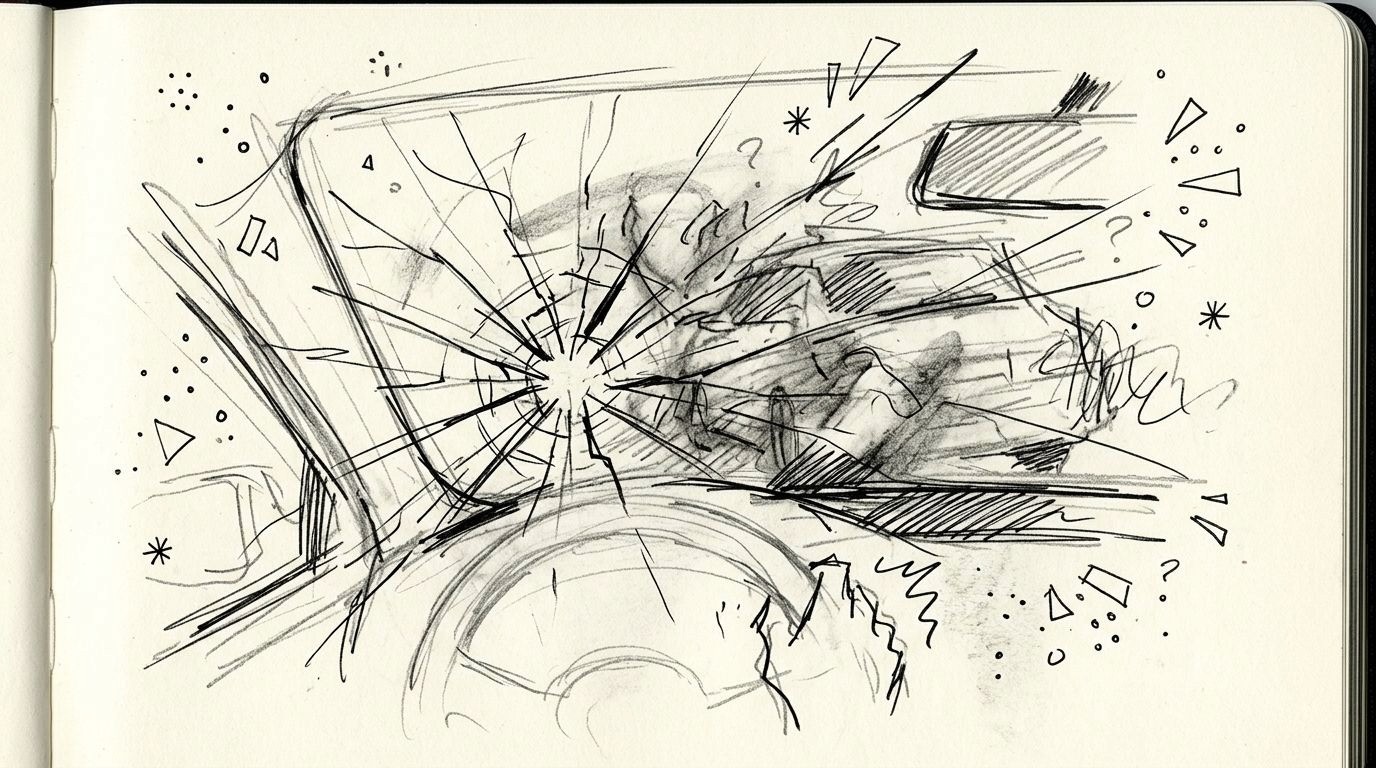
This isn't a rare fluke. According to the CDC, in 2022, there were 13,524 people killed in motor vehicle crashes involving alcohol-impaired drivers, accounting for 32% of all traffic-related deaths that year. This translates to roughly 37 people killed every day in the U.S. by drunk drivers. What happened to you is serious, preventable, and part of a recurring pattern of reckless choices on the road.
What your brain needs right now
After a violent collision, people often make the same mistake. They try to be polite. They reassure everyone they're “fine.” They apologize reflexively. They go into problem-solving mode before they've protected themselves.
Don't do that.
Your job is to slow the moment down and create a clean record of what happened. That starts with emergency response, then medical evaluation, then preserving what the scene shows before it disappears.
If you feel shaky, embarrassed, or unsure, assume your judgment is compromised by adrenaline. Follow a checklist, not your instincts.
Why the first decisions carry legal weight
In a drunk driving crash, evidence fades fast. Odor of alcohol disappears. Slurred speech gets sanitized into a bland report if nobody pushes for proper documentation. Witnesses leave. Skid marks wash away. Bruising develops later.
That's why I tell victims to act like this is both a medical event and a future legal case from the start. It is.
Your First 24 Hours: What Matters Most
Forget the long-term lawsuit for a moment. The next day is about protecting your body and protecting the record.
Start with these non-negotiables
Call 911 immediately
You need law enforcement and medical responders on scene. A DUI crash without a police response becomes harder to prove cleanly later.Accept medical evaluation
Pain can lag behind trauma. Neck injuries, back injuries, head symptoms, and internal issues don't always announce themselves at the scene.Report what you observed
If the driver smelled like alcohol, had glassy eyes, stumbled, slurred words, or admitted to drinking, tell the officer. Don't assume the officer noticed everything.Take photos if you can do it safely
Vehicle positions, debris, visible injuries, and the other car matter. If you can't do it, ask a passenger, witness, or family member.
What not to say
The most damaging statements often come from decent people trying to be cooperative.
Do not tell the other driver's insurance company what happened in a recorded statement.
They aren't calling to help you. They're looking for inconsistencies, delay arguments, and admissions they can use against you later.
Also, avoid these phrases at the scene:
“I'm okay.” That line shows up later when your MRI says otherwise.
“I didn't see them.” Insurers twist that into shared fault.
“Maybe I was going a little fast.” Never guess. Never volunteer.
“It happened so fast.” True, but useless. Stick to observed facts.
Get medical care even if you hate going to doctors
A lot of people tough it out. That's a mistake.
A same-day or next-day evaluation does two things. It detects injuries early and ties your symptoms directly to the crash. If you wait, the insurer will argue something else caused the pain, or that you weren't seriously hurt.
If you're dealing with Florida no-fault questions and how benefits may apply right after a crash, read this Florida PIP guide (2026). It's one of the first practical issues that affects treatment and billing.
Build a first-day file
Create one place for everything. Use your phone's notes app, a folder, or cloud storage. Put these items in it:
Crash details: Time, location, weather, lane position, direction of travel.
People involved: Driver name, plate, insurer, officer name, report number.
Symptoms: Pain, dizziness, nausea, numbness, confusion, headaches, sleep disruption.
Expenses: Towing, prescriptions, rides, urgent care, parking, and missed work notes.
The people who recover best legally are often the people who document best medically.
That may sound cold, but it's true. Insurance companies pay attention to records, not emotion.
Preserving Evidence to Build Your Case
Once the immediate danger passes, your role changes. You're not just a victim anymore. You're the person best positioned to preserve facts before they disappear.
Photograph, like the case, depends on it
Because it often does.
Take wide shots first. Show the entire roadway, intersection, lane markings, traffic lights, debris field, and resting positions of the vehicles. Then move closer and photograph impact points, crushed panels, shattered glass, deployed airbags, and anything inside or around the other vehicle that may support impairment.
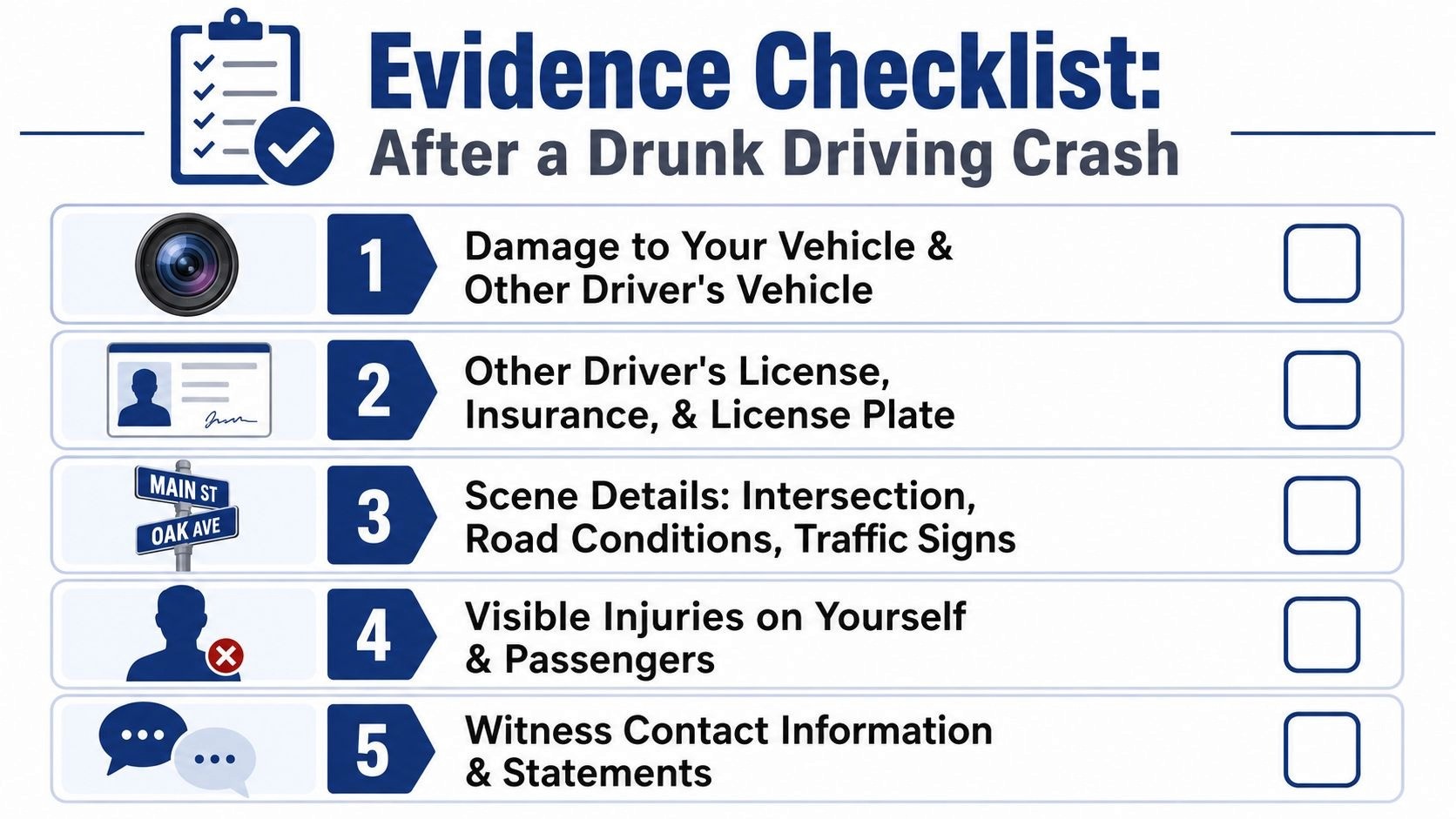
What specifically to capture
Your vehicle and theirs: Every side, interior damage, and VIN if visible.
The scene: Road signs, signals, lighting, puddles, potholes, and shoulder conditions.
Your injuries: Bruising, cuts, swelling, seatbelt marks, casts, stitches.
Identifiers: License plate, insurance card, driver's license, and company logos, if any.
Alcohol-related details: Containers, bar receipts, cups, or anything the officer may not preserve.
In Florida, as in most of the U.S., it is illegal to drive with a blood alcohol concentration of .08 grams per deciliter or higher. A BAC of .08 is a criminal DUI threshold and can be powerful civil evidence, but civil liability still requires proving negligence, causation, and damages. That legal standard matters, but your photos still matter because BAC evidence doesn't tell the whole story of how the crash happened.
Witnesses are gold
Witnesses disappear faster than physical evidence. People leave because they're late, uncomfortable, or convinced police “have it handled.”
Get names and contact information. If someone saw swerving, speeding, lane drifting, running a light, stumbling, or the driver admitting they drank, note it. Don't pressure them for polished statements. Just capture who they are and what they observed.
A witness who says, “I saw that driver drift into your lane before impact,” can shut down a lot of defense nonsense.
The police report is the foundation, not the whole house
The crash report matters. So do any DUI investigation materials, body-cam footage, dash-cam footage, citations, and any chemical test records that may follow. But don't make the rookie mistake of assuming the report will include every detail you need.
Police officers are moving fast. Reports can be incomplete. That's why your own documentation fills gaps and gives your lawyer an advantage later.
If you want a practical breakdown of what evidence belongs in a strong injury file, this guide on how to document evidence needed for a personal injury claim in Florida is worth reading.
Navigating Criminal Charges and Your Civil Claim
When a drunk driver hits you, two cases can grow out of one wreck. People confuse them all the time, and that confusion weakens their position.
The criminal case belongs to the State of Florida. Its goal is punishment. The civil claim belongs to you. Its goal is compensation.
They are related, but they are not the same
A DUI arrest may help your injury claim, but it doesn't automatically pay your medical bills, replace your wages, or compensate for your pain. The prosecutor represents the public. The prosecutor does not represent you personally.
You also don't need to sit on your hands waiting for the criminal case to finish. In many situations, your civil lawyer should start gathering evidence, preserving records, and dealing with insurers right away.
Criminal DUI Case vs. Civil Injury Claim
Aspect | Criminal Case (State of Florida vs. Driver) | Civil Claim (You vs. Driver/Insurer) |
Who brings it | The prosecutor on behalf of the state | You, through your attorney |
Main goal | Punish unlawful conduct | Recover compensation for your losses |
What must be shown | Violation of DUI or related criminal law | Liability and damages caused by the crash |
Who controls decisions | State attorney and court | You and your legal team |
Possible result | Conviction, plea, sentence, license consequences | Settlement or civil verdict |
Why it matters to you | It may create useful evidence | It directly affects your financial recovery |
How the criminal case can help your civil case
A DUI arrest, officer observations, breath or blood evidence, and a guilty plea can all strengthen your side. They help frame the collision for what it was. Reckless conduct, not a mere accident.
There's also a broader way to present the case. For your civil claim, an attorney can use national data from the Fatality Analysis Reporting System showing that 32% of 2022 crash deaths were alcohol-impaired to argue that the defendant's conduct fits a well-documented risk pattern, which can strengthen punitive damages arguments.
That matters because punitive damages aren't about reimbursing a bill. They're about punishment and deterrence when conduct crosses the line into egregious disregard for others.
Don't assume a criminal plea ends the fight
Even with a plea or conviction, insurers still try to cheapen the injury case. They may admit their driver was drunk and still dispute:
Causation: claiming your treatment isn't tied to the crash
Severity: pretending your injuries are minor
Duration: arguing you should've recovered faster
Fault allocation: suggesting you contributed somehow
That's why civil strategy has to start early. A strong file built in the first days often determines whether the defense negotiates seriously later.
If you want a related look at serious driving misconduct and how Florida victims should think about it, this felony reckless driving guide helps frame the issue.
Maximizing Your Recovery and Understanding Damages
Your case is not just about the ambulance bill, the body shop estimate, or the urgent care invoice. If that's all you claim, you leave real value on the table.
A drunk driving crash can take your mobility, sleep, confidence, focus, routine, and relationships. The law recognizes that those losses matter, but only if you document them properly.
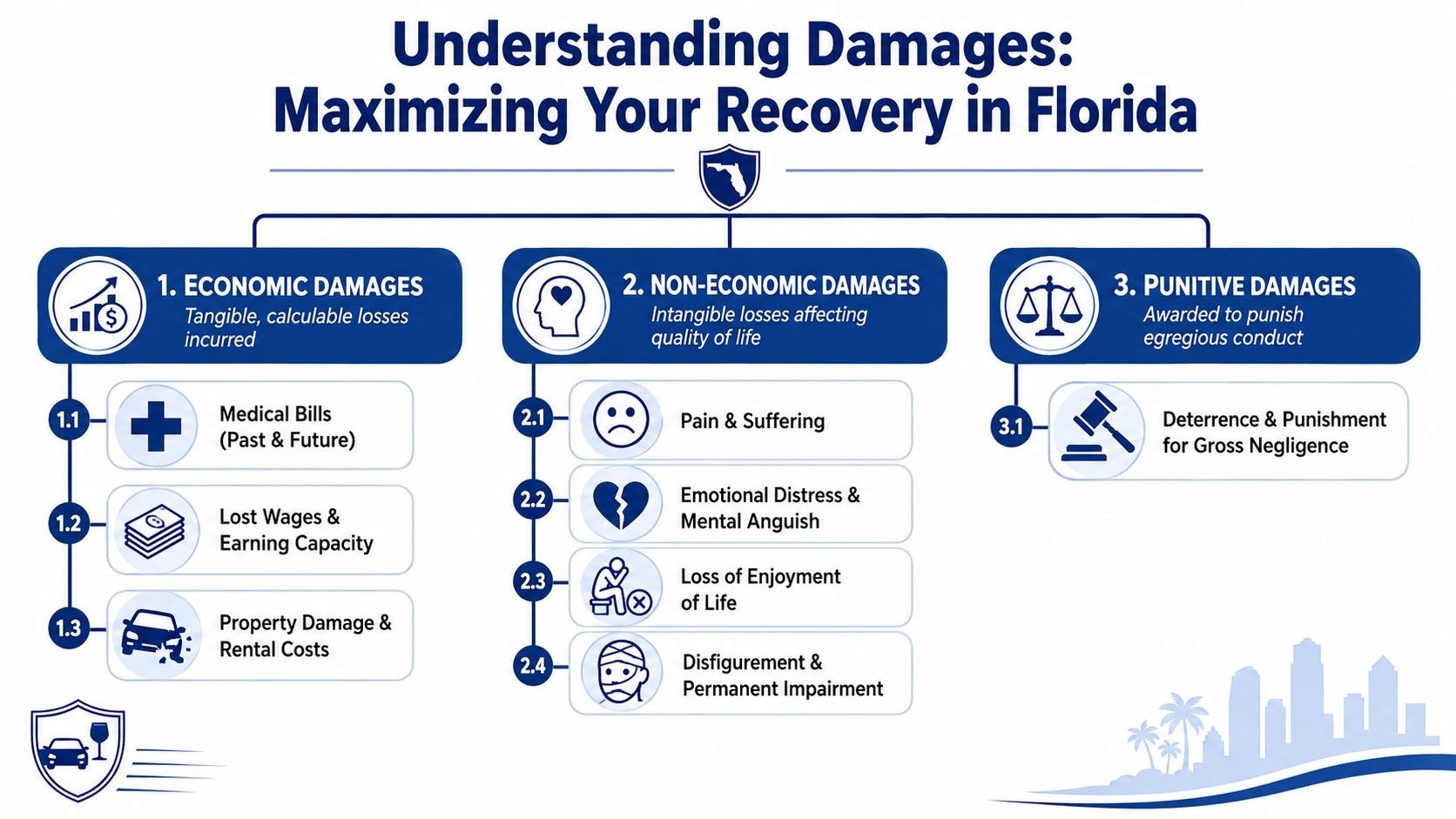
The three buckets that usually matter
Economic damages
These are the losses you can usually prove with records.
Medical expenses: ER care, imaging, follow-up appointments, prescriptions, therapy.
Income loss: missed work, reduced hours, or inability to perform the same job.
Property-related costs: vehicle damage, towing, storage, and rental expenses.
Non-economic damages
These often hold significant value because they reflect how the crash affected your daily life.
Physical pain
Emotional distress
Mental anguish
Loss of enjoyment of life
Disfigurement or lasting impairment
Many victims report panic around driving long after a crash, yet most guides don't explain how to document these symptoms.
Punitive damages
In some drunk-driving cases, punitive damages may enter the conversation because the conduct goes beyond ordinary carelessness. The point is punishment and deterrence.
How to prove the invisible part of your case
Pain is hard to see. Anxiety is even harder. That doesn't mean it's vague. It means you need proof from real life.
Keep a simple running log that records:
Daily pain levels: where it hurts, what movement triggers it, what interrupts sleep
Driving reactions: panic at intersections, fear at night, inability to pass the crash site
Functional losses: trouble lifting your child, missed gym sessions, canceled travel, and avoiding errands
Treatment notes: counseling, physical therapy, medication side effects, doctor restrictions
If your life got smaller after the crash, document exactly how.
That kind of record turns a generic pain-and-suffering claim into a credible damages presentation.
When to Hire Caine Law for Your DUI Accident Case
If a drunk driver hit you, hire counsel early. Not when the insurer stalls. Not when the lowball offer arrives. Not after you've given a recorded statement you can't undo.
Insurance companies move fast when they think you're unrepresented. They ask questions designed to lock you into half-formed answers. They review records selectively. They look for gaps in treatment, vague symptom descriptions, and any excuse to shift blame onto you.
Early representation changes the pressure
A lawyer can preserve evidence before it disappears, deal with the insurer before you say something damaging, and coordinate the civil side while the criminal case unfolds. That matters in DUI crashes because the facts often look obvious at first, then become contested in the details.
Florida injury claims also carry deadlines and fault arguments that can punish delay. Miss a deadline, and your rights can shrink or vanish. Handle communications poorly, and the defense may argue you caused part of your own harm. Those are avoidable problems if someone competent steps in early.
If a drunk driver hits you in Florida, get legal help before the insurer shapes the story for you. CAINE LAW fights for injured victims and families facing the fallout of reckless conduct on Florida roads. In pain? Call Caine.