In Pain? Call Caine
Semi Truck Accident in Florida: Your Complete Legal Guide

5 Min read
By: Caine Law
Share

A Florida semi truck accident throws people into the same brutal sequence. You're shaken, your phone won't stop ringing, your car may be totaled, and an insurance representative may contact you quickly, and even a friendly conversation can be used to evaluate or limit the claim.
That confusion isn't an accident. Trucking claims move fast because the other side knows the evidence matters. The truck's data, driver logs, dispatch records, maintenance history, and scene evidence can shape everything. If you wait, you lose your advantage.
The Aftermath of a Florida Semi Truck Accident
The first hours after a semi truck accident rarely feel clear. Many survivors are dealing with pain, adrenaline, and gaps in memory. They know something is wrong, but they don't yet know how serious the injury is, how much evidence exists, or how aggressively the trucking insurer will fight.
That last part matters. Trucking companies usually have a post-crash process in place before your vehicle even leaves the roadway. Safety staff, claims handlers, insurers, and defense counsel often start evaluating exposure immediately.
Why are these crashes different?
A crash with a commercial truck isn't just a larger car accident. The case usually involves federal safety rules, multiple corporate actors, and evidence that can disappear unless someone demands it quickly.
The medical side is different, too. People hit by a tractor-trailer often don't walk away with a sore neck and a body shop estimate. They face surgeries, lost income, pain that interrupts sleep, and a long recovery with no simple timeline.
The trucking company starts protecting itself right away. You need to start protecting yourself just as quickly.
What victims usually get wrong
People make three common mistakes in the first days:
They trust the adjuster too early. The adjuster may sound helpful, but their job is to limit what gets paid.
They delay treatment. Waiting gives the insurer room to argue you weren't badly hurt.
They assume fault is obvious. In truck cases, obvious isn't enough. Fault has to be proven with records, data, and a disciplined investigation.
A strong claim starts with control. Get medical care. Preserve what you can. Say little to the insurer. And treat every early contact from the trucking side as strategic, because it usually is.
In Florida, negligence lawsuits are generally subject to a two-year statute of limitations. That deadline is separate from the need to preserve trucking evidence quickly, so victims should not wait until the deadline is close before seeking legal guidance.
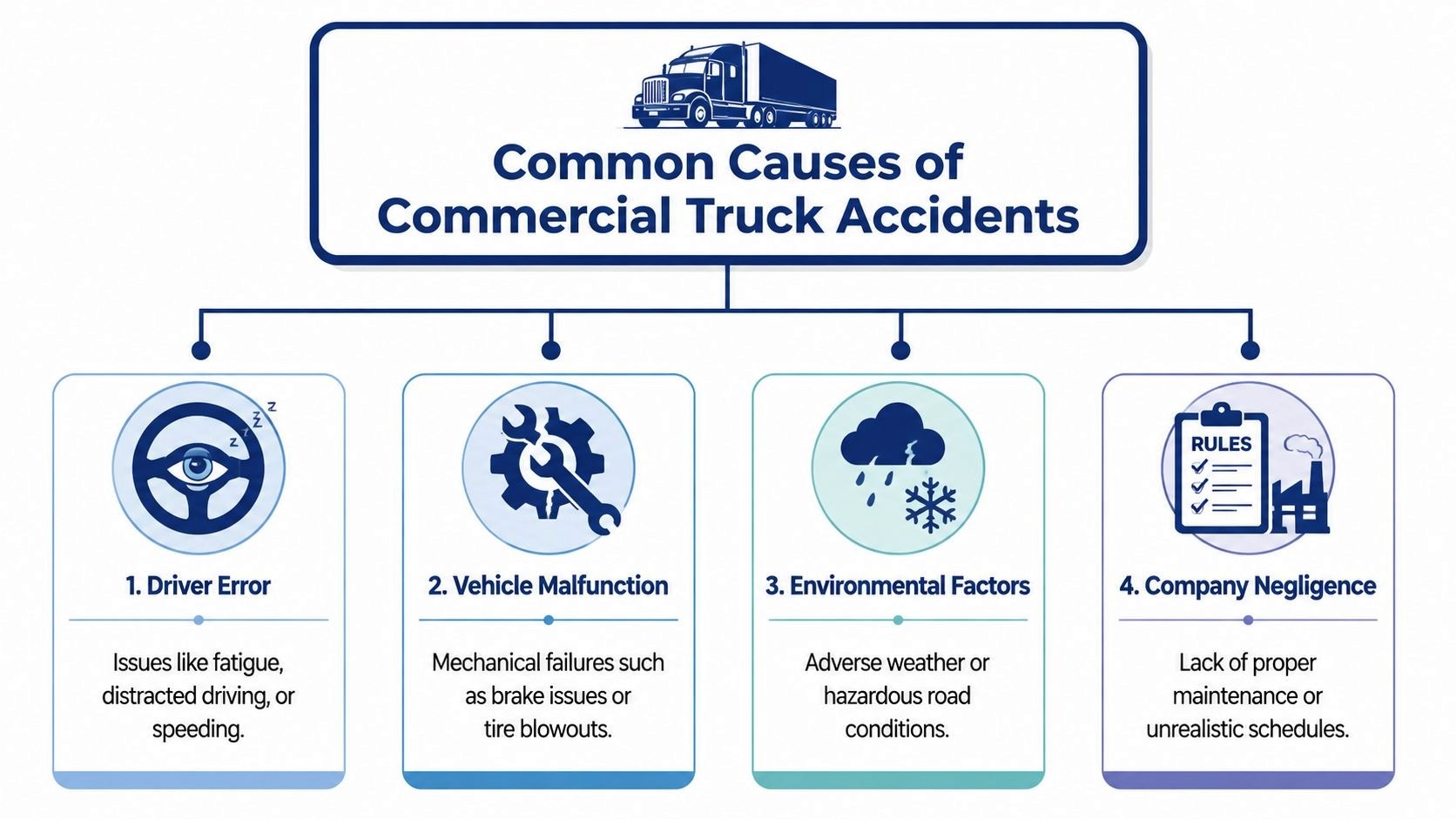
Driver error is broader than bad driving
When people hear "driver error," they think speeding or careless lane changes. That's part of it, but truck cases are often more technical.
A fatigued driver may stay awake but operate with slowed reactions. A distracted driver may miss a stopped vehicle, drift across a lane line, or fail to notice a smaller vehicle in a blind spot. A poorly trained driver may overcorrect, brake badly, or mishandle a turn with catastrophic results.
Here are the patterns I look for first:
Fatigue and hours-of-service pressure. A tired truck driver doesn't need to be asleep to cause a wreck. Missed rest, long shifts, and unrealistic schedules can destroy judgment.
Recognition failures. Inattention, distraction, and poor surveillance often lead to lane changes, rear-end collisions, and merge crashes.
Unsafe speed for the circumstances. Even legal speed can be too fast for traffic, road layout, or weather.
Poor decision-making in tight spaces. Interchanges, exits, construction zones, and urban turns create predictable risk points.
Company negligence often sits behind the driver
The driver may have made the final mistake, but the company may have created the conditions for it.
Failure by the company | Why it matters |
Poor hiring decisions | A dangerous driver shouldn't have been behind the wheel |
Inadequate training | New or weak drivers make avoidable mistakes under pressure |
Unrealistic dispatch demands | Schedules can encourage fatigue and rule-breaking |
Deferred maintenance | Worn brakes, tires, lights, and other systems become crash factors |
Road conditions and weather can contribute, but they rarely erase responsibility. Professional drivers and professional carriers are expected to anticipate those risks and operate accordingly. In most serious truck cases, the underlying cause isn't a mystery. It's a chain of preventable decisions.
Your First 72 Hours: A Critical Checklist
The initial seventy-two hours carry more weight than is commonly understood. This is when your medical record starts, key evidence can disappear, and the trucking insurer decides how hard it plans to push.
What to do immediately
Start with your health.
Get medical care now. Don't wait to see if the pain fades. Truck crashes can cause injuries that worsen after adrenaline wears off.
Report everything to the doctor. Headache, dizziness, numbness, back pain, rib pain, confusion, trouble sleeping. Put it all in the chart.
Follow the treatment plan. Missed visits get used against you.
Then protect the proof:
Photograph the scene if you can. Vehicle positions, skid marks, debris, road signs, trailer markings, license plates, and visible injuries.
Keep every document. Tow slips, discharge papers, prescriptions, repair photos, and employer notes.
Get witness information. Names and phone numbers matter. Memories fade fast.
If you need a practical framework for preserving proof, this guide on how to document evidence for a Florida personal injury claim is worth reading early.
What not to do
This part is where people damage strong cases.
Don't give a recorded statement to the trucking insurer. They aren't collecting your side for fairness. They're collecting language they can use later.
Don't guess. If you don't know speed, timing, or sequence, say you don't know.
Don't minimize your injuries. "I'm okay," said at the wrong time can show up later in a claim file.
Don't post about the crash online. Photos, comments, and check-ins can all be twisted.
If an adjuster calls, be polite and brief. Confirm your identity, say you're receiving treatment, and decline a recorded statement until you've had legal advice.
Your short timeline
Time window | Priority |
Same day | Emergency care, police report, photos, preserve basics |
Next day | Follow-up treatment, notify your insurer, and organize paperwork |
Within 72 hours | Secure records, identify witnesses, stop direct insurer pressure |
The goal isn't to do everything perfectly. It's to avoid the mistakes the defense wants you to make.
Unraveling Liability and Proving Fault
In a standard car wreck, fault may rest with one driver and one insurer. In a semi truck accident, that approach is usually too shallow. Liability often spreads across several parties, and each may point the finger at the others.
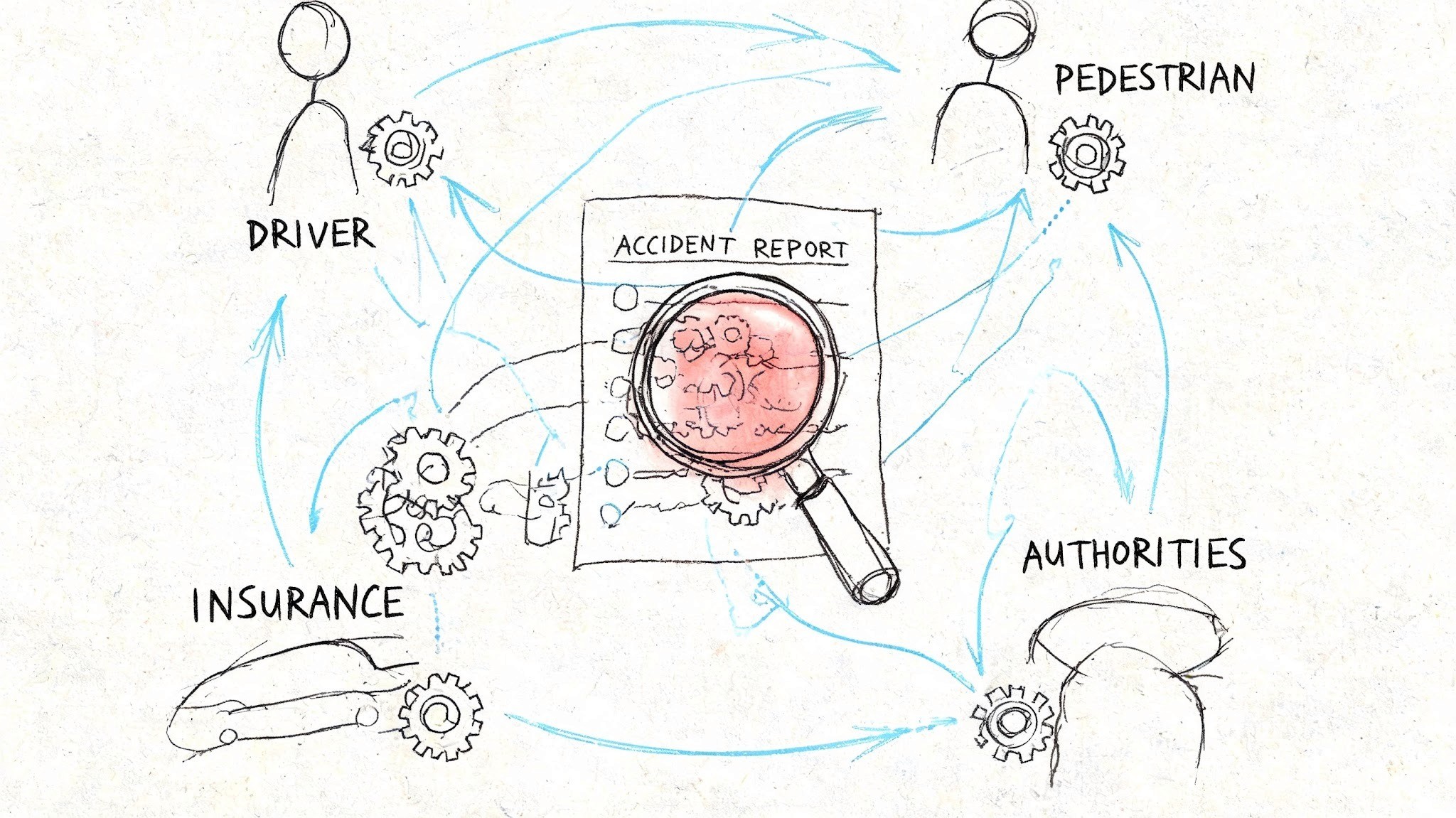
Who may be legally responsible
The truck driver is the obvious starting point. But that's not where a serious investigation should stop.
Potentially responsible parties can include:
The motor carrier. The company may be responsible for hiring, training, supervision, scheduling, and maintenance failures.
A maintenance contractor. Bad inspections and bad repairs can put dangerous equipment on the road.
A manufacturer. Defective brakes, tires, or safety components can give rise to product liability claims.
Other companies involved in the trip, such as a broker, shipper, trailer owner, cargo loader, or dispatch-related entity, may matter depending on the facts and their legal duties.
The evidence that proves the case
Truck cases are won with records, not assumptions.
Evidence | What it can show |
Driver logs and electronic records | Fatigue, rest violations, route timing |
Black box or onboard data | Speed, braking, throttle, sudden events |
Maintenance files | Deferred repairs, repeat defects, and inspection failures |
Post-crash inspections | Mechanical issues and compliance problems |
Dispatch and internal messages | Delivery pressure and company expectations |
This is why quick action matters. Some of this material is controlled by the very people who may be at fault.
How insurers try to muddy the fault
Insurance carriers for trucking companies often use predictable defenses. They argue your lane position caused the crash. They claim visibility was poor. They say the driver had no time to react. They may even frame a maintenance issue as an unforeseeable breakdown.
A proper investigation tests those claims against the hard evidence.
The first story you hear after a truck crash is rarely the final truth. The data usually tells a fuller story.
If the truck changed lanes, the mirror setup, blind spots, driver attention, and telematics matter. If the truck rear-ended you, braking data and following distance matter. If the truck rolled or jackknifed, vehicle condition, speed, loading, and driver input all matter. Proving fault means connecting those facts into one clear argument. Somebody broke a safety rule, and that failure caused your injuries.
Calculating Your Full and Fair Compensation
A truck accident claim involves more than just a collection of medical bills. If the insurer describes your case in those terms, they are attempting to limit it before the full extent of the damage is understood.
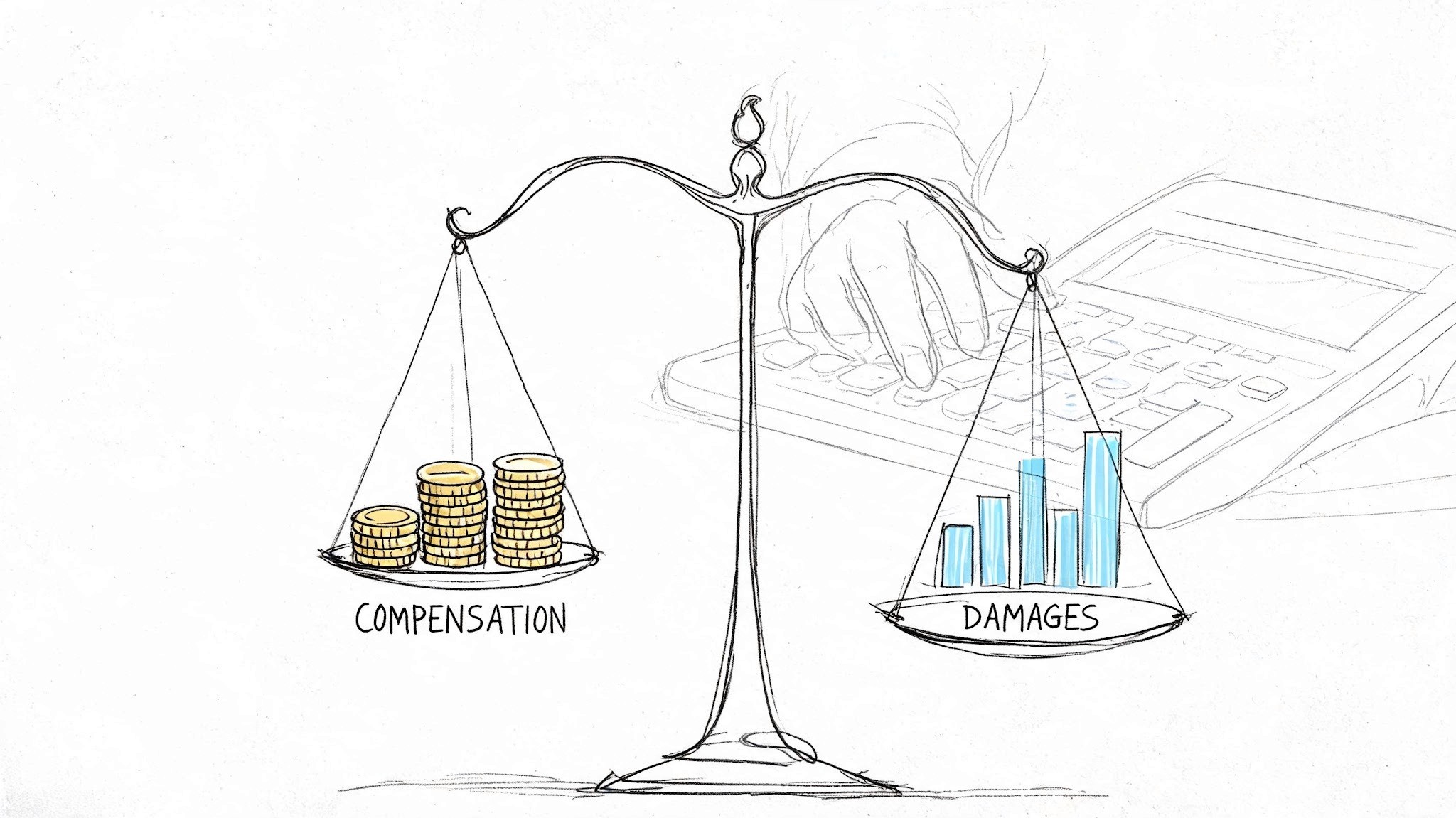
Economic losses are the easy part to see
Economic damages are the out-of-pocket and projected financial losses tied to the crash.
They often include:
Medical expenses such as emergency care, imaging, surgery, rehabilitation, medication, and future treatment
Lost wages from missed work during recovery
Reduced earning ability if your injuries limit what you can do long-term
Property damage and related costs tied to the wreck and its aftermath
Florida PIP benefits can apply regardless of fault, but there are strict rules, including the 14-day initial-treatment requirement. PIP does not replace a liability claim against a negligent truck driver or trucking company when injuries and damages exceed available no-fault benefits.
Non-economic damages are often the real center of the case
Pain changes daily life. So does anxiety, disrupted sleep, physical limitation, scarring, loss of independence, and the simple fact that normal routines may no longer feel normal.
These harms are harder to calculate, but they are no less real.
What a fair value should account for
Ask whether the claim value reflects the life you have now.
Daily pain burden matters if ordinary tasks now hurt.
Future treatment matters if doctors expect ongoing care.
Work disruption matters if you can't return to the same role or schedule.
Permanent change matters if the injury leaves lasting limits or visible damage.
A fast settlement is often a cheap settlement. Don't value a truck case before your medical picture is reasonably clear.
The insurer wants closure at the lowest number it can justify. You need a valuation that reflects the full arc of the injury, not just the first stack of bills.
How CAINE LAW Fights for Florida Truck Accident Victims
Truck cases are defense-driven from the start. The carrier has procedures. The insurer has scripts. The lawyers on the other side know exactly how to delay, narrow, and dispute a claim. If your legal team doesn't understand that playbook, you're already behind.
The advantage of defense-side insight
CAINE LAW approaches truck litigation with a useful perspective. Daniel Caine spent part of his early career working on the defense side. That's valuable because insurance tactics are easier to counter when you've seen them from the inside.
That background changes how a case gets built:
Early evidence preservation comes first, not later
Communication with insurers gets controlled immediately
Weak defense themes get identified before they gain traction
Trial preparation starts early enough to create settlement advantages
The firm also provides a deeper resource for victims who want to learn more about the process in this truck accident lawyer guide to their rights after a crash.
What does that mean for an injured client?
If you've been hit by a commercial truck, you don't need a law firm that treats the case like a routine auto claim. You need one that assumes records may disappear, fault will be disputed, and early offers will be designed to buy peace cheaply.
CAINE LAW's approach is built around that reality. The firm takes over contact with insurers, investigates aggressively, and prepares claims with litigation in mind. That's how you force serious evaluation from the other side.
Insurance companies pay attention when they know the victim's lawyer is prepared to prove every part of the case.
That matters in Florida, where interstate traffic, commercial volume, and complex crash patterns make truck litigation anything but simple.
Frequently Asked Questions
Question | Answer |
Should I talk to the trucking company's insurance adjuster? | Keep it brief and don't give a recorded statement. Basic identification is fine. Detailed discussion about fault, injury, speed, or what you "think happened" can hurt your case. |
What if I think I may have been partly at fault? | Don't assume you're responsible based on the shock of the moment. Truck cases require a full investigation. Lane position, braking data, driver logs, maintenance issues, and company conduct may dramatically change the picture. Florida follows a modified comparative negligence rule. If you are found partly responsible, your damages may be reduced by your percentage of fault. If you are found more than 50% at fault, you generally cannot recover damages in a negligence case. |
Why is an early settlement offer risky? | Because early offers usually come before the full medical picture is known. Once you settle, you generally can't go back for more because your treatment took longer or your injuries turned out to be worse than expected. |
What evidence matters most in a semi truck accident case? | The key pieces often include the police report, scene photos, witness information, medical records, driver logs, onboard data, maintenance records, and company communications tied to the trip. |
How soon should I get legal help? | Quickly. Trucking cases involve evidence controlled by the other side, and that evidence needs to be preserved early. Delay gives the defense room to shape the story before your side is ready. |
Can parties other than the driver be liable? | Yes. Depending on the facts, the trucking company, maintenance provider, manufacturer, or other commercial actors may share responsibility. |
It is normal to feel uncertain about whether you have a legal case. Many individuals are not specifically seeking a lawsuit. Instead, they want a clear answer, a method to relieve the current pressure, and a strategy to move forward that safeguards their medical recovery and financial stability.
If a Florida semi truck accident has turned your life upside down, CAINE LAW is ready to help you protect the evidence, deal with the insurers, and pursue the compensation you deserve. In pain? Call Caine.