In Pain? Call Caine
Can You Sue Someone for Emotional Distress? Key Florida Rules & Steps

5 Min read
By: Caine Law
Share

Yes, you can sue someone for emotional distress in Florida, but it’s rarely a simple, standalone claim.
Think of it this way: when you’re in an accident, the physical injuries, the broken bones, the cuts, the bruises are obvious. But what about the invisible wounds? The anxiety that makes your heart pound every time you get in a car, the nightmares that won't go away, or the constant stress that follows you long after the physical pain has faded. The law recognizes these as very real injuries.
Most of the time, compensation for this kind of emotional suffering is pursued as part of a larger personal injury case where a physical injury also happened.
Can You Sue Someone for Emotional Distress? The Rules of the Road
When someone else’s wrongful actions leave you with more than just physical scars, the legal system provides a path to hold them accountable. That lingering fear or trauma isn't just something you have to live with, and it's a form of damage that deserves justice.
But simply feeling upset or angry isn't enough to file a lawsuit. To get compensation, you have to meet specific legal standards. Your situation will almost always fall into one of two categories, and knowing which one applies is the first critical step.
Two Paths to an Emotional Distress Claim
The law separates these claims based on the at-fault person's behavior, whether they were just careless, or were they intentionally trying to cause harm?
Negligent Infliction of Emotional Distress (NIED): This is the most common path. It happens when someone's carelessness (negligence) causes an accident that hurts you both physically and emotionally. Think of a distracted driver causing a serious collision.
Intentional Infliction of Emotional Distress (IIED): This is much rarer and harder to prove. It’s reserved for situations where someone’s actions were not just careless but truly outrageous and deliberate, done with the specific goal of causing you severe emotional turmoil.
While your emotional pain is deeply personal and valid, the legal system requires it to be framed within established rules. Proving your case means showing a clear link between the defendant's actions and the tangible impact on your mental well-being. Before pursuing a claim, it's helpful to understand the key factors a court in Florida will look at.
Key Factors for an Emotional Distress Claim in Florida
Factor | Brief Explanation |
The "Impact Rule" | In most cases, you must have suffered a physical impact that also caused a physical injury. |
Type of Conduct | Was the other party's action negligent (careless) or intentional (deliberate and outrageous)? |
Severity of Distress | The emotional harm must be severe, not just temporary upset or embarrassment. |
Link to Physical Injury | For NIED claims, the emotional distress must be directly connected to a physical injury. |
Understanding these points is the foundation for building a strong and valid claim in Florida.
Florida's "Impact Rule"
Here in Florida, most claims for negligent emotional distress are governed by a very specific standard called the "impact rule."
The rule states that to recover damages for emotional suffering, you generally must have suffered a physical impact that also resulted in a physical injury. For example, the impact of a car crash that gives you a concussion and also leads to crippling anxiety would qualify. The emotional trauma must stem directly from the physical event.
This rule exists to help the courts separate claims for genuine, severe distress from cases of temporary upset. It creates a clear benchmark, tying the invisible injury of emotional pain to a visible, physical harm. While a few narrow exceptions exist, they are rare and apply only in very specific circumstances.
Navigating these complexities is exactly why getting guidance from an experienced attorney is so important. If you've been hurt, you can learn more about how a personal injury lawsuit works to see how these elements fit together.
Ultimately, whether your suffering was caused by someone’s recklessness or their malicious behavior, the law provides a potential remedy. In pain? Call Caine.
Understanding Negligent vs. Intentional Emotional Distress
When you're dealing with the fallout of a traumatic event, the emotional scars can be just as deep as the physical ones. So, can you sue someone for emotional distress that they cause? The answer really depends on how it happened.
The law draws a pretty clear line between harm caused by someone's malicious, intentional act and harm caused by simple carelessness. This split creates two very different legal paths, and understanding which one applies to your situation is the first step toward getting justice.
Intentional Infliction of Emotional Distress (IIED)
Let’s start with the more extreme (and less common) category. Imagine a person playing a cruel "prank" by telling you a close family member has died, just to watch your reaction. That’s not just a bad joke; it’s a deliberate act of cruelty meant to cause severe pain.
This is what the law calls Intentional Infliction of Emotional Distress (IIED). To win this type of claim, you have to prove the other person's behavior was extreme and outrageous. This is a very high bar to clear.
We’re not talking about simple insults, hurt feelings, or offensive comments. The conduct has to be so shocking and vile that any member of a civilized society would consider it completely intolerable.
Think of it as behavior that goes far beyond any acceptable bounds of decency. A few examples that might meet this standard include:
A Campaign of Terror: Relentless stalking or credible threats of extreme violence designed to keep you in a state of fear.
Calculated Public Humiliation: Deliberately leaking highly sensitive, private information about someone to ruin their reputation and cause maximum emotional damage.
Gross Mishandling of a Loved One's Remains: Actions by a funeral home, for example, that show a profound and shocking disrespect for the deceased.
Because the standard of proof is so high, IIED claims are tough and relatively rare. You need compelling evidence that the person acted with malicious intent to cause you severe emotional harm.
Negligent Infliction of Emotional Distress (NIED)
Now, let's look at a much more common scenario. A driver is glued to their phone, blows through a red light, and T-bones your car. You're left with a broken arm and a concussion. In the weeks and months that follow, you’re plagued by anxiety, have flashbacks of the crash, and develop a paralyzing fear of getting behind the wheel.
This is Negligent Infliction of Emotional Distress (NIED). In Florida, this is the most common path for recovering damages for emotional suffering, and it’s almost always tied to a personal injury case.
The key difference here is intent. The driver didn't mean to cause you emotional trauma. Their carelessness (negligence) caused an accident that resulted in both physical and emotional injuries. In Florida, these claims are governed by what’s known as the "impact rule."
As explained above, this rule essentially says your emotional suffering must stem from a physical impact that also caused you a physical injury. The mental anguish is seen as a direct consequence of the physical trauma.
This chart helps break down the two main paths for an emotional distress claim.
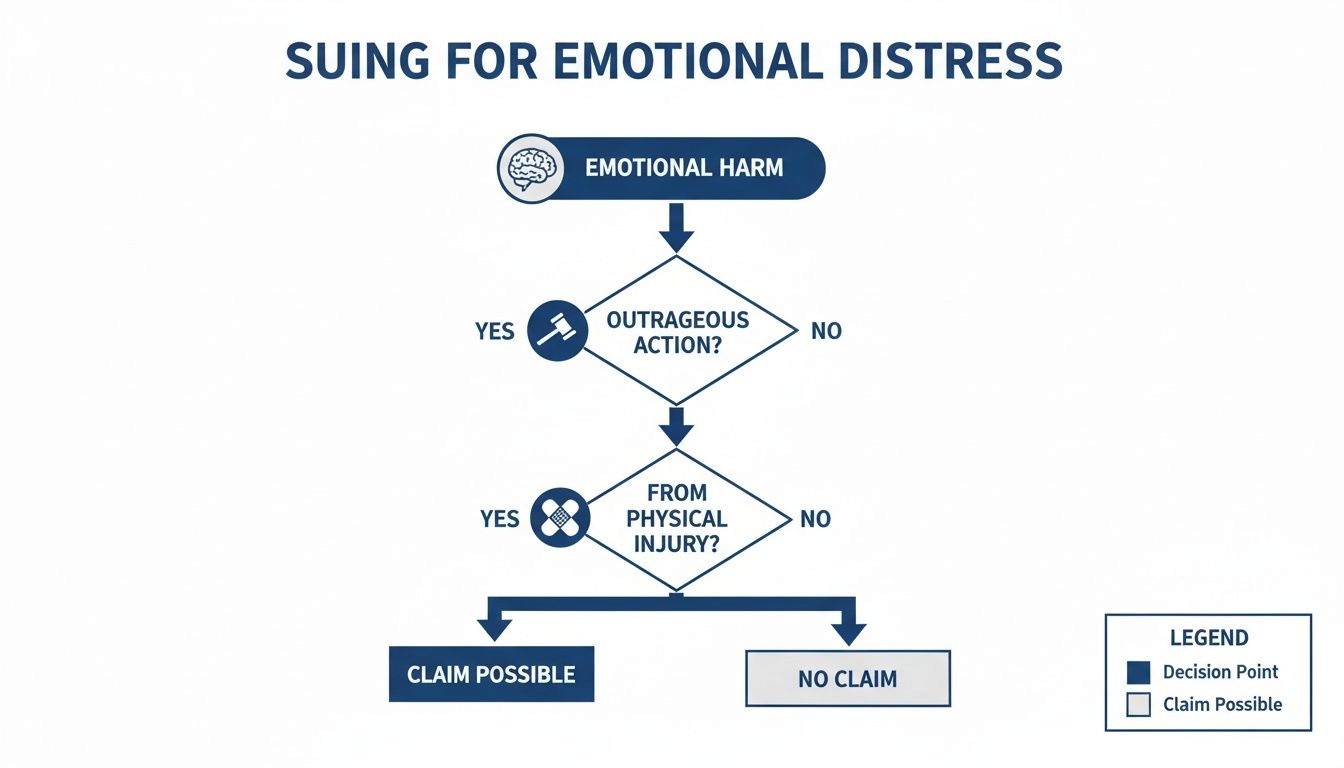
As you can see, the road ahead really depends on whether the harm came from outrageous, intentional actions or from a physical injury caused by someone else's negligence. It’s a critical distinction that shapes the entire legal strategy.
Knowing which type of claim you have is essential because the evidence you'll need and the arguments you'll make are completely different. An experienced attorney can analyze the specifics of your case to figure out the most viable path forward. If you're struggling after an accident, don't just assume your emotional pain is a burden you have to carry alone. In pain? Call Caine. Contact us today at 786-206-8726 to schedule your free consultation and receive the legal support you deserve.
How to Prove Your Emotional Distress Claim
To successfully sue someone for emotional distress, you have to do more than just tell a judge you’re in pain. You have to show them. It’s about translating your very real, personal suffering into objective, credible evidence that a court can understand and act on.
This means building a solid bridge between what the defendant did and the tangible, negative impact it’s had on your mental and emotional well-being. It’s not just about telling your story; it's about backing it up with proof that leaves no room for doubt.
Medical and Professional Documentation
The absolute cornerstone of any emotional distress claim is professional documentation. Medical records are your most powerful tool because they offer unbiased, expert validation of your suffering.
This kind of evidence is what establishes a formal diagnosis and a clear history of treatment. It proves your distress was severe enough that you had to seek professional help, which gives your claim serious weight.
Key pieces of medical evidence often include:
Records from Therapists or Psychologists: These are critical. They can contain formal diagnoses for conditions like Post-Traumatic Stress Disorder (PTSD), anxiety, or depression that are directly linked back to the incident.
Physician's Notes: Don't overlook your family doctor. Their notes can show how your mental state is impacting your physical health, causing things like high blood pressure, insomnia, or digestive problems.
Pharmacy Receipts: A simple list of prescriptions for anxiety, depression, or sleep aids provides a concrete record of your ongoing treatment.
Psychological Evaluations: A formal evaluation from a mental health professional gives an in-depth, expert assessment of your psychological state and what caused it.
Personal and Anecdotal Evidence
While professional records are vital, your own personal account and what those around you have noticed adds the human element. This is the evidence that paints a vivid picture of how your day-to-day life has been turned upside down, making the abstract concept of "distress" feel real and relatable.
Your own words can be incredibly powerful. Keeping a personal journal is one of the best ways to track your emotional journey. Writing down your daily struggles, your feelings, and the specific ways your life is now limited creates a real-time record that's tough to argue with later. Our guide on how to document evidence needed for a personal injury claim in FL has more tips on how to do this effectively.
Sometimes, to help quantify the impact, therapists and legal pros use tools like the Subjective Units of Distress (SUDS) Scale to measure the intensity of what you're feeling.
Testimony from Your Community
What other people have seen can be just as important as what you’ve felt. Testimony from friends, family, and even coworkers can back up your story and confirm the changes they’ve seen in your personality and behavior. They can speak to the "before and after."
Family Members: Can they talk about changes in your mood, your sleep, or how you no longer participate in family activities?
Friends: Have they noticed you withdrawing from social events or giving up hobbies you once loved?
Coworkers or Supervisors: They can provide objective evidence about a drop in your work performance, trouble concentrating, or an increase in absences.
When you combine professional diagnoses with your own journal and statements from people who know you, you build a comprehensive, multi-layered case. This approach is essential for showing the true extent of your suffering and getting the compensation you deserve. If gathering all this feels overwhelming, you don't have to do it alone. In pain? Call Caine.
Calculating the Value of Emotional Distress Damages
How does the legal system put a dollar amount on something as deeply personal as anxiety, fear, or grief? While no amount of money can truly erase trauma, compensation is designed to acknowledge your suffering and give you the resources you need to heal. This is where the challenge of calculating emotional distress damages comes into play.

Unlike a medical bill or a lost paycheck, emotional pain doesn't come with a price tag. Because of this, courts and insurance companies have to rely on established methods to land on a fair figure. Emotional distress is a perfect example of non-economic damages and losses that aren't easily measured in dollars and cents.
There are two primary ways attorneys and courts translate your suffering into a monetary value.
The Multiplier Method
The most common approach you'll see is the Multiplier Method. The whole calculation starts with the tangible, provable financial losses you've suffered because of the incident. We call these economic damages.
The process is pretty straightforward:
Add Up Economic Damages: First, your attorney will tally up all your concrete financial losses. This includes every medical bill, therapy session, prescription, and any lost wages from being unable to work.
Apply a Multiplier: That total is then multiplied by a number, usually somewhere between 1.5 and 5. The specific multiplier used depends entirely on how severe your injuries are and the real-world impact they've had on your life.
A minor injury with a quick recovery might get a multiplier of 1.5. But a catastrophic accident that leaves someone with a permanent disability, chronic pain, and severe PTSD would absolutely justify a much higher multiplier, like a 4 or 5.
Let’s look at an example: Imagine you were in a serious car accident, and your economic damages add up to $50,000 ($40,000 in medical bills + $10,000 in lost wages). Because of the crash, you now suffer from severe PTSD and need ongoing therapy. Your lawyer successfully argues for a multiplier of 4 because the emotional trauma is so profound and long-lasting.
Calculation: $50,000 (Economic Damages) x 4 (Multiplier) = $200,000
In this scenario, $50,000 covers your direct financial losses, and an additional $150,000 is awarded specifically for your emotional distress and suffering.
The Per Diem Method
"Per diem" is just Latin for "per day." This method assigns a daily dollar amount to your suffering and multiplies it by the number of days you were impacted.
The daily rate is often based on your daily earnings, working from the idea that enduring pain is at least as difficult as going to work every day. This approach is most often used for injuries that have a clear recovery timeline.
Let's go back to our car accident example to see how this works.
Here’s how Per Diem might look: You were unable to work for six months (about 180 days) while you recovered. Your attorney argues for a daily rate of $200 to compensate for your pain, anxiety, and limitations during that time.
Calculation: 180 (Days of Suffering) x $200 (Daily Rate) = $36,000
This amount would then be added to your economic damages.
For injuries that are long-term or permanent, the multiplier method is often the better fit. It’s not hard to see why. The multiplier can turn a $50,000 economic loss into a total settlement ranging from $75,000 to $250,000, while per diem covers the day-to-day struggle during recovery.
An experienced attorney knows exactly how to build a compelling case to argue for the highest possible multiplier or daily rate. They'll use your medical records, therapist's notes, and your own testimony to paint a clear picture of what you've endured and justify the number that truly reflects your suffering. Getting this calculation right is a critical part of making sure you get the justice you deserve.
Real-World Examples of Emotional Distress Cases
Legal talk can feel abstract and distant, but emotional distress is an intensely personal, very real experience. Let's ground these legal ideas in situations you might actually encounter. Looking at concrete examples helps bridge that gap between legal theory and real life, so you can see if your own experience fits what the law considers a genuine, compensable injury.
These scenarios show how an emotional distress claim isn't usually a standalone lawsuit but a critical part of a larger personal injury case. It’s the law’s way of saying your suffering matters.
Car Accidents: The Lingering Trauma
Imagine you’re stopped at a red light when a driver, glued to their phone, plows into you from behind. The physical injuries are obvious: whiplash, a broken arm, maybe some deep bruises. But long after the bones heal, the emotional fallout sticks around.
You start having nightmares about the crash. The simple act of getting behind the wheel, something you used to do without a second thought, now triggers a full-blown panic attack with shortness of breath and a cold sweat. This is a classic case of Negligent Infliction of Emotional Distress (NIED), where the emotional trauma is a direct result of the physical impact and injuries.
In this situation, your personal injury claim would demand compensation for more than just your medical bills and time off work. It would also cover the ongoing anxiety and PTSD that have fundamentally changed how you live your life. That fear and panic are real damages caused by the other driver's carelessness.
Premises Liability: Slips, Falls, and Lasting Fear
Picture this: you're doing your weekly shopping in a Florida grocery store, and your feet go out from under you. You’ve slipped on a puddle of water with no "wet floor" sign in sight. The fall fractures your hip, leading to surgery and a long, painful road of physical therapy. But it’s not just the physical pain you’re dealing with. You’ve developed a deep-seated fear of public places, your eyes constantly scanning the floor, terrified of falling again. This new anxiety keeps you isolated at home.
Negligent security or premises liability cases often include claims for emotional distress. With over 1 million emergency room visits in the U.S. each year from falls, these lawsuits are unfortunately common, and the emotional damages can dramatically increase the value of a settlement.
The emotional piece of the puzzle here is just as significant as the broken bone. The store’s negligence didn't just break your hip; it broke your sense of safety and independence, and that is a harm worth fighting for.
Wrongful Death: The Profound Grief of Loss
Now, consider a family completely shattered after losing a loved one in an accident caused by a drunk driver. While no amount of money could ever bring that person back, a wrongful death lawsuit is one of the only ways to hold the negligent driver accountable for their devastating actions.
Here in Florida, the law allows surviving family members to seek damages for their own mental pain and suffering. This is a legal acknowledgment of the profound grief, the loss of companionship, and the emotional devastation they're forced to endure. In these cases, the emotional distress claim is not just a part of the lawsuit; it's often the very heart of it.
Whether the harm stems from a car crash, a dangerous property, or an irreversible loss, these examples show that our legal system has a framework for addressing the invisible wounds. If you see a reflection of your own story in these scenarios, you don't have to carry that burden by yourself. In pain? Call Caine.
Filing Deadlines You Cannot Afford to Miss
After an accident, all you can think about is getting better. That’s completely understandable. But the legal world runs on a strict clock, and waiting too long to act can mean losing your right to compensation forever. This unforgiving deadline is called the statute of limitations.
Think of it as a countdown that starts the second you’re injured. Here in Florida, the law gives you a very specific window of time to file a lawsuit. If you miss it even by a day, your claim is likely barred for good. It doesn't matter how strong your case is or how badly you were hurt.
What is the Statute of Limitations in Florida?
For most personal injury cases, including emotional distress claims tied to physical harm, Florida has always had a set timeframe. However, the state legislature recently changed this period, so the exact deadline that applies to your case depends on when your injury happened.
This recent change makes figuring out your exact filing deadline tricky. The consequences of getting it wrong are devastating.
The statute of limitations isn't a suggestion; it's a hard stop. The court won’t make an exception just because you didn't know the law or delayed in seeking legal advice.
Acting fast is about more than just beating a legal deadline, though. It’s also about building the strongest case possible. Evidence gets lost, memories fade, and witnesses move away. The sooner you bring an attorney on board, the better your chances are of locking down the proof you need to win. You can learn more about what to do right away by reading our guide on what to do when accidents happen.
Don't gamble with your right to compensation by waiting. An experienced attorney can pinpoint the correct statute of limitations for your claim and take immediate action to protect your rights. Your financial and emotional recovery could depend on it. In pain? Call Caine.
Answering Your Questions About Emotional Distress Lawsuits
Even after getting the basics down, you probably still have some specific questions buzzing around in your mind. That's completely normal. The law around emotional distress can feel complicated and, well, personal.
Let's tackle some of the most common questions we hear from clients. Think of this as clearing the air so you can understand what a potential claim might look like in the real world.
Can I Sue Someone for Emotional Distress if I Wasn't Physically Hurt?
This is the big one, and the answer in Florida can be frustrating. Generally, the answer is no. Our state follows what's called the "impact rule," which means that for most negligence cases, you have to suffer some kind of physical impact that leads to a physical injury. The emotional distress has to flow from that physical harm.
There is one major exception, but it's a tough one: Intentional Infliction of Emotional Distress (IIED). To win an IIED claim, you have to prove the other person's behavior was not just wrong, but utterly outrageous and beyond all bounds of human decency. The bar is set incredibly high, which is why these claims are quite rare.
How Much Is My Emotional Distress Claim Actually Worth?
There's no simple calculator for this. Unlike a hospital bill with a clear dollar amount, your suffering is unique to you. The value of your claim is tied directly to the specific facts of your situation and how well you can document what you've been through.
When we build a case, we often look at a couple of methods to put a number on it:
The Multiplier Method: We take your concrete economic damages (like medical bills and lost wages) and multiply them by a number, usually between 1.5 and 5. A higher multiplier is used for more severe, life-altering trauma.
The Per Diem Method: This approach assigns a daily dollar amount to your suffering, running from the day of the incident until you reach what doctors consider your maximum recovery.
Ultimately, the final figure will depend on things like how bad your initial injury was, what your long-term prognosis looks like, and how profoundly this has impacted your everyday life.
What's the Difference Between "Emotional Distress" and "Pain and Suffering"?
You'll hear lawyers use these terms a lot, and while they're related, they aren't exactly the same thing.
Think of "pain and suffering" as the large umbrella term that covers all the non-economic ways an accident has harmed you. It includes both the physical pain from your injuries and the mental and emotional fallout.
"Emotional distress" is a specific slice under that umbrella. It refers only to the psychological harm, such as anxiety, depression, sleepless nights, fear, or PTSD that follows an accident. So, emotional distress is a type of pain and suffering, but "pain and suffering" is the all-encompassing term for everything that isn't a bill or a lost paycheck.
At CAINE LAW, we provide the clarity and aggressive representation needed to pursue justice for your suffering. If you're struggling after an accident caused by someone else's negligence, you don't have to navigate this complex process alone. In pain? Call Caine. Call Caine Law at 786-206-8726 now for a free consultation and take the first step toward justice.