
In Pain? Call Caine
What to do: ringing in the ears after car accident

5 Min read
By: Caine Law
Share
That ringing, buzzing, or hissing sound that won't go away after your car accident? That’s not just in your head—well, not in the way you might think. It’s a very real medical condition known as tinnitus, and it’s often a screaming red flag for a deeper, underlying injury caused by the crash.
Think of it as your body's built-in alarm system. It’s trying to tell you that the collision may have damaged your head, neck, or the incredibly delicate parts of your inner ear. Listening to that alarm is the first critical step toward getting the help you need.
Why Your Ears Are Ringing After a Car Accident

The moments during a car wreck are a chaotic blur of screeching tires, crunching metal, and violent forces. It's completely normal to feel shaken up and disoriented afterward. But if you get home and realize there’s a constant, phantom noise that nobody else can hear, don't just brush it off as stress. It’s a physical symptom with a physical cause.
The sudden, jarring motion of a collision can do serious harm in ways you can't see on the surface. The same forces that snap your head back and cause whiplash or a concussion can also rattle the intricate, sensitive systems responsible for your hearing and balance.
Common Causes of Post-Accident Tinnitus
Imagine your hearing system is like a high-end recording studio. You have a sensitive microphone (your inner ear) connected by complex wiring (your nerves) to a sophisticated soundboard (your brain). A car accident can violently shake up the entire studio, damaging any part of that chain.
A few specific injuries are the usual suspects:
Whiplash and Neck Injuries: When your head snaps forward and back, it can stretch, pinch, or even tear the nerves in your neck and jaw. These nerves are closely linked to your auditory pathways, and when they get damaged, they can send faulty signals that your brain interprets as sound.
Concussions and Head Trauma: You don't have to hit your head to get a concussion. The violent shaking alone is enough to cause a traumatic brain injury (TBI). This can disrupt the parts of your brain that process sound, essentially creating phantom noises out of thin air.
Acoustic Trauma from Airbags: The explosive sound of an airbag deploying is deafening—literally. It can be loud enough to cause immediate and sometimes permanent damage to the thousands of tiny hair cells in your inner ear that are responsible for detecting sound waves.
Tinnitus is far more common after a crash than most people realize, but it often depends on the injury. While about 10% of whiplash patients report ringing in their ears, that number skyrockets to a staggering 53% for those who suffer a traumatic brain injury. Learn more about the connection between car accidents and tinnitus.
To help you make sense of what might be happening, we've put together a quick-reference guide.
Immediate Steps for Post-Accident Tinnitus
Symptom | Potential Cause | What to Do Now |
|---|---|---|
Ringing with neck/jaw pain | Whiplash-related nerve damage | Seek a medical evaluation for your neck and mention the tinnitus. Physical therapy may be recommended. |
Ringing with headaches, dizziness | Concussion or traumatic brain injury (TBI) | Go to the ER or see a doctor immediately. Brain injuries require urgent medical attention. |
Sudden ringing after airbag deploys | Acoustic trauma/inner ear damage | See an audiologist or an Ear, Nose, and Throat (ENT) specialist for a hearing test as soon as possible. |
This table is a starting point, not a diagnosis. Your top priority should always be a professional medical evaluation.
This invisible injury can have a very real and disruptive impact on your life, wrecking your sleep, shattering your concentration, and taking a toll on your emotional health. Getting a prompt diagnosis is crucial to connect the tinnitus directly to the accident—a vital step for both your physical recovery and for protecting your rights in a Florida injury claim.
If you're dealing with this maddening condition, you're not alone, and you don't have to suffer in silence. Help is available. In pain? Call Caine.
That ringing in your ears isn't just in your head—it’s a direct result of the incredible forces your body is subjected to during a car crash. The violence of a collision sends a shockwave through you, and this force is more than enough to disrupt the incredibly delicate systems that control your hearing and balance.
It’s not just a minor annoyance; it's a sign that something is wrong. Let’s break down the three most common ways a car accident can trigger tinnitus.
Whiplash and Nerve Damage
Whiplash is one of the most frequent injuries we see in car accident claims. That sudden, violent snap of your head back and forth does a lot more than just strain your neck muscles. It can stretch, pinch, and damage the intricate network of nerves that connect your brain to your inner ear.
Think of your auditory nerve as a sensitive cable sending sound information to your brain. When whiplash jerks your head and neck, it can tug violently on that cable, causing internal damage. A frayed or irritated nerve can start sending phantom signals—basically static—that your brain interprets as a constant ringing, buzzing, or hissing.
Concussions and Brain Trauma
You don't need to hit your head on the steering wheel or window to get a concussion. In fact, the brain can be injured just from the sheer force of the impact. Your brain sits inside your skull, cushioned by fluid. During a wreck, that rapid stop-and-start motion can cause your brain to slam against the inside of your skull.
This impact can directly bruise or damage the auditory centers of the brain—the parts responsible for making sense of sound. When these processing centers are injured, the brain's internal "sound system" can go haywire, creating noise that isn't really there. This is precisely why tinnitus is a classic symptom of a traumatic brain injury (TBI).
The link between physical trauma and tinnitus is undeniable. Research confirms that the causes are complex, involving both direct physical injury and acoustic damage. One study even found that people with tinnitus from whiplash and a head injury reported a much higher burden from their symptoms than any other group. You can discover more insights about the link between trauma and tinnitus symptoms here.
Airbag Deployment and Acoustic Trauma
Airbags are absolute lifesavers, but deploying one is essentially a controlled explosion happening just inches from your face. The noise is immense, often rocketing past 160 decibels (dB). For context, that’s louder than a jet engine on takeoff or a gunshot right next to your ear.
That extreme blast of sound creates a powerful pressure wave that slams into your eardrum and inner ear, causing severe acoustic trauma. It can permanently damage the thousands of tiny, delicate hair cells inside your inner ear.
Outer Hair Cells: These cells amplify quiet sounds, and damage to them can lead to hearing loss and tinnitus.
Inner Hair Cells: These are responsible for sending sound signals to the brain. When they’re destroyed, that connection is gone for good.
Once these microscopic cells are bent, broken, or completely destroyed, they don’t grow back. The damage is often permanent, leaving you with that persistent ringing long after the accident.
Understanding these causes is the first step toward getting the right help. That sound in your ears is a legitimate symptom of a real injury. If you’re dealing with this after a crash, getting proper medical care and legal guidance is critical. In pain? Call Caine.
The Hidden Danger of Airbag Deployment
We all know airbags save lives. They're a non-negotiable safety feature designed to cushion us during a crash and prevent far worse injuries. But while they are true lifesavers, the way they work is a violent, explosive event that carries its own set of hidden risks—especially for your hearing.
The sudden inflation of an airbag is anything but quiet. To put it in perspective, imagine a gun being fired just inches from your ear. That intense, concussive blast is a form of acoustic trauma powerful enough to cause immediate and sometimes permanent damage to the delicate parts of your inner ear. It’s an often-overlooked cause of ringing in the ears after a car accident, even in crashes that might otherwise seem minor.
The Science Behind the Sound
To really get a handle on this, we need to talk about decibels (dB), the unit we use to measure how loud something is. A quiet library is around 30 dB, and a normal conversation is about 60 dB. Sounds start to become painful and genuinely dangerous to our hearing at around 140 dB.
An airbag deployment completely shatters that safety threshold.
A driver's side airbag can produce a sound pressure level of 160 dB.
A passenger side airbag can hit 168 dB.
When both deploy, the combined force can reach 170 dB.
Most alarmingly, the side airbags now standard in most cars can generate an incredible 178 dB. That’s a level of sound that can cause instant, severe, and irreversible hearing loss. You can learn more about the auditory risks of airbag deployment to see just how significant this is.
This infographic breaks down the main physical reasons you might experience tinnitus after a crash.
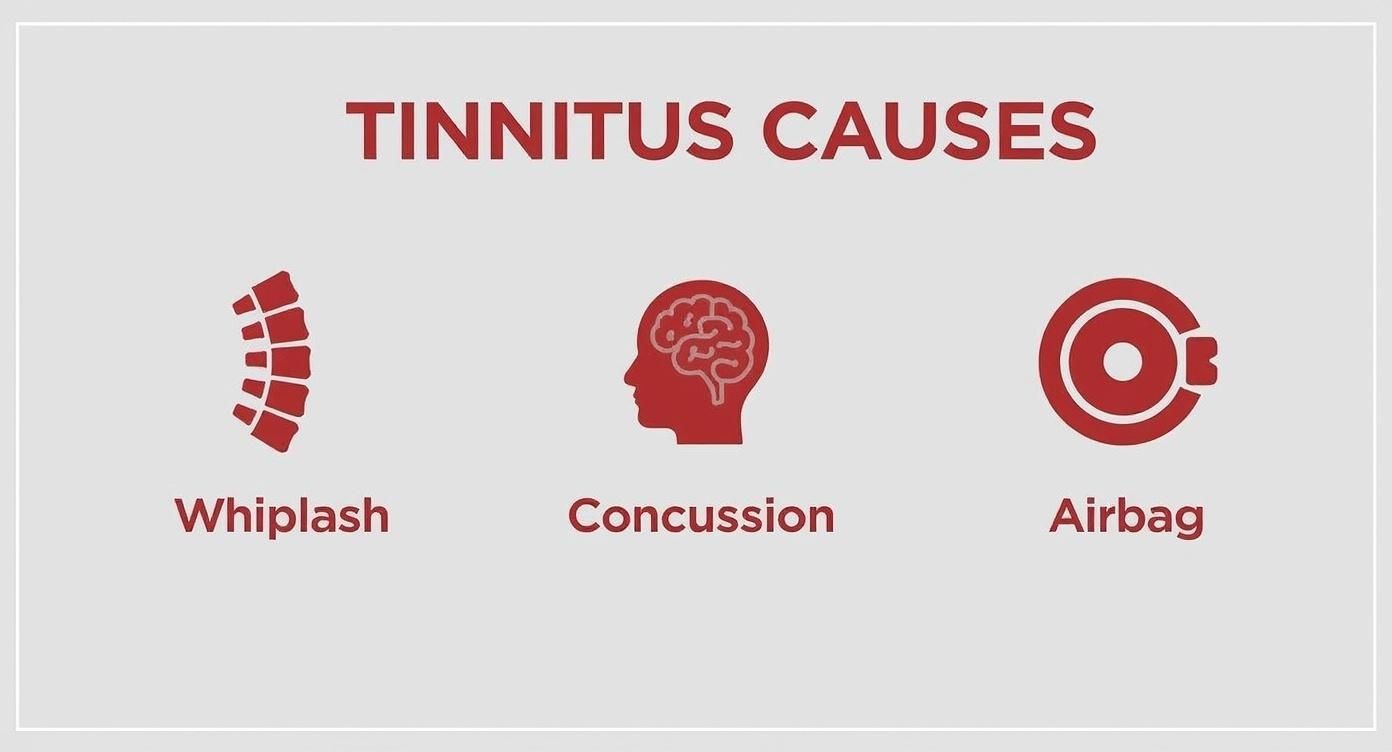
As you can see, the explosive force from an airbag is a direct and distinct cause of hearing damage, completely separate from the trauma of a concussion or whiplash.
How the Blast Damages Your Hearing
Tucked away in your inner ear is a spiral-shaped structure called the cochlea, which is lined with thousands of microscopic hair cells. These tiny cells have a huge job: they convert sound vibrations into electrical signals that your brain understands as sound. The problem is, they are incredibly fragile and simply not built to handle the extreme pressure wave from an airbag.
That blast can bend, break, or completely destroy these hair cells. And once they’re gone, they’re gone for good—they don’t grow back. This permanent damage messes up the flow of information to your brain, which can lead to two major problems:
Hearing Loss: When the hair cells are destroyed, you lose the ability to pick up on certain sound frequencies.
Tinnitus: The damaged auditory system starts sending scrambled, faulty signals to the brain. Your brain, trying to make sense of this neural static, interprets it as a constant ringing, buzzing, or hissing sound.
The connection is clear: a single, explosive sound well above the 140 dB pain threshold can be enough to trigger lifelong tinnitus. The very device meant to protect you can inadvertently cause a permanent, life-altering invisible injury.
If your ears started ringing right after an airbag went off in your accident, it's critical to get checked out by an audiologist or an Ear, Nose, and Throat (ENT) specialist. Documenting this connection right away is essential for your health and for any potential injury claim you might need to file. In pain? Call Caine.
Getting an Accurate Medical Diagnosis for Tinnitus
That relentless ringing in your ears after a car crash is more than just an annoyance—it's a warning sign from your body that needs to be taken seriously. Trying to ignore it or hoping it will just go away on its own is a huge risk, not just for your health but also for your potential legal claim. The first, most critical step is getting a formal, accurate diagnosis. This is the bedrock of your treatment plan and the foundation for a strong Florida injury case.
The process starts with that initial doctor's visit. Even if you felt "fine" at the scene, you need to get checked out at an ER, an urgent care clinic, or by your family doctor as soon as possible. This first appointment creates a crucial piece of paper: an official record that connects your symptoms, including the tinnitus, directly to the car accident. Don't downplay what you're experiencing. Make it crystal clear to the doctor that the ringing started right after the crash.
Consulting the Right Specialists
While the ER doctor will handle the immediate trauma, figuring out the why behind your tinnitus often requires someone with more specialized knowledge. Your first exam will likely be the starting point for referrals to experts who can really dig into what’s causing the sound in your ears.
Think of it this way: your primary doctor is like a general contractor who assesses the overall storm damage to your house. But to fix the intricate, fried electrical system, you need a master electrician. For tinnitus, these are your "master electricians":
Otolaryngologist (ENT): This is a doctor who specializes in everything related to the ear, nose, and throat. An ENT can physically examine your ear structures to see if there's direct trauma, fluid buildup, or a ruptured eardrum causing the problem.
Audiologist: This is the expert in hearing and balance. They'll run a series of comprehensive tests to figure out the extent of any hearing loss and get a better handle on the specific type of tinnitus you're experiencing.
Getting these specialists on your team isn't just about feeling better. Their detailed reports become the expert medical evidence you need to prove to an insurance company just how serious your condition is and what caused it.
What to Expect During Diagnostic Appointments
Walking into a specialist’s office can feel a little overwhelming, but knowing what’s coming can help you feel more in control. The diagnostic process is basically a methodical investigation to pinpoint why you are experiencing ringing in the ears after your car accident.
Doctors will use a few different tools to get a clear picture of what’s going on inside your head and ears.
A huge part of the diagnosis involves objective testing to back up your subjective experience of the ringing. This almost always includes an audiogram—a detailed hearing test that maps out your ability to hear different pitches and volumes. This test is great at revealing specific patterns of hearing loss that are classic signs of acoustic trauma or nerve damage from a whiplash injury.
Beyond a standard hearing test, your evaluation will probably include:
A Thorough Medical History: Get ready to talk about the accident in detail. They’ll want to know exactly when the tinnitus began and if you’re having any other symptoms like dizziness, headaches, or neck pain.
Physical Examination: The doctor will carefully check out your head, neck, and ears for any visible signs of physical injury.
Imaging Scans: If the doctor suspects a concussion or a more serious traumatic brain injury (TBI), they might order an MRI or CT scan. These powerful scans can actually show damage to the brain or the auditory pathways that could be the root cause of the tinnitus.
This formal diagnosis is the cornerstone of your entire recovery. It creates a clear roadmap for treatment and serves as the undeniable proof that your injury is real, serious, and directly tied to the accident. Without it, you're left fighting an uphill battle for both your health and the compensation you deserve. In pain? Call Caine.
Documenting Your Tinnitus for a Florida Injury Claim
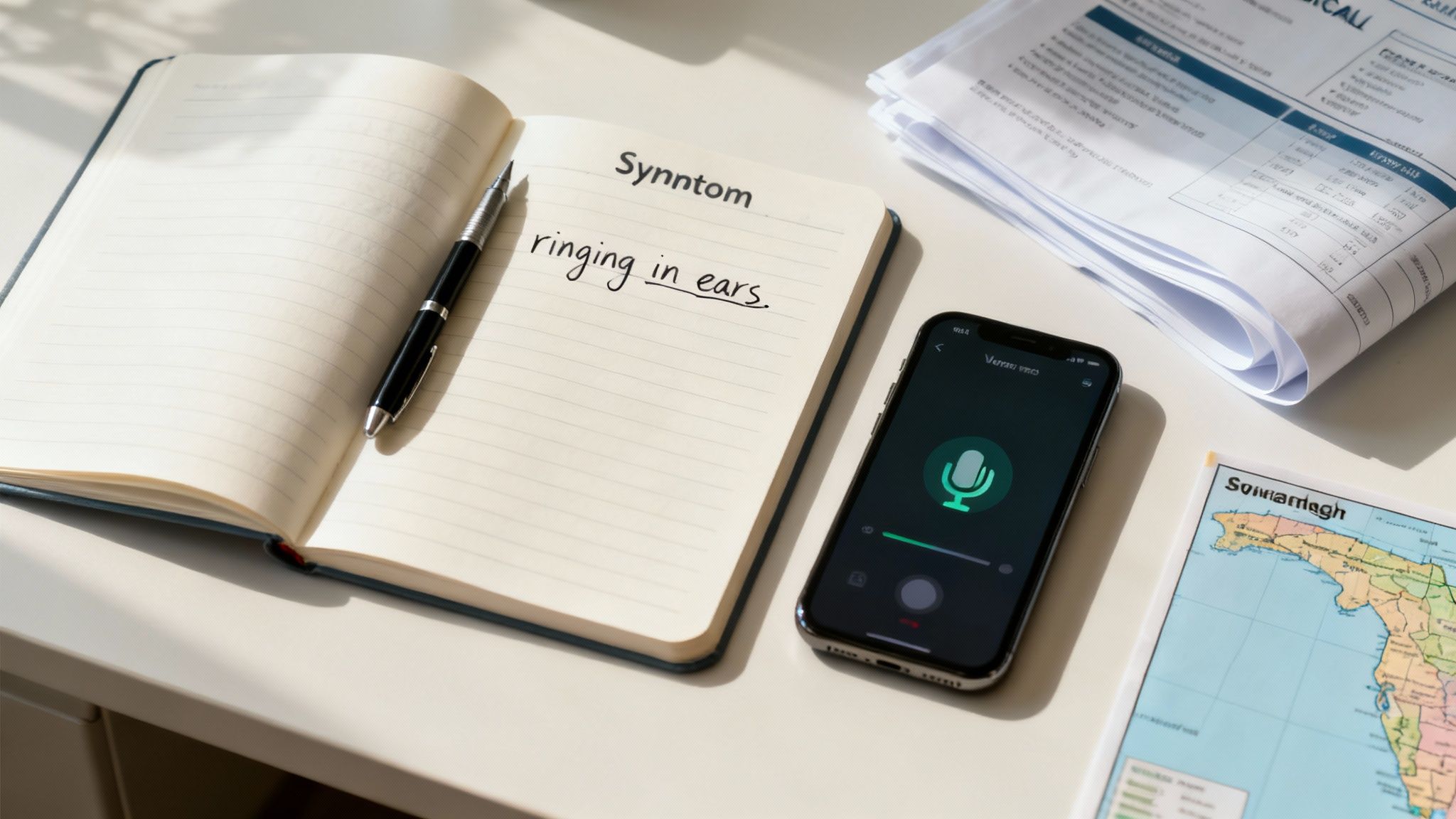
Once you have a medical diagnosis, it’s time to shift gears and focus on protecting your legal rights. Tinnitus is a very real, often debilitating injury, but it creates a unique challenge in a Florida injury claim.
Unlike a broken arm an X-ray can prove, an insurance adjuster can’t see the sound you hear. This makes it an "invisible injury," and adjusters are quick to downplay or dismiss something they can’t physically observe.
The way you fight back is by making your invisible injury visible through overwhelming evidence. Meticulous documentation is your single most powerful weapon. It transforms your personal experience of ringing in the ears after a car accident into a concrete, undeniable record that shows exactly how this condition has turned your life upside down.
Start a Detailed Symptom Journal
The single most important piece of evidence you can create is a daily symptom journal. This isn’t just a diary of your feelings—it's a methodical log that tracks the harsh reality of living with tinnitus. Think of it as painting a vivid picture for someone who has never experienced what you’re going through.
Your journal needs to be consistent and specific. Start one immediately, even if it's been a few weeks since the crash.
Your symptom journal is your voice in the claims process. It provides a day-by-day account that connects the dots between the accident and your ongoing suffering, making it much harder for an insurer to claim your symptoms are minor or unrelated.
Every entry should capture key details about the phantom sound and its very real effects. Be sure to include:
Date and Time: Note when you're making the entry.
Sound Description: Is it a high-pitched whine, a low buzz, a hiss, or a roar? Does the quality or volume change?
Intensity Level: On a scale of 1 to 10, how loud is the sound at that moment?
Triggers: Did anything make it worse? Think stress, fatigue, or even just turning your head a certain way.
Impact on Daily Life: This is critical. How did the tinnitus disrupt your day? Did it wreck your sleep? Did it make it impossible to focus at work? Did you have to bail on a family dinner because the noise was too overwhelming?
Gather Every Piece of Paperwork
Your journal tells your story, but official records provide the proof. You need to become a disciplined record-keeper, collecting every document related to your injury and treatment. This paperwork is what builds the legal and financial framework of your entire claim.
Get a dedicated folder and keep everything organized. This includes:
All Medical Records: Get copies of everything, from the first ER visit to your latest specialist appointment. This means doctor's notes, audiograms, MRI reports, and physical therapy records.
Medical Bills and Receipts: Save every single bill, invoice, and receipt for co-pays, prescriptions, and any helpful devices you bought, like a white noise machine.
Proof of Lost Wages: Ask your employer for a letter detailing the specific days you missed from work and the income you lost because of your symptoms or medical appointments.
To make this easier, here’s a quick checklist to help you stay organized.
Evidence Checklist for Your Florida Tinnitus Claim
Building a strong case is about collecting the right pieces of the puzzle. This table breaks down what you need and why it matters.
Evidence Category | Specific Items to Collect | Why It's Important |
|---|---|---|
Medical Documentation | Doctor's notes, ER reports, specialist evaluations (ENT, neurologist), audiograms, imaging scans (MRI/CT). | Establishes a professional diagnosis and links the tinnitus directly to the accident. |
Financial Records | All medical bills, pharmacy receipts, co-pay records, receipts for assistive devices (e.g., white noise machines). | Proves the financial cost of your injury and treatment, which is a core part of your damages. |
Proof of Lost Income | A letter from your employer detailing missed workdays and lost pay, pay stubs showing reduced hours. | Quantifies the income you've lost, demonstrating the injury's impact on your ability to work. |
Personal Symptom Journal | A daily log detailing the sound's intensity, triggers, and its effect on your sleep, work, and social life. | Translates your "invisible" suffering into a tangible record that shows the day-to-day human cost. |
Witness Statements | Written statements from family, friends, or coworkers describing changes they've seen in you since the accident. | Provides third-party validation that corroborates your claims about pain, suffering, and lifestyle changes. |
A well-organized file with all these documents is a powerful asset when dealing with insurance companies.
The Power of Witness Statements
Because tinnitus is subjective, statements from people who see its daily impact on you can be incredibly persuasive. The testimony of family, friends, or even coworkers can validate your experience and show an adjuster or jury the real human cost of your injury.
Ask people in your life if they’d be willing to write a short statement about the changes they’ve observed in you since the accident. A spouse could describe how your sleep has been ruined. A coworker could explain how your focus at work has plummeted. These third-party accounts provide powerful confirmation of your suffering.
Building a strong evidence file is one of the most proactive steps you can take to support your claim. By combining your personal journal, official records, and witness accounts, you create a comprehensive and compelling case. Our general guide to Florida personal injury claims can offer more insight into the overall process.
Properly documenting your tinnitus isn't just about paperwork; it's about making sure your voice is heard and your suffering is taken seriously. In pain? Call Caine.
Contacting a Florida Car Accident Attorney
While you're trying to figure out how to manage the constant ringing in your ears after a car accident and juggling doctor's appointments, the at-fault driver's insurance company isn't waiting around. Their team is already working, building a strategy designed to protect their profits by paying you as little as they possibly can.
Insurance adjusters are trained professionals, and they know exactly how to minimize claims for "invisible" injuries like tinnitus. They often use specific tactics to downplay your suffering and push you into accepting a quick, lowball settlement before you even know what your recovery will truly cost.
When to Call for Legal Help
Learning to spot the insurance company’s red flags is the first step in protecting your rights. If you notice any of these common tactics, it’s a sure sign you need a professional advocate fighting for you.
Dismissing Your Tinnitus: The adjuster might try to convince you the ringing is “just stress” or something that will go away on its own, completely ignoring the medical evidence you've gathered.
Making a Lowball Offer: They may dangle a fast settlement that barely covers your first emergency room visit. This offer intentionally ignores your future medical needs, lost income, and the daily torment of living with tinnitus.
Blaming a Pre-existing Condition: A classic move is to dig through your medical history for any mention of past hearing issues or headaches, then argue your tinnitus was there before the crash.
Requesting a Recorded Statement: Adjusters love recorded statements. They use them to ask tricky, leading questions, hoping you’ll say something—anything—that can be used to undermine your claim later on.
It's crucial to remember that the insurance adjuster's primary loyalty is to their employer, not to you. Their goal is to close your case for the lowest possible cost, regardless of how this injury has turned your life upside down.
How an Attorney Fights for You
Hiring an experienced Florida car accident attorney immediately levels the playing field. Your lawyer takes over all communication with the insurance company, shielding you from their high-pressure tactics so you can finally focus on getting better.
A skilled attorney gets to work building a powerful, evidence-based case to prove the full and fair value of your tinnitus claim. This isn't just about sending a demand letter; it involves several critical actions:
Handling All Negotiations: Your lawyer will field every call and email from the adjuster, stopping them from taking advantage of you during a vulnerable time.
Gathering Expert Testimony: We often work with medical experts, like audiologists or neurologists, who can provide professional testimony that directly links your tinnitus to the trauma of the accident.
Calculating Your True Damages: A good attorney looks far beyond just the current medical bills. They calculate the total value of your claim, including future treatments, lost wages, and the significant pain and suffering caused by a persistent, life-altering condition.
Dealing with the legal side of a crash is overwhelming, but understanding the basics of Florida auto and motorcycle accident claims can empower you to make the right moves. Don't let an insurance company decide what your recovery is worth. In pain? Call Caine.
Common Questions About Tinnitus After a Car Accident
When you're dealing with a persistent ringing in your ears after a car wreck, you’re bound to have a lot of questions. It's a confusing and frustrating time, trying to balance your medical recovery with the maze of legal options. Getting straight answers is the first step toward getting back on your feet.
Here, we'll tackle some of the most common concerns we hear from people just like you.
Can Tinnitus from a Car Accident Be Permanent?
The short answer is yes, it can be. Whether the ringing in your ears becomes a chronic, lifelong issue really depends on what's causing it. If the accident caused severe damage to your auditory nerve or inner ear from the sheer force or noise, the changes might be irreversible.
But there's hope. If the tinnitus is a side effect of a milder concussion or whiplash, it often fades as the primary injury heals over weeks or months. The only way to know for sure is to get a full evaluation from an ENT (ear, nose, and throat doctor) or an audiologist. They can figure out the root cause and give you a realistic idea of what to expect.
Your prognosis is directly linked to the underlying injury. While some cases resolve, permanent damage to the inner ear or auditory nerve can lead to a lifelong condition requiring ongoing management and support.
What Treatments Help Manage Post-Accident Tinnitus?
While there isn't a magic-bullet cure that works for everyone, there are absolutely effective ways to manage the symptoms and take back your quality of life. An audiologist or ENT will put together a plan that’s right for you, which might include a few different approaches:
Sound Therapy: This is a simple but powerful technique. It uses low-level background noise from a white noise machine or a small, wearable device to help mask the internal ringing, making it far less intrusive.
Cognitive Behavioral Therapy (CBT): Tinnitus isn't just a physical problem; it's a mental one, too. CBT is a type of therapy that helps you change how you react to the sound, breaking the cycle of anxiety and stress that often comes with it.
Tinnitus Retraining Therapy (TRT): This is a more intensive approach that combines sound therapy with counseling. The goal of TRT is to help your brain learn to filter out the tinnitus, essentially recategorizing it as an unimportant background noise you can ignore.
Sometimes, the best solution is treating the source of the problem directly, like getting physical therapy for a whiplash injury that’s contributing to the ringing. For a deeper dive into what to do after a crash, check out our guide on the essential steps and legal guidance after an accident.
How Long Do I Have to File a Tinnitus Claim in Florida?
This is critically important. In Florida, the deadline for filing a personal injury lawsuit—called the statute of limitations—is non-negotiable. For any car accidents that happened on or after March 24, 2023, you have just two years from the date of the crash to file your claim. For accidents before that date, the old four-year deadline applies.
If you miss this window, the court will almost certainly refuse to hear your case, and you will lose your right to seek compensation forever. Time is not on your side, so acting quickly is essential to protect your legal options.
If another driver's carelessness has left you with the constant, frustrating ringing of tinnitus, you shouldn't have to fight the insurance companies on your own. The experienced team at CAINE LAW is ready to step in and handle the legal battle so you can focus on healing. We know firsthand how disruptive an invisible injury like this can be, and we will work relentlessly to secure the full and fair compensation you deserve.
In pain? Call Caine.
