
In Pain? Call Caine
Premises Liability Settlements: Factors to Maximize Your Recovery

5 Min read
By: Caine Law
Share
If you've been hurt on someone else's property, you're probably wondering how these cases get resolved. The reality is, most don't end with a dramatic courtroom trial. They end with a settlement.
A premises liability settlement is simply a formal, negotiated agreement. The property owner's insurance company agrees to pay you a certain amount of money for your injuries. In return, you agree to drop the lawsuit and release them from any future claims related to that specific incident.
It’s the most common path forward, and for good reason. It provides a definite outcome without the risk and stress of a trial.
What Are Premises Liability Settlements?
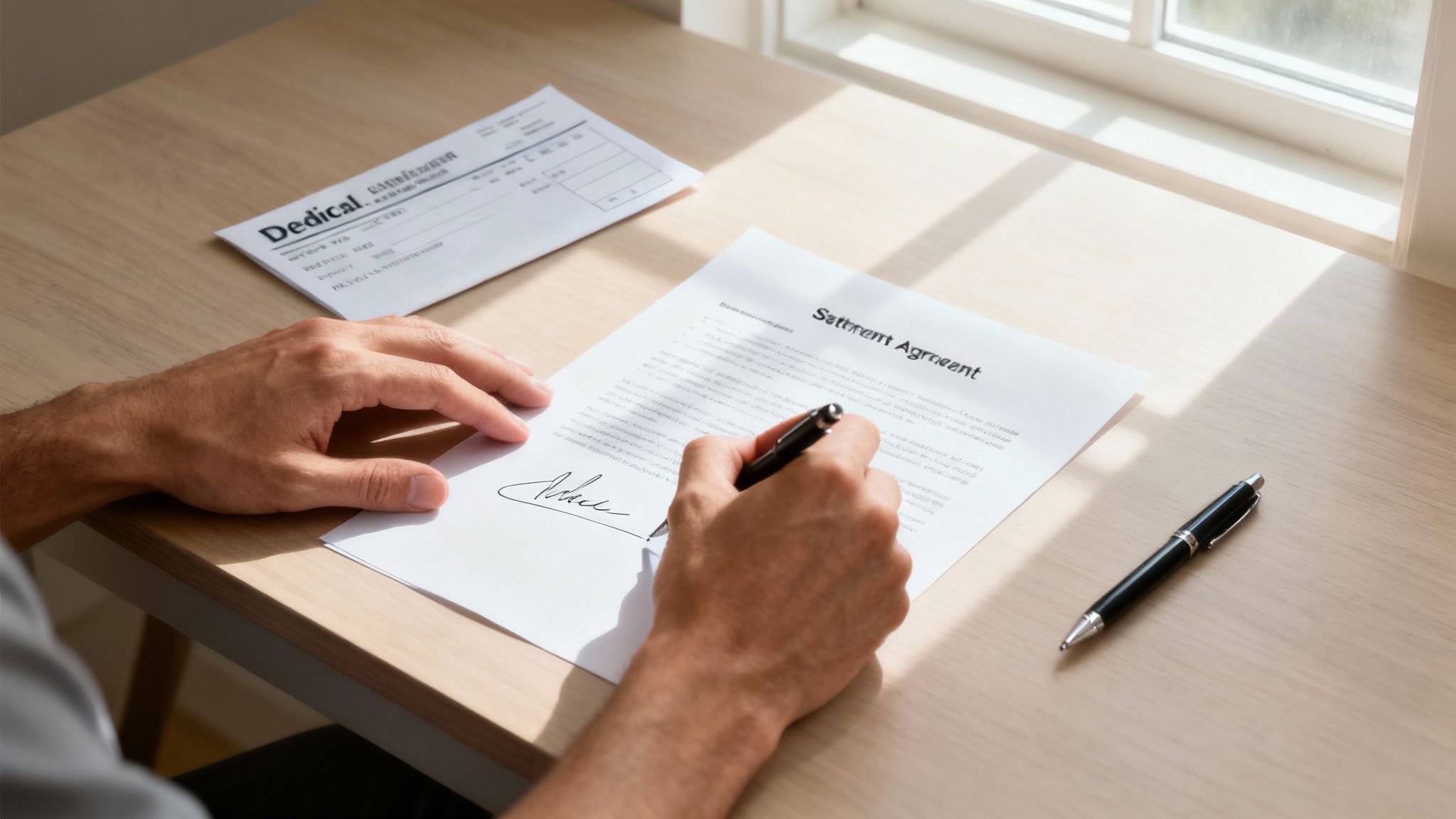
Think of a settlement as a private resolution. Instead of letting a judge or jury decide your fate, your attorney negotiates directly with the insurance company to land on a fair number that covers your damages—from medical bills and lost wages to your pain and suffering.
This isn't some rare occurrence; it's the standard. Industry data consistently shows that 90–95% of all personal injury claims are settled out of court. The legal system is built to encourage these resolutions, saving time and resources for everyone involved.
How Much Is My Claim Worth?
This is always the first question, and the honest answer is: it depends. There’s no magic "average settlement" calculator because every single case is unique.
The value of premises liability settlements hinges on a few critical factors: how badly you were hurt, how clearly the property owner was at fault, and the type of property it was. A minor slip on a friend's welcome mat is a world away from a life-altering injury at a major retail store with a massive insurance policy.
To give you a practical sense of what to expect, we've put together some ballpark figures for cases here in Florida. Remember, these are just illustrations, not guarantees.
A settlement isn't just a number; it's a reflection of your medical journey, lost income, and the personal toll the injury has taken on your life. Its purpose is to provide the financial resources needed to help you recover and move forward.
The table below breaks down potential settlement values based on whether the injury occurred on residential or commercial property. This is a huge factor, as businesses typically carry much larger insurance policies than homeowners. If you're exploring your options, our firm provides expert guidance on all aspects of personal injury claims in Florida.
Illustrative Florida Premises Liability Settlement Ranges
This table provides estimated settlement ranges for premises liability claims in Florida based on the severity of the injury. These are not guarantees but reflect common outcomes.
Injury Severity | Typical Residential Property Range | Typical Commercial Property Range |
|---|---|---|
Minor Injuries (e.g., sprains, bruises, minor cuts requiring minimal treatment) | $10,000 – $40,000 | $20,000 – $75,000 |
Moderate Injuries (e.g., bone fractures, herniated discs, ligament tears requiring some intervention) | $40,000 – $100,000 | $75,000 – $250,000 |
Serious Injuries (e.g., complex fractures requiring surgery, significant back injuries) | $100,000 – $300,000+ (often limited by policy) | $250,000 – $750,000 |
Catastrophic Injuries (e.g., traumatic brain injury, spinal cord damage, amputation) | Policy Limits (typically $300k-$500k) | $750,000 – $5,000,000+ |
These ranges give you a starting point. Now, let's dig into the specific details that can push your settlement to the higher or lower end of these brackets.
If you've been injured and are unsure what your case might be worth, don't face the insurance companies alone. In pain? Call Caine.
The Four Pillars That Define Your Settlement Value
Every premises liability case has a unique story, but the value of a settlement always comes down to four key factors. I like to think of them as the four legs of a table—if any one of them is weak, the entire structure becomes unstable.
Understanding how these elements work together is the first step in seeing your case the way an insurance company or a jury would. It’s not just about what happened to you; it’s about what can be proven, what the financial fallout looks like, and what practical limits are in play. Let's break down each one.
Pillar 1: The Severity of Your Injuries
This is the big one, and it’s always the starting point. The more severe your injuries, the more support your claim has. This isn't just about the initial diagnosis; it’s about the total impact the injury has on your life, from the day of the accident onward.
A sprained wrist that heals in a month simply won't support the same settlement value as a complex spinal injury that requires surgery and leaves you with chronic pain. Catastrophic injuries—like traumatic brain injuries or paralysis—create the most significant damages and, naturally, result in the highest potential settlement values.
To show the true scope of your injuries, we have to document everything:
Past Medical Bills: Every single cost, from the ambulance ride and ER visit to surgery, medication, and physical therapy.
Future Medical Needs: This is crucial. If you'll need ongoing care, future surgeries, pain management, or even just a cane for the rest of your life, we need to calculate those future costs.
Lost Wages: The paychecks you missed while you were out of work recovering.
Lost Earning Capacity: If your injury prevents you from returning to your old job or earning what you used to, we calculate that long-term financial hit.
These are the concrete, calculable damages. But just as important is the human cost—the non-economic damages. This is compensation for your physical pain, emotional trauma, and the simple loss of being able to enjoy your life the way you did before.
Pillar 2: How Clear Is the Liability?
The next leg of the table is liability. In plain English: how easy is it to prove the property owner was negligent and that their negligence is the direct reason you got hurt?
Think of it this way: if you fall down a flight of stairs because a wobbly handrail the landlord knew about for months finally gave way, liability is pretty clear-cut. Contrast that with slipping on a wet spot on a grocery store floor just seconds after another customer dropped a carton of milk. In that case, proving the store had a reasonable chance to clean it up is much tougher.
Proving liability isn't about pointing fingers. It's a legal process of showing that a property owner dropped the ball on their duty to keep people safe. The more black-and-white the evidence of their failure, the stronger your negotiating hand.
The evidence is what makes this pillar solid. Strong proof can be anything from photos of the hazard you took right after the fall, maintenance logs showing a history of neglect, or even witness testimony confirming the dangerous condition had been there for a while. The less room there is to argue about who was at fault, the more pressure the insurance company is under to settle fairly.
Pillar 3: Insurance Policy Limits
This pillar is all about practicality. An insurance policy is a contract, and it has a maximum payout amount, known as the policy limit. This number acts as a hard ceiling on how much the insurance company will pay for a claim, no matter how devastating your injuries are.
A typical homeowner's policy might have a $300,000 limit. A large commercial property, like a national retail chain or a shopping mall, could have a multi-million-dollar policy.
This is a critical reality check. If your total damages add up to $500,000, but the property owner’s insurance policy is capped at $300,000, that’s the absolute most the insurer will pay. While you could technically sue the owner for their personal assets to cover the difference, that’s often a long, difficult, and uncertain road. That's why one of our first jobs is to identify all available insurance policies right away.
Pillar 4: Florida's Comparative Fault Rule
The final pillar is a legal doctrine unique to Florida called comparative fault. This rule comes into play when there's an argument that you might have been partially to blame for your own accident.
Under Florida law, any compensation you receive is reduced by your percentage of fault. So, if a jury decides your damages are worth $100,000 but also finds you were 20% at fault—maybe you were looking at your phone while walking through a poorly lit parking lot—your final award would be cut by that 20%. You’d walk away with $80,000.
Insurance adjusters love to use this rule to drive down premises liability settlements. They’ll argue you weren't paying attention, wore the wrong shoes, or should have seen the hazard. Our job is to fight back against those baseless accusations, minimize any percentage of fault assigned to you, and protect the full value of your claim.
If you are struggling to understand how these pillars apply to your situation, we can help clarify your rights and options. In pain? Call Caine.
Your Premises Liability Claim Timeline Step by Step
Understanding what happens after an injury on someone else's property can take a lot of the stress and uncertainty out of the equation. While every case has its own unique path, most premises liability claims follow a predictable timeline, from the moment of injury to the final settlement. Knowing these steps helps you see the road ahead.
The journey to a fair settlement is definitely a marathon, not a sprint. It’s a process that requires careful documentation, a thorough investigation, and some pretty strategic negotiation. Let’s demystify it and walk through how a solid claim is built and resolved.
Step 1: The Immediate Aftermath and Initial Actions
The clock starts ticking the second you get hurt. Honestly, the things you do in those first few hours and days can lay the foundation for your entire claim.
Get Medical Help Immediately: Your health is always priority number one. See a doctor right away, even if you think the injury is minor. This creates an official medical record that directly links what happened to your injuries.
Report the Incident: Tell the property owner, manager, or landlord what happened as soon as you can. If you're at a business, they should file an incident report—always ask for a copy.
Document Everything: Pull out your phone. Take pictures and videos of the exact hazard that caused your fall, the area around it, and your injuries. If anyone saw what happened, get their name and number.
This initial evidence is often the most powerful because it captures the scene exactly as it was, before anything can be cleaned up, changed, or repaired.
Step 2: Investigation and Building Your Case
Once you've handled the immediate crisis and spoken with an attorney, the focus shifts to a much deeper investigation. This is where your legal team really takes the reins, gathering all the evidence needed to prove the property owner was negligent and to calculate the full value of your damages.
During this phase, we'll be collecting everything from your medical records and police reports to building maintenance logs and any available security camera footage. We might also bring in experts—like an engineer or a safety specialist—to explain exactly why the property was unsafe. This detailed work is absolutely essential for building a compelling argument for your premises liability settlement.
The goal here is simple: build a story backed by hard facts. It's about showing not just that you were hurt, but that the property owner knew (or should have known) about the danger and failed to do anything reasonable to protect you.
This is where we focus on strengthening the four key pillars of your claim: Injury, Liability, Insurance, and Fault.
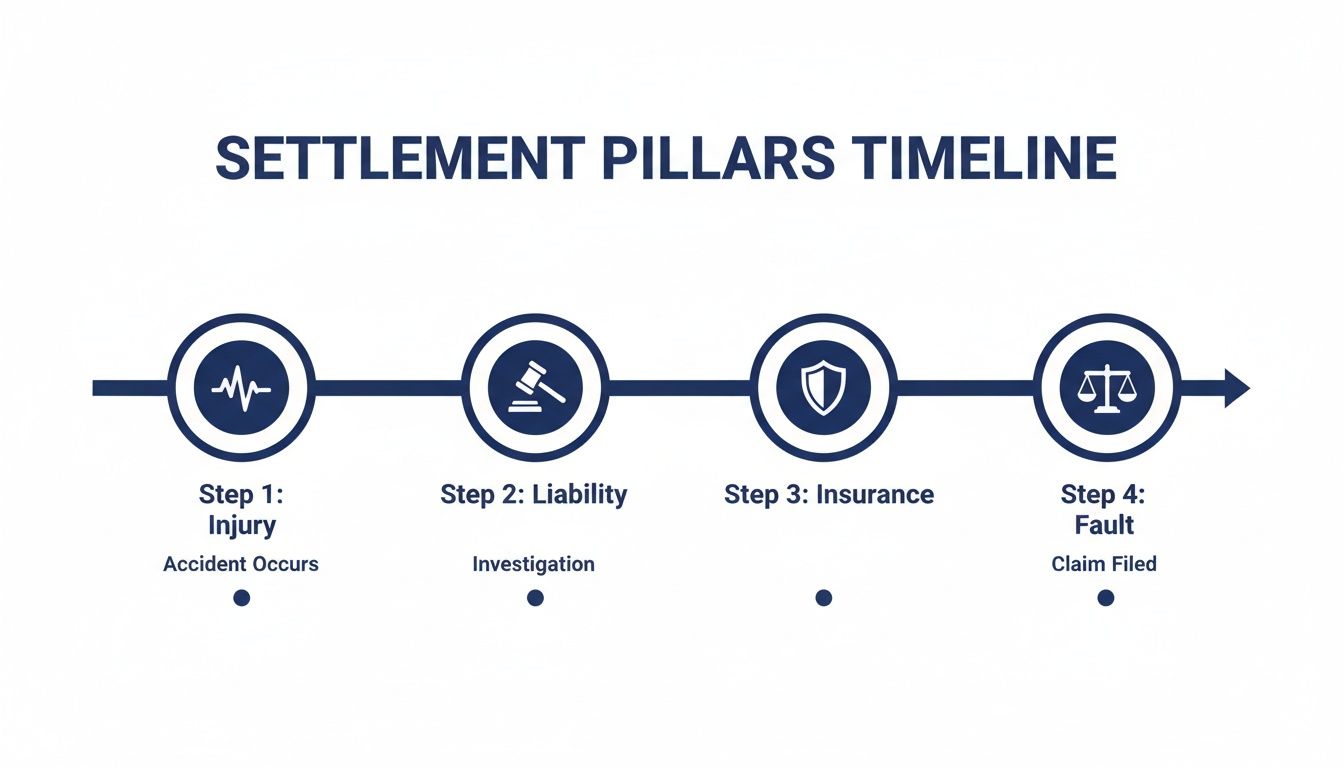
As the image shows, proving each of these elements—from the severity of your injury to how clear the fault is—is a critical step toward a successful outcome.
Step 3: The Demand and Negotiation Phase
After the investigation is complete and we have a clear, full picture of your damages (including any future medical care you'll need), your attorney will put together a formal demand package. Think of this as the opening shot. It’s a comprehensive document we send to the insurance company that lays out our legal arguments, summarizes all the evidence, and demands a specific amount to settle the case.
The insurance adjuster will review it and, almost without fail, come back with a much lower counteroffer. This is where the real negotiation begins. Your attorney will go back and forth with the adjuster, fighting back against their attempts to downplay your injuries or shift the blame. This part of the process can take weeks, and sometimes months.
Step 4: Settlement or Filing a Lawsuit
The vast majority of personal injury cases are resolved right here, during the negotiation phase. If we can get the insurer to agree to a fair number, you've reached a settlement. You'll sign a release form, and the insurance company will send the check.
But what if they refuse to be reasonable? The next strategic move is to file a lawsuit. It's important to understand that filing a lawsuit doesn't automatically mean you're headed for a big courtroom trial. More often than not, the very act of filing suit and starting the formal litigation process—what lawyers call "discovery"—is enough to put serious pressure on the insurance company to come back to the table with a much better offer.
Navigating this timeline takes expertise and a whole lot of patience. If you're just starting this journey, let us guide you. In pain? Call Caine.
How to Maximize Your Premises Liability Settlement
Getting the settlement you deserve after an injury isn't about luck—it's about building a rock-solid case from the ground up. When you're hurt and feeling overwhelmed, it's easy to think you have no control. But the truth is, the steps you take right after the accident can make all the difference.
You have to do more than just show you were injured. It's about meticulously documenting every detail of your ordeal and weaving that evidence into a powerful story. The goal is to build a case so undeniable that the insurance company has no choice but to take you seriously. Let's walk through the actions that give you leverage and help you recover every dollar you're owed.
Seek Immediate and Consistent Medical Care
First things first: get to a doctor. Your health is always the top priority, but seeking immediate medical care also creates the single most important piece of evidence for your claim. If you wait days or weeks, the insurance adjuster will jump at the chance to argue your injuries aren't that serious or that something else must have caused them.
Following through with your treatment is just as crucial.
Go to every appointment: Don't skip physical therapy, specialist visits, or follow-ups.
Do what your doctor says: Stick to the treatment plan, take your medications, and respect any work or activity restrictions.
Speak up about your pain: Be completely honest with your doctors about what hurts and how it’s impacting your day-to-day life.
Every visit, prescription, and therapy session creates an official record. This paper trail becomes the backbone of your claim, making it incredibly difficult for an insurer to downplay the true cost of your injuries.
Preserve Every Piece of Crucial Evidence
While your medical files tell the story of your recovery, the evidence from the scene tells the story of what happened. And that evidence can vanish in an instant. A puddle gets mopped up, a broken handrail gets fixed, a dim lightbulb gets replaced. You have to act fast.
Put on your detective hat and capture everything.
Take photos and videos: Get pictures of the hazard from every possible angle. If you slipped, show the slick floor and the lack of warning signs. If you tripped, get close-ups of the crack in the pavement.
Save what you were wearing: Your clothes and shoes are evidence. Don't wash them. Bag them up and put them somewhere safe—they might hold clues that support your case.
Get witness contact info: If anyone saw what happened, get their name and number. An unbiased account from a third party can be a game-changer.
Ask for an incident report: If you were hurt at a business, they almost certainly created a report. Make sure you ask for a copy before you leave.
This evidence helps piece together exactly how the property owner's negligence led to your injury.
Build a Powerful Demand Package
Once all the evidence is in hand—medical records, photos, witness statements, and expert opinions—it's time to make your move. A skilled attorney will take all this information and assemble it into a formal demand package. This is far more than just a letter asking for a check.
A demand package is a comprehensive legal argument. It tells the full story of the owner’s negligence, the severity of your injuries, and the devastating impact this event has had on your finances, your health, and your life.
This document lays out the legal reasons the property owner is liable, breaks down every single dollar of your damages, and presents a specific settlement figure. It’s the opening shot in negotiations and sets the tone for everything that follows. A strong, evidence-backed demand shows the insurance company you mean business and often stops them from trying to lowball you right out of the gate.
If you are ready to build the strongest case possible, we are here to help you every step of the way. In pain? Call Caine.
Common Insurance Company Tactics and How to Counter Them
Once you file a claim, you’re no longer just dealing with a property owner. You’re now up against their insurance company. And make no mistake—these companies are businesses, with adjusters highly trained to protect the bottom line by minimizing or outright denying premises liability settlements.
Their entire goal is to pay out as little as possible. Knowing their playbook is the first and most critical step in protecting yourself and fighting for the full compensation you deserve. When you can spot these common maneuvers, you can avoid costly mistakes and negotiate from a position of strength.
The Recorded Statement Trap
Almost immediately, an adjuster will call asking for a recorded statement. They’ll be friendly and professional, framing it as a routine step to simply “understand what happened.” Don’t fall for it.
Their real agenda is to get you on record, hoping you’ll say something—anything—they can twist and use against you later. They are masters at asking leading questions designed to get you to downplay your injuries, admit partial fault, or lock you into a version of events before all the facts are even clear. The best response is to politely decline and inform them that all future communications will go through your attorney.
The Quick, Lowball Offer
Another favorite tactic is dangling a fast, but very low, settlement check in front of you shortly after your injury. This can be incredibly tempting, especially as medical bills start rolling in. But this offer isn't a gesture of goodwill; it's a calculated move to close your case before you have any idea what your injuries will truly cost you.
A quick settlement offer is almost never a fair settlement offer. It’s designed to prey on your financial anxiety and get you to sign away your rights for a fraction of what your claim is actually worth.
Once you accept that check, your case is closed forever. You can never seek more money for that injury again, even if you find out later you need surgery or long-term therapy. You should never consider any offer until you've reached what doctors call "maximum medical improvement" and have a complete picture of your damages.
Disputing Your Medical Treatment
Insurance adjusters will comb through your medical records, searching for any excuse to challenge the necessity or cost of your care. You'll hear arguments that a pre-existing condition is the real source of your pain or that you received "too much" physical therapy.
This is nothing more than a cynical attempt to devalue your claim by second-guessing your doctor's professional judgment. It’s also exactly why consistent, well-documented medical treatment is so vital to your case. A skilled attorney works directly with your medical team to build a powerful narrative that clearly connects every single treatment back to the injuries you suffered on the property.
Successfully fighting back against these tactics requires a deep understanding of how insurance companies operate. If you're feeling pressured, you can learn more about how to handle insurance disputes and protect your rights. An experienced lawyer sees these moves coming a mile away and builds a case designed to shut them down, ensuring you aren’t taken advantage of when you’re most vulnerable.
Don't let an insurance adjuster decide the value of your health. In pain? Call Caine.
Why an Experienced Attorney Is Your Greatest Asset

Trying to handle a premises liability claim yourself is like walking into a legal boxing match with one hand tied behind your back. On the other side of the ring is the insurance company’s legal team—professionals whose entire job is to protect their employer’s profits by paying you as little as possible.
It's not a fair fight. This is exactly why having an experienced attorney in your corner is the single most important decision you can make.
A skilled lawyer does so much more than just fill out forms. They level the playing field. The first thing they'll do is accurately calculate the full, true value of your claim, making sure nothing—from future medical bills to lost earning potential—gets left on the table.
From there, your attorney takes over all communication, acting as a shield against the insurance adjuster’s high-pressure tactics. They know every trick in the book used to downplay your injuries or shift the blame, and they know exactly how to shut those arguments down.
Leveraging Experience for Maximum Results
The most powerful tool a great lawyer brings to the table is the very real threat of a jury trial. Insurance companies are all about managing risk, and they know that a sympathetic jury can award massive damages.
When they see a rock-solid case built by a seasoned trial attorney, their entire calculation changes. Suddenly, offering a fair settlement looks a lot better than risking a costly courtroom battle they might lose.
With over 20 years of experience—including priceless insight from his early days as a defense attorney—Daniel Caine knows precisely how insurance companies think and operate. This unique, dual-sided perspective gives his clients a distinct advantage when negotiating the premises liability settlements they deserve.
Personal injury attorneys work on a contingency fee basis. This means you pay absolutely nothing upfront. We only get paid if we win your case and recover money for you.
Choosing the right legal partner is everything. To help you feel confident in your choice, we put together a guide on the most important questions to ask your slip and fall attorney before hiring. Don’t leave your financial future to chance.
In pain? Call Caine.
Your Top Questions About Premises Liability Answered
When you’re hurt and facing a mountain of medical bills, it’s only natural to have a lot of questions. Let’s cut through the confusion and get you some clear, straightforward answers about premises liability settlements here in Florida.
How Long Do I Have to File a Claim in Florida?
The clock starts ticking the moment you get hurt. In Florida, you generally have just two years from the date of the injury to file a lawsuit. This isn't a suggestion; it's a hard deadline known as the statute of limitations.
Miss that window, and you'll almost certainly lose your right to seek compensation forever. That’s why it’s so critical to act fast. The sooner you start, the better your chances of preserving key evidence, tracking down witnesses, and protecting your legal rights before they disappear.
What if I Was Injured at a Friend or Family Member's House?
This is a tough one, and it comes up more often than you'd think. The most important thing to remember is that you are not suing your friend or relative directly. You're filing a claim against their homeowner's insurance policy.
Insurance is there for exactly this reason—to cover accidents. The goal is to get the money you need for your medical bills and other losses from the insurance company, not out of your loved one's pocket.
Think of it this way: filing a claim against a homeowner's policy is a standard business transaction with an insurer. It’s designed to help you recover financially without putting a personal relationship on the line.
Do I Have to Go to Court for a Settlement?
Probably not. In fact, it's highly unlikely. The vast majority of premises liability cases—we're talking well over 90%—are settled through negotiation long before they ever see the inside of a courtroom.
Sometimes, filing a lawsuit is a necessary strategic step to show the insurance company you mean business and get them to the table with a fair offer. But for both sides, the end goal is almost always to reach an agreement without the time, expense, and stress of a trial.
How Much Does a Lawyer Cost for My Injury Claim?
This is the best part: it costs you nothing upfront to hire a top-tier personal injury lawyer. We handle these cases on what's called a contingency fee basis.
It’s simple. Our fee is just a percentage of the settlement or verdict we win for you. If we don’t get you any money, you don’t owe us a dime for our time. This system makes sure that anyone, regardless of their financial situation, can get the expert legal help they need to fight back.
Trying to figure out a premises liability claim on your own is a burden you shouldn't have to carry. The team at CAINE LAW is here to take that weight off your shoulders, answer every question you have, and fight for the full compensation you deserve.
In pain? Call Caine. Reach out today for a free, no-obligation consultation at https://cainelegal.com.
