
In Pain? Call Caine
How to File a Wrongful Death Claim in Florida With Confidence

5 Min read
By: Caine Law
Share
Quick Answer For Filing A Wrongful Death Claim In Florida
In Florida, you’ve got a two-year deadline to get your wrongful death claim rolling—and gathering the right paperwork is non-negotiable. That means medical records, expert affidavits and a certified death certificate all in hand.
Your next move is mapping out everything from who’s eligible to how you’ll negotiate. Get the venue right (county of death) and serve the defendant on time. Do this well and you’ll avoid costly delays.
Eligibility And Standing: Only a spouse, child, parent or appointed personal representative can file.
Core Documents: Death certificate, medical files, expert affidavit.
Drafting The Complaint: Identify parties, lay out the facts, cite legal grounds and spell out damages.
Negotiation Tactics: Start with a demand letter, highlight policy limits and build settlement leverage.
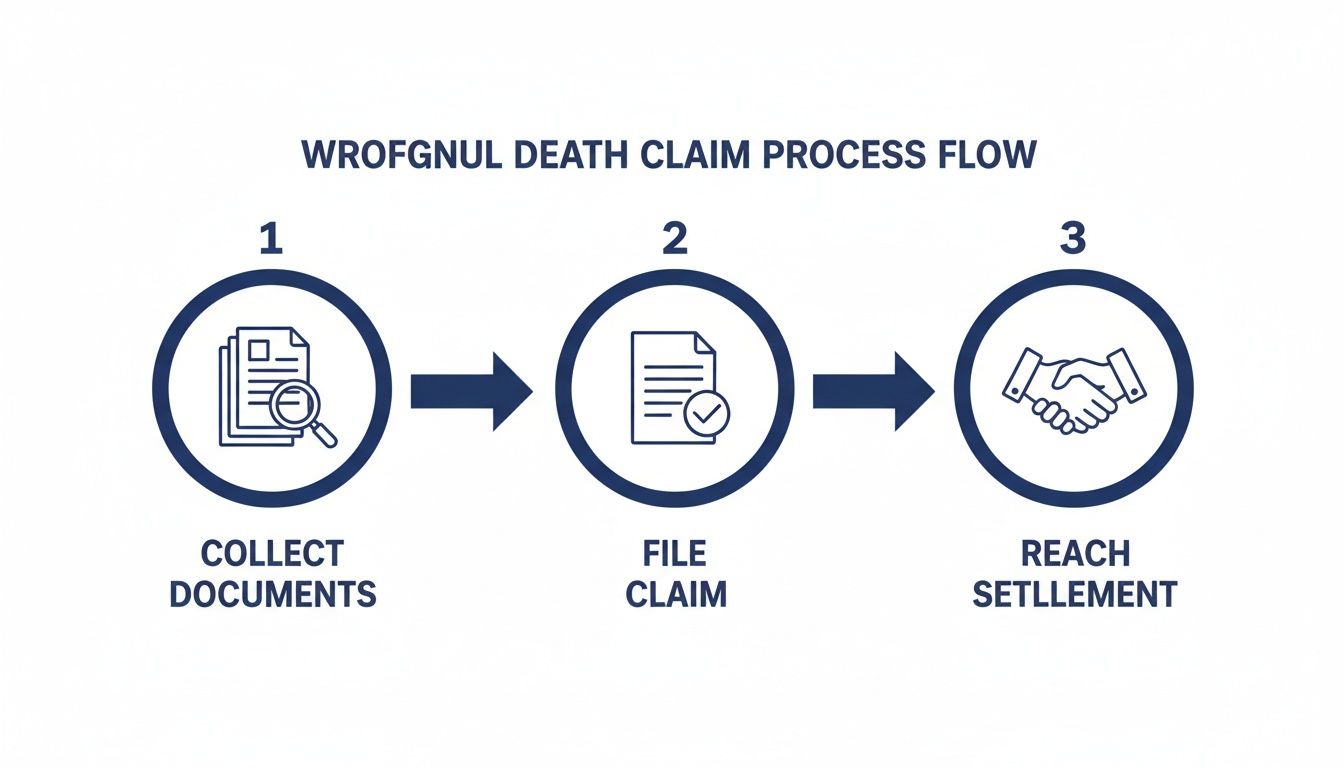
Core Stages Of The Process
From the moment you start collecting documents to the day you reach an agreement—or head to trial—each phase feeds into the next. Solid prep accelerates the whole journey.
Key Phases Of Filing
Here’s a quick overview of the major milestones you’ll hit on the way to resolving a wrongful death claim.
Phase | Objective | Timeframe |
|---|---|---|
Document Gathering | Secure death certificate, medical and expert records | 2–4 weeks |
Complaint Draft & Filing | Assemble complaint, file in the correct county court | 1–2 weeks |
Settlement Negotiation | Issue demand letter, negotiate with insurers | 1–6 months |
Discovery & Trial Prep | Exchange evidence, take depositions, plan for trial | 6–18 months |
Even a small slip on timing can derail your case. Move quickly to keep insurers on their toes and protect your claim.
You’ll also find more hands-on tips in our detailed Personal Injury services guide—everything from evidence collection to settlement strategy.
Key Takeaway: Acting early not only safeguards your rights; it creates momentum with insurers.
When you’re ready to take action, remember: In pain? Call Caine.
Who Can File a Wrongful Death Claim in Florida
Florida law reserves wrongful death actions for a select group of survivors and estate representatives. You can’t just anyone to file—only those with a direct legal stake get a seat at the table.
Spouse: The surviving husband or wife, backed by a valid marriage certificate.
Child: Biological, adopted, or legally acknowledged children, with birth or adoption papers.
Parent: Mother or father, but only if there’s no surviving spouse or child.
Estate Representative: A court-appointed personal representative acting on behalf of the decedent’s estate.
Proving Your Relationship
To establish standing, you’ll need a certified Florida death certificate. This document is your foundation.
Supplement it with marriage licenses, birth records or probate letters to reinforce your claim. For example, one Jacksonville daughter moved quickly—she secured letters of administration through probate in just a few weeks.
Use this checklist to pull together your paperwork:
Order the official death certificate from Florida Vital Records.
File for probate or letters of administration at the county clerk’s office.
Request certified copies of each document for your attorney.
Keep both digital scans and paper originals in a secure folder.
Appointing a Personal Representative
If there’s no spouse, child or parent, the court can name a personal representative to step in. They receive letters of administration and gain the authority to file on the estate’s behalf.
“Securing letters of administration opens the door for those without immediate family to seek justice.”
After a formal petition and notice period, the clerk will issue these letters.
It’s worth noting how rare wrongful death payouts are, even in cases of medical errors. NPDB’s 2023 figures reveal 11,400 malpractice claims but only 3,100 wrongful death payments among roughly 250,000 fatal errors. That’s a payout rate of just 1.2%, underscoring why preserving evidence right away is crucial.
Gather your evidence without delay:
Pull together medical charts and expert opinions.
Request hospital and laboratory records with written authorization.
Interview witnesses and log their statements digitally.
Track every deadline and filing date on a running timeline.
Avoiding Standing Challenges
Defendants often attack standing by disputing your relationship proof or pointing to missed deadlines. You’ll counter that by filing a complete, timely application.
In one Jacksonville case, confirming hearing dates and updating documents a week ahead prevented a dismissal.
Keep these best practices in mind:
Verify probate petition deadlines as soon as possible.
Double-check every name, date and signature on your forms.
Serve notices of administration via certified mail, keeping receipts.
Maintain a master calendar of all court appearances and filing dates.
Solid standing means you’re less likely to face early motions to dismiss. Once you’ve locked in the right to sue, you can focus on proving liability and damages.
When To Seek Legal Help
Bringing in a lawyer early can save you headaches and protect critical deadlines in the probate process. Ideally, reach out within weeks of starting probate to avoid losing vital evidence.
You should consult counsel now if you encounter any of these hurdles:
Trouble proving family ties with the documents on hand.
Confusion over court notices or upcoming hearings.
Disputes about who holds letters of administration.
Worries about meeting Florida’s strict two-year deadline.
Document | Purpose |
|---|---|
Death Certificate | Establishes date and cause of death |
Letters of Administration | Grants authority to file on behalf of the estate |
Marriage or Birth Records | Confirms legal relationship |
Probate Petition | Initiates estate administration |
Outdated or missing paperwork is a leading cause of early dismissals. A seasoned Florida wrongful death attorney can audit your files, spot gaps, and make sure each form is solid before you file.
When you’re ready to move forward with confidence, schedule a consultation today. Early action not only preserves key evidence but also strengthens your position from day one.
In pain? Call Caine.
Differentiating Survival And Wrongful Death Actions
In Florida, a family facing a tragic loss often needs two separate claims to cover all damages. One route—known as a survival action—captures the decedent’s own expenses and suffering before death. The other, the wrongful death action, compensates loved ones for lost support, companionship, and burial costs.
Imagine a case where a misdiagnosis of sepsis leads to death days later. The survival action addresses those final medical bills and pain endured. Meanwhile, the wrongful death action seeks the income the decedent would have provided and the emotional support the family has lost.
• Beneficiary differs: estate’s representative versus surviving spouse or child
• Damages vary based on pre-death harm and survivors’ losses
• Both actions must generally be filed within two years of death
Precision is crucial. Your complaint should spell out dates, locations, medical facts and financial figures—nothing left to guesswork.
Comparison Of Survival And Wrongful Death Actions
Here’s a snapshot of how these two actions stack up under Florida law:
Aspect | Survival Action | Wrongful Death Action |
|---|---|---|
Beneficiary | Estate’s Personal Representative | Surviving Spouse, Child or Parent |
Damages | Medical Bills and Pain Before Death | Lost Income, Companionship, Funeral |
Filing Purpose | Continue Decedent’s Own Legal Claim | Independent Claim for Survivors |
Example Language | “Decedent incurred $30,000 medical…” | “Plaintiff lost $50,000 income…” |
This breakdown makes it easier to draft each claim with the right focus.
Key Takeaway: Each claim serves a unique legal purpose.

That image shows who’s eligible to sue and underlines the strict two-year deadline for both actions.
Once you’ve got your distinctions clear, draft the survival count first. For example:
“Decedent incurred $40,000 in pre-death medical bills and suffered severe pain as a direct result of Defendant’s negligence.”
Follow with the wrongful death count:
“Plaintiff lost $75,000 in future earnings and has a claim for loss of companionship and mental anguish.”
• Align pain and suffering claims under survival counts
• Tie wage and funeral expenses directly to the wrongful death count
This structure keeps your complaint focused and ready to withstand motions to strike irrelevant claims.
Maximizing Recovery
Building a solid case goes beyond drafting counts. Attach expert affidavits and reports that bolster each element:
Secure a medical expert affidavit detailing the timeline and severity of injuries
Obtain an economist’s analysis quantifying lost wages with present-value calculations
Include clearly labeled exhibits with page references for quick review
Organized evidence signals thorough legal preparation.
When your counts, exhibits and expert opinions line up neatly, insurers take your demand seriously. A polished complaint often leads to policy-limit offers before trial.
• Practice your narrative before mediation
• Send a draft complaint alongside your demand letter to underscore urgency
Don’t forget the procedural must-haves: correct case captions, accurate party names, and signed verification pages.
Double-check docket numbers, footers and caption formatting
Bookmark exhibits in your filing system for easy electronic navigation
In Florida courts, presentation can make or break an early dismissal motion. A complaint that’s well-organized and rich in evidence pushes your case forward smoothly.
Expert Tip: Mapping your factual timeline into complaint counts drives credibility and speeds up discovery.
From here, you’ll move into gathering depositions, finalizing expert reports and meeting every filing deadline. By keeping survival and wrongful death damages in separate, clearly labeled folders—“SurvivalAction” and “WrongfulDeath”—you’ll avoid mix-ups and reduce costly delays.
Proceed confidently.
Gather Evidence And Meet Filing Deadlines
Building a strong wrongful death claim starts with rock-solid proof and meeting every deadline. Florida’s two-year statute of limitations runs from the date of death or the moment negligence is uncovered.
I recall a Tampa medical-error suit that stalled when an expert affidavit showed up too late. Moving fast on records and witness statements keeps you out of that trap.
Draft Records Requests
Begin by tailoring requests to each hospital, lab or provider. Spell out patient names, treatment dates and ask for electronic delivery.
Use certified mail with return receipt to confirm delivery.
Log each request in a shared spreadsheet so everyone sees real-time status.
Follow up at 30 days if nothing arrives, and note every call or email.
A centralized evidence tracker makes documents, contacts and deadlines instantly visible. It’s your best defense against last-minute surprises.
Did you know that medical malpractice wrongful death claims are vastly underreported? In 2023, the NPDB logged 11,440 malpractice suits yielding $4.8 billion in settlements. Yet out of roughly 250,000 preventable fatalities, only about 3,046 wrongful death payments happen—just 1.2%.
Read the full research on malpractice trends from Miller and Zois
Key insight: Survivors face only a 1.2% chance of compensation for wrongful death due to underreporting.
Capture Witness Statements
Talk to anyone who saw or heard key events as soon as possible. Quick, short recordings lock in memories before they fade.
Use open-ended prompts like “What happened next?” and steer clear of leading questions. Transcribe verbatim, then attach signed affidavits to your evidence tracker.
Draft a brief script covering dates, times and actions.
Bring a notary to secure on-the-spot signatures.
Store audio files and transcripts in timestamped folders.
Expert affidavits hold equal weight. Retain specialists early so you don’t lose their availability—or their recollections. I’ve seen cases in Tampa where a delayed expert report weakened causation proof. Signing engagement letters within weeks of death sidesteps that risk.
Track Deadlines And Tolling Rules
Florida gives you just two years from the date of death to file. Miss it, and your claim almost always ends in dismissal.
Tolling rules can pause that clock if a defendant leaves the state or conceals misconduct. Flag possible triggers on your timeline immediately.
Keep a running calendar with:
Complaint and response deadlines
Statute of limitations and tolling event windows
Hearing dates, mediator filings and appeal periods
A weekly scan of your timeline catches looming cutoffs before they become fatal. Spot a deadline you can’t meet? File a protective action or motion right away.
For practical tips on timely accident response, read our blog on essential accident response steps.
A consolidated checklist ensures nothing slips through the cracks. Include document dates, witness details, motion deadlines and expert deliverables.
Task | Recommended Timeline |
|---|---|
Record request drafts | Within 1 week of appointment |
Expert engagement | Within 4 weeks of death date |
Complaint filing | Before 24 months expire |
Missing service deadlines or mis-timed expert reports can sink a case. Staying organized and documenting every move keeps your claim on track.
Always confirm receipt of filings with the clerk’s office and secure proof of service.
If deadlines feel overwhelming, contact an attorney early to lock down your evidence and protect your right to recover.
Draft And File Your Complaint

With standing and your evidence ready, it’s time to put all that groundwork into a solid complaint that ticks every box under Florida law.
This filing doesn’t just launch your case—it’s your first message to insurers that you’re serious.
Identify Plaintiffs And Defendants
Before anything else, make sure every party is correctly named. A tiny typo in a plaintiff’s name or a missing suffix for a corporate defendant can give the defense a free ticket to dismiss.
Pull the plaintiffs’ full legal names straight from the death certificate and probate paperwork. And when you list the defendants, include each doctor’s credential, hospital’s corporate title or insurer’s formal name without cutting corners.
Use names as they appear in probate letters to prove standing.
Include all possible liable entities: medical staff, clinics, insurance carriers.
Format your case caption to reflect the right court and docket style.
Weave A Clear Factual Narrative
Rather than a laundry list of facts, tell a day-by-day story that flows. In a Hillsborough County case I handled, mapping out each timestamp helped the judge connect the dots.
Lean on hospital charts, paramedic logs and witness affidavits. They lend weight to every detail you claim.
“On August 14, 2025, at 3:05 pm, Decedent arrived at Park Medical Center complaining of chest pain.”
Always follow key incidents with connectors—words like additionally or however guide the reader seamlessly.
Duty — spell out what the medical team owed your client.
Breach — tie each mistake to an expert’s critique.
Causation — show how that mistake led directly to the fatal outcome.
Damages — break down economic losses and assign a figure to pain and suffering.
Cite Negligence Elements And Calculate Damages
Break your counts into bite-sized sections. Each one should stand on its own, backed by evidence and the right statute.
You can’t skip citations. Sprinkle in references to Fla. Stat. 766.102 or 768.21 when they apply.
Negligence Element | Citation Example |
|---|---|
Duty | Fla. Stat. 766.102 and professional standards |
Breach | Expert report at Exhibit B showing protocol violation |
Causation | Medical affidavit linking delay to fatal outcome |
Damages | Economic $120,000 and non-economic $250,000 |
Once your counts are rock solid, you’re ready to:
Draft the summons.
Pay filing fees (and check if you qualify for a fee waiver).
E-file in Florida’s online portal.
Then pick a service method—certified mail or a process server—and track every date. Under Florida Rule of Civil Procedure 1.070, that timeline is non-negotiable.
Confirm exact fee amount and any waiver criteria.
Grab the clerk’s e-receipt as proof.
Log service attempts meticulously.
File your return of service before anything can get thrown out.
Organized filings cut through motions to dismiss and show judges you are ready for trial.
Drafting and filing the complaint is the foundation of a successful wrongful death claim.
Avoid Common Procedural Traps
Procedural slip-ups can cost weeks or derail your case entirely. Take a close look at names, signatures and attachments before you hit submit.
Common stumbles include:
Using “Bob” instead of Robert J. Smith in your caption.
Forgetting to attach exhibits or a verification page.
Always sign the verification or include a separate verification affidavit.
Stick to local formatting: font, margins and line spacing.
Add a cover sheet if your county demands it.
Don’t forget the certificate of service at the end.
In Hillsborough County, a missing cover sheet or signature can stall your case for weeks.
“A missing signature caused a mandatory denial in one Tampa case, costing us two weeks.”
A quick pre-filing checklist or co-counsel review can catch these mistakes before they slip through.
Prepare For Next Steps
Once service is complete, the defendant has twenty days under Florida Rule 1.140 to file their answer.
Use that breathing room wisely:
Review the opposing insurer’s reserves and policy caps.
Draft your first set of interrogatories—early written questions can lock in facts.
Pencil in depositions to catch them off guard and record testimony on day one.
This blitzkrieg approach sets the pace—whether you head into settlement talks or full-blown discovery. Stay organized, follow each county’s idiosyncrasies, and you’ll keep control of your case.
When you’re ready to file your complaint with confidence, remember:
In pain? Call Caine.
Negotiate And Litigate Your Claim
Wrongful death cases rarely go all the way to trial. Yet achieving top dollar means blending assertive negotiation with clear trial readiness.
It begins with a demand letter that spotlights your strongest proof—medical or life-care analyses, cost projections and witness accounts woven into a persuasive narrative.
Use these elements to bolster your demand:
Expert medical or life-care planner reports with clear cost opinions
Financial breakdowns of lost income, future support and funeral expenses
Concise witness statements that underscore pivotal events
A narrative tying negligent conduct directly to the family’s loss
Grasping payout patterns helps you set realistic goals. Average U.S. medical malpractice wrongful death settlements hover around $420,000, but standout verdicts can surge into the billions. Check out the latest data on Expert Institute here.
Drafting A Strategic Demand Letter
A well-crafted demand letter does more than list figures—it tells a human story backed by solid proof. Custom themes plus a clear response deadline often spark an early policy-limit offer.
In one Miami-Dade matter, emphasizing a life-care planner’s projections alongside a timeline of procedural errors led to a $950,000 pre-suit offer.
Keep these in mind:
Lead with your most compelling piece of evidence or statistic
Tie damage numbers to detailed expert reports
Set a firm response deadline linked to the filing date
Weave in how the loss has upended the family’s daily life
A concise, evidence-backed demand letter can shift insurers from defensive to cooperative.
Timing And Follow-Up Strategies
Once that letter is sent, timing is everything. Waiting too long risks losing momentum—and the insurer’s attention.
Plan a follow-up call within seven days. This shows you’re tracking their review process closely.
Confirm they’ve received the demand and ask about next steps
Update figures promptly when new medical records or opinions arrive
Log every call and email in your case tracker
In a Broward County example, a targeted check-in on day seven sparked policy-limit talks by day fifteen.
Consistent touchpoints underscore your commitment and readiness to litigate.
Leveraging Discovery And Mediation
If settlement talks stall, discovery becomes your toolbox. Each request, interrogatory and deposition peels back another layer of the defense’s strategy.
Craft interrogatories that lock in key facts
Request all life-care plan updates and expert billing records
Schedule depositions early to capture unvarnished testimony
Discovery Tool | Purpose | Outcome |
|---|---|---|
Interrogatories | Pin down defendant’s version of events | Narrowed defense issues |
Document Requests | Access claim files and internal notes | Insight into policy limits |
Depositions | Test witness memory under oath | Verbatim transcripts for leverage |
Mediation then offers a focused negotiation forum. A concise brief with demonstrative exhibits and realistic settlement bands often prompts movement.
Use life tables and spreadsheets to map future care needs
Attach economic loss worksheets to quantify household support
Well-crafted mediation materials can increase settlement offers by 30% on average.
Using Expert Testimony For Leverage
Expert witnesses translate technical evidence into clear, persuasive narratives.
Medical experts confirm negligence standards and causal links
Economists apply present-value analyses to quantify losses
Life-care planners outline long-term support needs in clear charts
In a Miami case, an economist’s present-value model nudged the insurer’s offer from $750,000 to $1.2 million.
Solid expert testimony adds weight to your numbers and counters defense challenges.
Preparing For Trial Or Settlement
When mediation stalls, weigh trial prospects against final offers. Jury trends, past verdicts and policy limits should guide your next move.
Learn more about handling insurance disputes at Caine Law here.
Key preparation tasks:
Draft juror questionnaires to root out biases
Organize deposition transcripts in a searchable database
Work with economists to model lost support over time
Develop exhibits that simplify complex financial data
Mock juries can surface blind spots. Recruit community volunteers, test your themes and refine your opening statement based on their feedback.
Use deposition video clips to preview witness reactions
Follow local exhibit rules on formatting and labeling
Phase | Focus | Benefit |
|---|---|---|
Settlement Negotiation | Demand letter, mediation | Faster resolution, lower costs |
Trial Preparation | Discovery, jury selection | Stronger leverage, higher awards |
Staying organized keeps deadlines on track and lets you pivot seamlessly between settlement talks and trial readiness.
Combining strategic letters, targeted discovery and robust trial prep positions your wrongful death claim for maximum value.
In pain? Call Caine.
Frequently Asked Questions

If a defendant skips out of Florida to dodge service, does your filing deadline still tick? Florida law actually freezes the two-year clock when someone leaves the state for that purpose. Once they return, you’ve still got the full period to file your wrongful death claim.
In one Tampa case, the clock stayed paused until a tolling motion restored the deadline.
File a tolling motion as soon as you learn of the departure
Include proof of the new address in your motion
Keep detailed records of all service attempts
How do you put a number on non-economic losses like loss of companionship? Courts usually lean on a multiplier formula tied to the victim’s economic damages. For instance, in a Miami wrongful death trial, the judge applied a 1.5 to 5 multiplier based on the bond between plaintiff and decedent.
Emotional damages hinge on a compelling narrative and credible testimony.
Start by collecting affidavits from close family members and expert witnesses. Detailed journals or therapy notes can vividly show the emotional impact.
When’s the right time to hire experts, and what will it cost? You’ll want a medical specialist on board within the first month after the incident. Early involvement means their report will cover causation, prognosis, and damage calculations precisely.
Typical fees run between $3,000 and $10,000 per expert
Common choices include medical examiners, accident reconstructionists, and economists
When Settlement Talks Stall
A rejection of your demand letter isn’t the end. You can move into mediation, ramp up trial preparation, or—even in rare procedural disputes—file an appeal. Weigh insurer responses, policy limits, and your budget before picking a path forward.
Thorough discovery often breathes new life into negotiations by exposing defense weaknesses. Build a clear timeline of events to highlight inconsistencies in witness statements.
Mediation with joint briefs and demonstrative exhibits
Depositions to lock in key testimony
Trial preparation, including jury questionnaires and exhibit boards
Looking for a concrete checklist? A simple tracker that lists each phase, the responsible party, and the deadline keeps everyone aligned and prevents oversights.
Preparing For Trial
If negotiations stall, dive into trial prep.
Draft detailed jury questionnaires
Run mock voir dire sessions
CAINE LAW guides you through every step of filing a wrongful death claim in Florida. In pain? Call Caine. https://cainelegal.com
Get started today. Start now. In pain? Call Caine.
