
In Pain? Call Caine
How to choose a personal injury attorney: Your concise guide

5 Min read
By: Caine Law
Share
After you’ve been in an accident, one of the first and most important decisions you'll face is choosing the right personal injury attorney. It’s about more than just finding a lawyer on Google; it’s about finding a strategic partner who can go toe-to-toe with the insurance companies and fight for the full compensation you deserve. This isn't just hiring a lawyer; it's finding an advocate.
Your First Crucial Decision After an Injury

The moment an accident happens, the clock starts ticking, and you’re immediately at a disadvantage. Insurance companies have entire teams of adjusters and lawyers whose one and only job is to protect their bottom line—usually by minimizing or outright denying your claim.
Selecting the right legal advocate is the single most powerful move you can make to level that playing field. You need someone who knows the insurance industry's playbook inside and out, because an attorney with a deep understanding of their tactics can fundamentally change the outcome of your case.
Finding the Right Strategic Partner
The best personal injury attorneys bring a lot more to the table than just a law degree. They have a specific skill set, honed through years of experience, that gives your claim real leverage.
When you start your search, you should be looking for someone who checks these essential boxes:
A Laser Focus on Personal Injury Law: You don't want a jack-of-all-trades. A lawyer who handles divorces on Monday and DUIs on Tuesday simply won't have the deep, specialized knowledge needed for a complex Florida injury claim.
Real, Proven Trial Experience: Insurance adjusters are smart. They keep lists of attorneys who always settle and avoid the courtroom at all costs. Hiring a lawyer with a credible trial threat is often the key to getting a much better settlement offer without ever stepping foot in court.
A Client-First Approach: You're going through a difficult time. You need an attorney who is easy to reach, provides regular and clear updates, and treats you with the compassion and respect you deserve.
To zero in on the best fit for your case, it helps to have a clear picture of what you're looking for. These are the qualities that truly matter.
Key Attorney Qualities at a Glance
Essential Quality | Why It Matters for Your Case |
|---|---|
Specialization in Personal Injury | Deep knowledge of Florida-specific laws, insurance tactics, and case valuation. |
Verifiable Trial Record | Provides leverage in negotiations, as insurers want to avoid costly trials. |
History of High-Value Results | Shows they have the resources and skill to handle complex, serious injury claims. |
Experience with Defense Tactics | Can anticipate and counter the insurance company's strategies to devalue your claim. |
Clear Communication Style | Ensures you stay informed and feel supported throughout a stressful and confusing process. |
Ultimately, finding a lawyer with a documented history of winning substantial verdicts and settlements is a game-changer.
Very few attorneys reach the top of their field. In fact, fewer than 1% of U.S. lawyers are members of prestigious groups like the Million Dollar Advocates Forum, which requires members to have won a million-dollar verdict or settlement.
Your goal is to find a dedicated fighter who will champion your cause from start to finish. This guide will walk you through exactly how to do that, from vetting their background to knowing what to ask in that first meeting.
If you’re ready to speak with an experienced trial attorney about your case, our team is here to help. In pain? Call Caine.
Evaluating an Attorney's Experience and Track Record
When you start looking for a lawyer, you'll see "experience" thrown around a lot. But not all experience is created equal. An attorney who has spent the last 20 years handling real estate closings isn't the person you want fighting for you after a serious car crash.
What you're looking for is specialized experience. You need someone who lives and breathes personal injury law. It’s not just about knowing the statutes; it's about understanding the tactics insurance companies use to deny claims, knowing how to prove the true value of your injuries, and having the guts to take them to court if they won’t pay what’s fair.
This isn’t just my opinion. A recent iLawyer Marketing survey found that nearly 40% of people said that an attorney's specific experience and a strong track record were the most important factors in their decision. People want to see proof that a lawyer has handled and won cases just like theirs. You can dig into more of those survey findings over at Attorney at Work.
Looking Beyond the Years of Practice
Don't get dazzled by the "Established in 1985" plaques. The number of years an attorney has been practicing is a starting point, but it barely scratches the surface. You need to dig into the quality and type of that experience. Think of it this way: you aren't just hiring a lawyer; you're hiring their entire history of battles fought and won in the trenches.
So, what should you actually be looking for?
Case-Specific History: Has the attorney you're considering actually won cases involving motorcycle accidents, negligent security, or whatever specific situation caused your injury? A lawyer with a portfolio of similar cases already knows the unique evidence needed and the common roadblocks the other side will throw up.
A Verifiable Track Record of Results: Any firm can claim they get "great results." Demand specifics. Do they publish their settlements and verdicts online? While past results can't guarantee a future outcome, they are solid proof of an attorney's ability to secure real money for their clients.
Client Reviews and Testimonials: Check out what real people are saying on Google, Avvo, and other independent review sites. You're looking for patterns. Do clients consistently mention great communication and feeling supported? Or do they complain about never getting a call back?
A single bad review can happen to anyone, but a pattern of clients saying they felt ignored or left in the dark is a massive red flag. Your peace of mind during this process is worth a lot.
Assessing Professional Standing and Reputation
Another great way to gauge an attorney's skill is to see what their peers think of them. Look for memberships in respected legal organizations or awards recognizing their trial skills. Being part of elite, results-based groups is a particularly strong signal, as those invitations are often earned by securing substantial verdicts and settlements for clients.
Ultimately, your goal is to piece together a complete picture. You want to see a clear, consistent history of an attorney who has dedicated their career to personal injury law, fighting for people, and getting meaningful results. This is how you move from a long list of names to a short list of true advocates who have your back.
If you’re ready to talk about your case with a team that has the track record to back it up, remember: In pain? Call Caine.
Here's a crucial truth that most people don't realize about personal injury claims: even though over 95% of cases settle out of court, the very best settlements are won by attorneys who are always ready to go to trial.
It sounds like a contradiction, I know. But it’s the single most important piece of leverage you have.

Insurance companies aren’t in the business of paying claims just because it's the right thing to do. They use sophisticated software and teams of adjusters to size up every part of your case—including the lawyer you hire. They know which law firms are "settlement mills" that churn through cases and avoid the courtroom at all costs. And they adjust their offers way down for those firms.
But when an insurer sees your lawyer is a formidable trial attorney with a history of winning big for their clients, their entire risk calculation changes. Suddenly, the threat of a costly and unpredictable jury trial forces their hand. That’s what gets them to the table with a fair settlement offer. This is why you need a true litigator, not just a negotiator.
Uncovering True Trial Experience
Every attorney’s website says they're ready for court. You need to find out if they have the track record to actually back it up. During your free consultation, don't be afraid to ask some direct, specific questions to get past the marketing fluff.
These are the questions that will reveal their real-world trial experience:
How many personal injury cases have you personally taken to a jury verdict in the last five years? This gets right to the point. A lawyer who actually tries cases will have a clear, immediate answer.
What was the outcome of your most recent trial? Both wins and losses can tell you a lot about their experience and honesty.
Can you walk me through a case similar to mine that you took to trial? This shows their specific expertise in handling situations just like yours inside a real courtroom.
If my case goes to trial, who from the firm will actually be in the courtroom with me? You need to make sure the experienced lawyer you’re meeting with isn't just going to hand your case off to a junior associate down the line.
Your attorney's reputation in the courtroom precedes them. When an insurance company sees a proven trial lawyer on the other side of the table, they know that lowball offers won't work.
The Advantage of Local Florida Knowledge
Beyond raw trial skills, your attorney's familiarity with the local legal landscape is a massive advantage. A lawyer who practices in Florida courts day in and day out understands the unique procedures, the tendencies of local judges, and the go-to strategies of opposing law firms.
This insider knowledge can completely change a case strategy. For example, knowing how a specific judge tends to rule on certain motions or how a particular defense firm operates gives your attorney an edge from day one. You can learn more about how a deep understanding of Florida’s legal environment can benefit your case by exploring our firm’s local presence and commitment.
When you choose an attorney, you’re choosing a champion to fight for you. Make sure they have both the courtroom courage and the local intelligence to win that fight. In pain? Call Caine.
Asking the Right Questions During Your Consultation
Think of your free consultation as more than just a chance to tell your side of the story. It's really a two-way interview. You’re sizing them up just as much as they’re evaluating your case. You need to find a strategic partner who can guide you through what is often one of the most difficult chapters of your life.
Walking in prepared with a solid list of questions is the only way to truly gauge an attorney's expertise, their communication style, and whether they're the right fit for you. This first meeting really sets the tone for everything that follows. A good lawyer will welcome your questions and give you clear, straight answers. If you get vague responses or feel like you're being rushed out the door, take that as a serious red flag.
Questions About Communication and Your Case
A strong attorney-client relationship is built on a foundation of solid, consistent communication. From day one, you need to understand exactly how the firm operates and what to expect after you sign the paperwork.
Kick things off with these critical questions about their process and how you'll stay in the loop:
Who will be my main point of contact? Will you be dealing directly with the experienced lawyer you're meeting now, or will your case be handed off to a paralegal or a junior associate? There's no wrong answer, but you need to know who will handle the day-to-day updates.
How does your firm typically keep clients updated? Do they have a set schedule, like a check-in every 30 days? Or do they only call when something major happens?
What's the best way to get in touch if I have an urgent question? Knowing their preferred method—whether it's a phone call, email, or a client portal—and their typical response time helps keep everyone on the same page.
It's also interesting how the legal world is changing. One industry report found that 38% of personal injury firms say their clients are now perfectly comfortable with virtual meetings. It seems that being close by geographically isn't as crucial anymore; people are more focused on finding firms that are flexible and easy to communicate with. You can see more of these trends in the full report from Casepeer.
Questions About Strategy and Timelines
Next, you need to drill down into their approach for your specific situation. This is where you can get a feel for their experience and strategic thinking. Of course, they can't predict the future with a crystal ball, but a seasoned attorney should be able to sketch out a general roadmap for you.
Try asking a few of these to get a sense of their game plan:
Based on what I've told you so far, what’s your initial take on my case?
What do you see as the biggest potential challenges or hurdles we might face?
Can you give me a rough outline of the timeline for a case like mine here in Florida?
The answers to these questions reveal a lot about their thought process and whether their style meshes with what you need. A strategy for a car accident case, for instance, will look completely different from a premises liability claim. For more specific ideas, check out our guide on the 9 questions to ask your slip and fall attorney before hiring.
Remember, you are looking for an advocate you can trust and communicate with openly. The answers you get are just as important as the attorney's win-loss record. A great lawyer will make you feel heard, respected, and confident that they’re ready to fight for you.
Finding the right legal partner is a huge step in your recovery journey. Don't feel pressured to sign with the first person you talk to. Take your time, ask the tough questions, and find an attorney who truly has your back.
If you’re ready to talk with a team that puts clear communication and smart strategy first, we're here to listen. In pain? Call Caine.
Understanding Fees, Costs, and Your Attorney Agreement
Let’s talk about money. It can be an awkward conversation, but when it comes to hiring a lawyer, it's one of the most important ones you'll have. Financial transparency isn't just a nice-to-have; it's the bedrock of a strong attorney-client relationship. You need absolute clarity on how your lawyer gets paid before you sign anything. The last thing you want are surprise bills or deductions you didn't see coming.
Most established personal injury firms, including ours, work on a contingency fee basis. We do this for a simple reason: everyone deserves a fair shot at justice, not just those who can afford to pay a lawyer by the hour. A contingency fee means you don't pay us a dime in attorney's fees unless and until we win your case. The fee is simply a pre-agreed percentage of the final settlement or court award.
What’s the Difference Between Fees and Costs?
This is where a lot of people get tripped up. It's crucial to understand that attorney's fees and case costs are two totally different things.
Attorney's Fees: This is what your lawyer earns for their experience, time, and hard work on your case. It's the percentage we just talked about.
Case Costs: These are the out-of-pocket expenses needed to move your case forward. Think of them as the operating expenses for your claim—things like court filing fees, paying for expert witnesses (like accident reconstructionists or doctors), deposition transcripts, and the cost of pulling medical records.
This distinction brings us to one of the most critical questions you must ask any attorney you're considering.
Make sure you ask: "Are the case costs taken out of the total settlement before or after you calculate your fee percentage?" The answer to this one question can make a huge difference in the final amount of money that goes into your pocket.
Read the Fine Print of Your Agreement
Your representation agreement is a binding legal contract. Never let anyone pressure you into signing it on the spot. A good lawyer will want you to be comfortable. They'll encourage you to take it home, read every word, and come back with any and all questions.
The infographic below highlights some other key areas you’ll want to discuss to make sure you and your potential lawyer are on the same page right from the start.
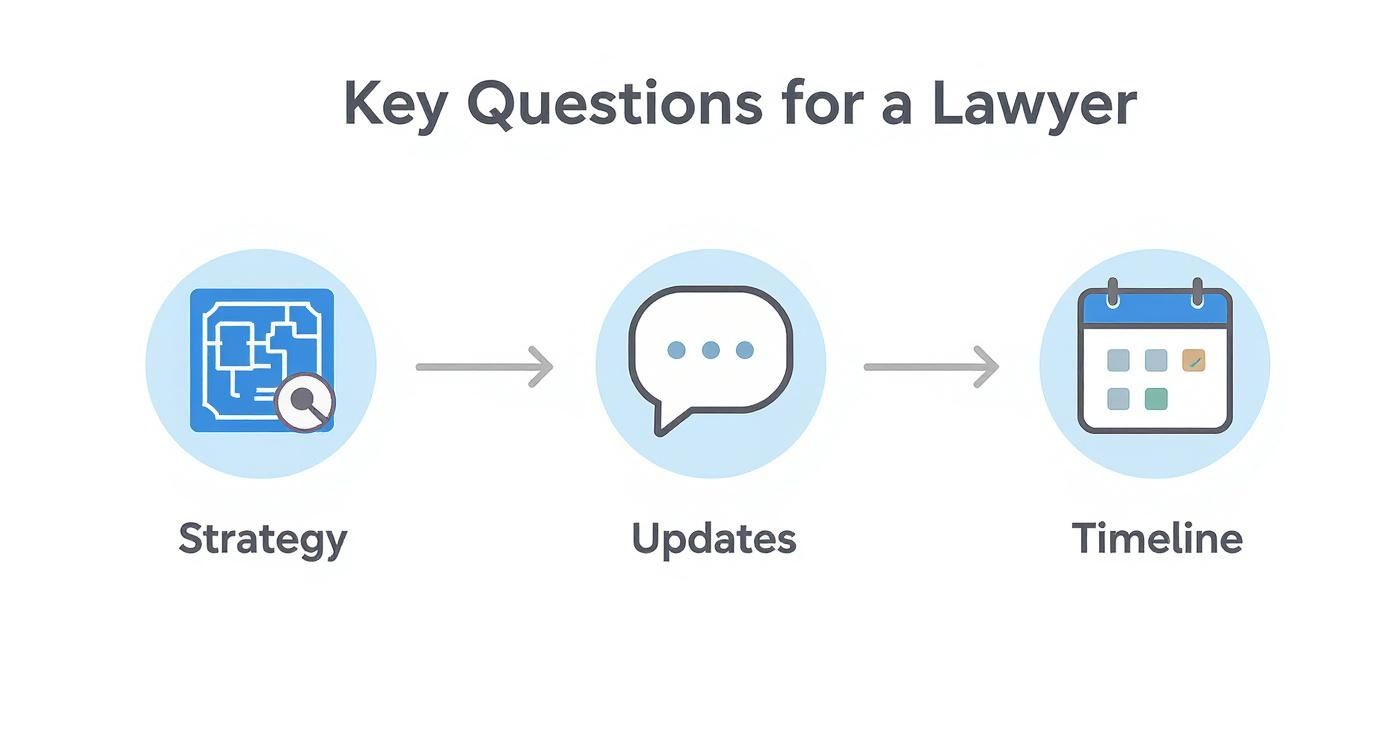
It’s a great visual reminder to clarify things like case strategy, how often you’ll get updates, and a realistic timeline before you commit.
The personal injury industry is a massive $57.3 billion field in the U.S., and with that much money at stake, you have to be careful. You need a firm that prioritizes your financial well-being, not just their own. Since around 95% of lawsuits are resolved through settlements, it's vital to partner with an attorney who is upfront about the numbers from day one. You can read the full research about these personal injury law statistics to see why this is so important.
Before you sign anything, get clear answers to these questions:
What is the exact contingency fee percentage?
Who pays for the case costs if we lose? (Some firms will bill you for these.)
Will I get a detailed, itemized breakdown of all costs when the case is over?
Getting this information upfront allows you to focus on your recovery with the peace of mind that comes from knowing your financial interests are protected. If you're looking for a firm that believes in total transparency, let's talk. In pain? Call Caine.
Have Questions? Let's Get Them Answered
If you’re reeling from an injury, your mind is probably racing with questions about what to do next. That's completely normal. Getting straight answers is the first step toward finding the right personal injury attorney for your situation.
When Is the Right Time to Call an Attorney?
This is easily the most common question we hear, and the answer is simple: as soon as you can.
In Florida, you're up against a strict legal clock called the statute of limitations. It’s a hard deadline for filing a lawsuit. If you miss it, your right to seek compensation is likely gone for good.
But it’s not just about deadlines. Getting a lawyer involved early means they can jump into action immediately—preserving evidence before it gets lost, tracking down witnesses while their memories are still sharp, and taking over all the frustrating back-and-forth with the insurance companies. This lets you focus on healing while a professional handles the fight.
How Should I Prepare for the First Meeting?
Another big concern is what you actually need to bring to that first free consultation. To give an attorney the clearest possible picture of your case, try to pull together whatever you have on hand. Don't worry if it's not perfectly organized.
Here's a good checklist to start with:
The police report or any official incident report.
Photos and videos you took of the scene, your injuries, and any vehicle damage.
Names and phone numbers for anyone who saw what happened.
Medical records, hospital bills, and pharmacy receipts related to your treatment.
Any emails, letters, or voicemails you’ve gotten from an insurance adjuster.
The more information you can share right away, the better a lawyer can evaluate your claim's strengths and map out a potential strategy.
Are There Any Red Flags I Should Watch Out For?
Absolutely. When you're meeting with a lawyer, you need to trust your gut. If something just doesn't feel right, it probably isn't.
Be extremely wary of any attorney who guarantees you'll win or promises a specific settlement amount. The legal system is full of variables, and an ethical lawyer will never make a promise they can't keep. They can talk about past results, but they should never guarantee a future one.
Also, watch out for pushy sales tactics. A good attorney will give you time and space to think things over without pressure. If you get vague answers about their trial experience, their fees, or how they’ll keep you updated on your case, that’s another major warning sign. Your relationship with your lawyer is built on trust, and that starts with honest, direct communication from day one.
At CAINE LAW, we believe in giving you clear, straightforward answers so you can make decisions with confidence. If you have questions about an injury claim, we’re here to provide the guidance you need. Learn more at https://cainelegal.com.
In pain? Call Caine.
